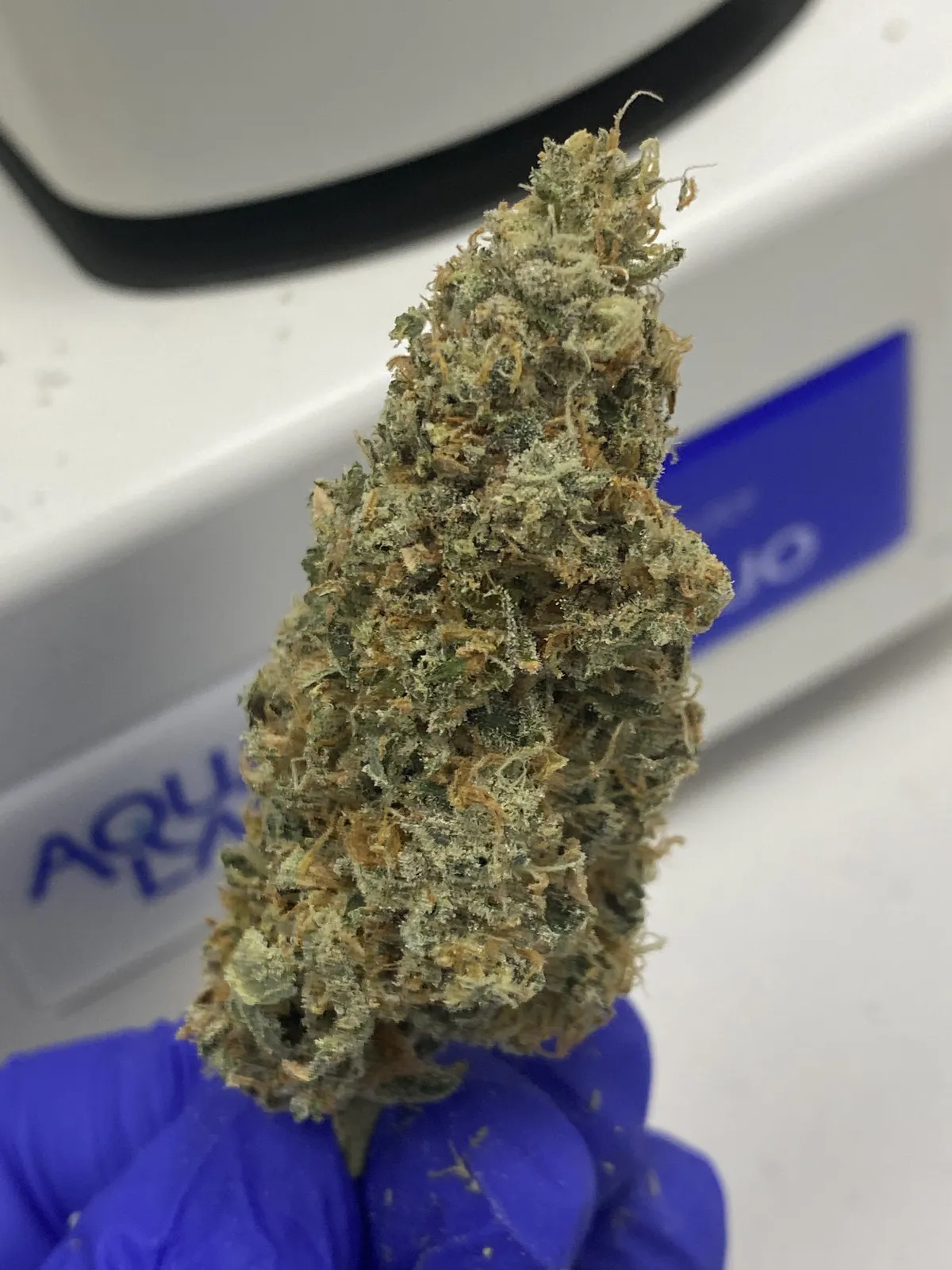
Why “portable potency” is becoming a production control requirement
If you run operations, you already know the problem: waiting days for third-party potency results is incompatible with modern production control. It forces you to make decisions blind—blending, remediation, post-processing routes, packaging release timing, or yield-tracking—then you discover later the batch didn’t behave the way your process model predicted.
At the same time, most facilities don’t want (or need) to build a full ISO/IEC 17025 lab just to answer operational questions. The goal here is not to replace accredited compliance testing. The goal is to implement a portable HPLC potency method validation that’s fitness-for-purpose: fast enough, precise enough, and documented well enough that you can defend it internally, with auditors/customers, and when troubleshooting process drift.
A “good enough” potency method is one that:
- Produces repeatable numbers within decision-grade tolerances
- Uses controls, blanks, and calibration checks to detect drift
- Has a documented, consistent workflow (sampling → prep → run → review → action)
- Applies basic data integrity principles (role-based access, audit habits, change control)
- Anchors comparability to the industry’s push for harmonized methods (AOAC CASP) and traceable reference materials (NIST)
The industry push toward harmonized methods (and why it matters even for in-process testing)
Two forces are quietly raising the bar for in-house potency workflows:
-
AOAC’s Cannabis Analytical Science Program (CASP) is building consensus around standard method performance requirements (SMPRs), official methods, and proficiency testing resources that improve comparability across labs and instruments. Even if you’re not running an accredited lab, aligning your internal approach to this ecosystem makes your results easier to reconcile with outside labs. Source: https://www.aoac.org/scientific-solutions/casp/
-
NIST reference materials are increasingly available for cannabinoid measurement and quality assurance. NIST’s RM 8210 “Hemp Plant” is an example of a matrix reference material developed to help labs validate methods and support QC. Using recognized reference materials as checks reduces arguments about whose numbers are “right.” Source: https://www.nist.gov/news-events/news/2024/07/rm-measuring-cannabinoids-and-toxic-elements-hemp
Operational takeaway: even if your goal is “process control,” you should build your program so results are comparable over time and across partners. That means consistent sample prep, defined acceptance criteria, and documented QC checkpoints.
Start with the operational question (not the instrument)
Portable potency programs fail when teams start with the analyzer and work backward. Method fitness should be defined by the decision you’re trying to make.
Ask these first:
- What decision will the result drive? (blend ratio, rework, routing, hold/release, yield KPI)
- What’s the tolerance of that decision? (e.g., “If we’re within ±10% relative, that’s fine for blending.”)
- What’s the cost of a wrong decision? (lost yield, rework time, compliance risk, customer complaints)
- What turnaround time is required? (same shift, same day, next day)
Then set the method targets.
Suggested “good enough” precision targets for in-process control
Your targets should be explicit and written into your SOP as acceptance criteria. In most production control use cases, you’re not trying to win method-comparison debates—you’re trying to detect meaningful changes.
A practical starting point for an in-process portable HPLC potency method validation plan:
- Repeatability (same analyst, same day, same sample prep): aim for ≤5–10% RSD for major cannabinoids in the matrix types you actually run most.
- Intermediate precision (different day/analyst): aim for ≤10–15% RSD.
- Bias expectation: define an acceptable comparison window to your external lab (for example, ±10–20% relative) depending on matrix complexity and how you’ll use the result.
These ranges are not regulatory limits; they are operationally defensible targets when documented, trended, and paired with controls. Your acceptance criteria should be tightened as your team learns where variability enters the workflow.
The analyzer: why portable HPLC can be the right “middle layer”
Portable HPLC sits in a sweet spot between fast-but-limited screening tools and full-scale lab systems. The advantage is that chromatography-based potency can provide a credible measurement foundation while keeping the workflow simple enough for production environments.
Product plug (recommended gear)
Recommended gear: https://www.urthandfyre.com/equipment-listings/orange-photonics-lightlab-3-cannabis-analyzer---potency-testing-lab-
The Orange Photonics LightLab 3 is designed for fast, in-house potency testing of up to 19 cannabinoids using an HPLC-based approach, positioned for non-specialist operators and rapid decisions.
Urth & Fyre value-add is not just “a unit in a box.” For operations teams, what matters is deployment success: training, SOP packages, and connecting you to calibration/verification partners so your results stay stable.
Build a defensible portable HPLC potency method validation (without overbuilding)
Think in two layers:
- Method validation-lite (prove the workflow is fit for your purpose)
- Ongoing verification (prove it stays in control)
Step 1: Define scope and matrices
Document what you will and won’t claim.
In your SOP, state:
- Matrices covered (e.g., flower, concentrate, distillate, infused intermediates)
- Cannabinoids reported and units
- Intended use: in-process control, not compliance release
- Decision rules: what actions the team will take based on results
Step 2: Sampling and homogenization (the #1 source of variability)
If your sampling is weak, no instrument can save you.
Minimum defensible sampling practices:
- Define sample mass and minimum number of increments pulled from a batch container
- Require homogenization time and method (grind/mix/vortex/heat where appropriate)
- For viscous samples, specify temperature conditioning (and log it)
- Use dedicated, clean tools and change them between batches to avoid cross-contamination
Operational tip: create a one-page “Sampling Card” that operators can follow at the line. That alone often cuts variability more than any analytical tweak.
Step 3: Controls, blanks, and calibration checks (keep it simple but non-negotiable)
You want to detect three things: contamination, drift, and preparation errors.
Minimum QC set per run sequence
- Solvent blank (checks carryover/contamination)
- Calibration check standard (mid-level): confirms the system still quantifies correctly
- Matrix control (optional but powerful): an in-house retained sample or reference material prepared the same way each time
If you only add one thing to a “quick test” culture, add calibration checks and documented acceptance criteria.
Suggested acceptance criteria (starter set)
Write these into your procedure so analysts aren’t improvising:
- Blank: no reportable peaks above your defined noise threshold
- Calibration check: within ±10% of expected for major cannabinoids
- Duplicate prep of the same sample: within ±10–15% relative difference (matrix-dependent)
If a criterion fails, your SOP should say exactly what happens next (rerun, reprep, service, quarantine results).
Step 4: Precision study that matches production reality
Don’t do a textbook validation that ignores your real workflow.
A practical validation-lite design:
- Choose 3 representative matrices you run frequently
- For each matrix, run:
- n=6 independent sample preps by the same analyst (repeatability)
- Repeat on a second day or second analyst (intermediate precision)
- Calculate mean, SD, and %RSD for key analytes
- Set final acceptance criteria based on observed performance and decision risk
Document the study results, deviations, and final acceptance criteria in a short internal report. That report becomes your “defensible method basis.”
Step 5: Ongoing verification and trending (where defensibility actually comes from)
Validation is not a one-time event; production environments drift.
Adopt a lightweight verification cadence:
- Daily/shift: blank + calibration check
- Weekly: duplicate prep on a representative sample
- Monthly: retained sample comparison (same retained material run over time)
- Quarterly: compare to an external lab on a subset of samples (method alignment)
When you trend these checks, you create an evidence trail that shows the method is controlled.
A simplified Part 11-aligned data integrity playbook (without building a bureaucracy)
You likely don’t need full 21 CFR Part 11 compliance unless you’re submitting electronic records to FDA under predicate rules. But Part 11 principles are a useful north star for defensibility and governance.
FDA’s scope and application guidance is worth understanding at a high level: https://www.fda.gov/regulatory-information/search-fda-guidance-documents/part-11-electronic-records-electronic-signatures-scope-and-application
Here’s a Part 11-lite playbook that works for operations teams.
1) User roles and access
Define roles, even if your team is small:
- Operator/Technician: can run tests, cannot change methods
- Supervisor/QA: can approve results, can open investigations
- Admin: can change configuration (rarely used; controlled)
Rules:
- No shared logins
- Password discipline and lockout behavior aligned to your risk level
- Remove access promptly when roles change
2) Audit trail habits (even if the system’s audit trail is limited)
If your analyzer software has audit capabilities, enable them. If not, create procedural auditability:
- Record who, when, sample ID, method version, and result
- Any re-run requires a reason code (e.g., QC fail, prep error, instrument error)
- Store raw exports (PDF/CSV) in a controlled folder with read-only permissions
3) Change control for “method drift”
Most internal programs lose defensibility when small changes accumulate without documentation.
Implement a simple change control trigger list:
- New column/consumable type
- New calibration standard vendor or lot strategy
- Sample prep ratio changes
- Software updates
- New matrix type
For each trigger, require:
- A short change request
- A comparison run (before/after)
- Supervisor approval
- Updated SOP version
4) Backup and retention
- Back up results to a secure location (cloud or server)
- Retain data long enough to cover customer complaint windows and internal investigations
This isn’t “paperwork for paperwork’s sake.” It’s how you keep results usable when a batch question shows up months later.
Throughput planning: don’t create a bottleneck
Operations leaders should size potency testing like any other production resource.
Define:
- Expected samples per shift
- Required turnaround time
- Staffing model (who preps, who runs, who reviews)
- Peak loads (campaigns, new product runs, troubleshooting days)
Portable analyzers often return results quickly, but the real limiter is usually sample prep and review discipline.
A practical implementation target:
- Same-shift decisions for blend/rework routing
- Daily trending for yield KPIs and process drift
- Weekly alignment to external lab for comparability
Where AOAC CASP and NIST fit in your “good enough” program
You don’t need to adopt every element of harmonized method development—but you can borrow the parts that increase credibility.
Use AOAC CASP as a comparability anchor
- Align your internal method expectations to the idea of standard performance requirements and inter-lab comparability.
- When discrepancies appear between internal and third-party results, treat it like a method alignment project (sampling, prep, calibration, matrix effects), not a blame game.
AOAC CASP resource hub: https://www.aoac.org/scientific-solutions/casp/
Use NIST reference materials as a reality check
NIST’s RM 8210 hemp plant material is designed as a control and research material to help labs validate methods and support QC. Using reference materials in your program strengthens traceability and helps your team learn what “normal” looks like.
NIST RM 8210 overview: https://www.nist.gov/news-events/news/2024/07/rm-measuring-cannabinoids-and-toxic-elements-hemp
Implementation framework: a 30–45 day rollout that sticks
A fast deployment is possible if you treat it like an operations project.
Days 1–7: Setup and workflow design
- Define decisions and acceptance criteria
- Write the sampling card and chain-of-custody-lite labels
- Establish user roles and data storage
- Train 2–3 primary users (avoid “everyone is trained” at first)
Days 8–21: Validation-lite study + SOP finalization
- Run repeatability and intermediate precision checks on representative matrices
- Lock sample prep ratios and run sequences
- Finalize SOPs: sampling, prep, run, review, deviation handling
Days 22–45: Verification cadence + external alignment
- Start daily calibration checks and trend charts
- Send a subset of samples to an external lab for comparison
- Tune acceptance criteria if needed (based on actual variability)
How Urth & Fyre helps operations teams win with portable potency
Portable potency succeeds when it’s treated as a production control system, not a gadget.
Urth & Fyre supports that by:
- Helping you select the right analyzer for throughput and matrix scope
- Delivering training + SOP packages so operators can run consistent workflows
- Connecting you to calibration/verification partners so you can sustain comparability
- Advising on practical governance: data integrity habits, change control triggers, and QC trending
If you’re building an in-house program and want it to be defensible without becoming a full ISO 17025 lab, start with the tool designed for fast in-process decisions:
Recommended gear: https://www.urthandfyre.com/equipment-listings/orange-photonics-lightlab-3-cannabis-analyzer---potency-testing-lab-
Actionable takeaways
- Define “good enough” by the decision, then set explicit precision targets.
- Treat sampling and homogenization as your primary control point.
- Make blank + calibration check non-negotiable for every sequence.
- Implement a Part 11-lite governance layer: user roles, audit habits, and change control.
- Anchor comparability to AOAC CASP and NIST reference materials to reduce disputes.
To explore equipment listings, deployment support, and consulting built for real production environments, visit https://www.urthandfyre.com.

Founder of Urth & Fyre. 1M+ square feet of cannabis facilities designed and optimized. Every answer on this site is his.
About Trevor →