Why this guide exists (and why operators keep buying the wrong tool)
If you’ve ever inherited a drying step that “kind of works” (but the product swings batch-to-batch, smells off, or bottlenecks the whole line), you already know the problem: drying equipment gets purchased based on what a neighboring facility uses, what a broker has in stock, or what looks most “industrial.”
But vacuum ovens, freeze dryers (lyophilizers), and ambient/convective drying rooms solve different problems. Choosing incorrectly can create avoidable failures like:
- Oxidation and color shift in sensitive extracts or intermediates
- Loss of volatile aroma compounds (terpenes, flavors, fragrance fractions)
- Texture damage in foods (collapse, case-hardening, sticky surfaces)
- Cycle time creep that quietly kills throughput
- Energy bills that don’t match the business case
- “Invisible” quality issues because no one wrote a validation-lite acceptance test
This vacuum drying vs freeze drying selection guide breaks the decision down by mechanism, product risk, and operational realities—so you can match process goals to the right equipment train.
The three drying mechanisms (what’s actually happening)
1) Vacuum ovens: boiling point suppression under vacuum
A vacuum oven removes moisture (or solvent) by reducing chamber pressure so liquids boil at lower temperatures. In plain terms: lower pressure = lower boiling point, which enables drying at gentler temperatures than ambient-pressure ovens.
- Mechanism: evaporation/boiling under reduced pressure
- Heat input: jacket/shelf heating + radiant/conductive transfer
- Why it’s used: accelerate drying while reducing oxidation and thermal stress
Vacuum drying is widely used across regulated and R&D environments because it is straightforward to run and document, and it scales well for many solids, powders, and viscous materials. A baseline reference on the concept is summarized in the general description of vacuum drying and its reduced-pressure boiling behavior: https://en.wikipedia.org/wiki/Vacuum_drying
Where it can fail: if the oven has poor temperature uniformity, insufficient vacuum integrity (leaks), or inadequate vapor handling/condensation, you’ll see long cycles and inconsistent end moisture.
2) Freeze dryers (lyophilizers): sublimation + desorption
Freeze drying is a different physics problem. The product is frozen, then water is removed first by sublimation (ice → vapor) during primary drying, followed by removal of bound water by desorption in secondary drying.
- Mechanism: sublimation under vacuum (primary drying) + desorption (secondary)
- Heat input: carefully metered shelf heat while maintaining product below collapse temperature
- Why it’s used: preserves structure, activity, porosity, reconstitution behavior
A widely cited overview of the stages (freezing, primary drying, secondary drying) is covered in introductory lyophilization references such as American Laboratory: https://www.americanlaboratory.com/913-Technical-Articles/36127-Freeze-Drying-101-Lyophilization-Technology/
Where it can fail: wrong cycle development (collapse/meltback), undersized condenser, or assuming it’s “gentle” for volatiles (many aromatics can still be stripped under deep vacuum).
3) Ambient/convective drying rooms: mass transfer with airflow
Ambient rooms (or hot-air drying rooms) remove moisture by airflow-driven mass transfer. Heat may be ambient or elevated via HVAC/dehumidification.
- Mechanism: convection + diffusion with controlled airflow and humidity
- Heat input: room air temperature + latent heat carried away in exhaust/dehumidification
- Why it’s used: low capital cost, simple handling, large footprint throughput
Where it can fail: uneven airflow, microbial risk, oxidation, long residence times, and difficulty proving uniformity without serious mapping work.
Product risks: what you’re protecting (and what you’re willing to sacrifice)
Drying is never only about “removing water.” It’s about what happens to:
Oxidation and reactive degradation
- Ambient rooms expose product to oxygen for longer periods.
- Vacuum ovens reduce oxygen exposure, but opening the door, poor seals, or backfilling incorrectly can reintroduce oxygen.
- Freeze drying typically uses vacuum and can be paired with inert gas backfill, but long cycles still create opportunities for oxidation if handling isn’t tight.
Volatile loss (aroma, flavor fractions, fragrance notes)
- Vacuum ovens can strip volatiles if you run too warm or too deep on vacuum without cold trapping.
- Freeze dryers can also remove volatiles—especially low molecular weight compounds—during sublimation and under deep vacuum.
- Ambient rooms can lose volatiles via continuous airflow (and can “broadcast” aroma into the HVAC system).
If volatile retention is a critical quality attribute, your best lever is not only “freeze vs vacuum,” but:
- lower product temperature,
- faster cycle completion,
- cold trapping/condensing strategy,
- inert handling (nitrogen backfill, sealed containers),
- and minimizing surface area when appropriate.
Texture and structure
- Freeze drying usually wins when you need porosity, reconstitution, or “crispy” structures.
- Vacuum ovens can produce dense, glassy, or sticky textures depending on formulation (sugars, gums, emulsions).
- Ambient rooms can cause case hardening (dry crust outside, wet core) without tuned airflow and humidity.
Solvent and residuals (common in APIs, botanicals, and extracts)
Vacuum ovens are frequently selected when you must drive down residual solvents at temperatures that avoid degradation. Regardless of equipment, align with your internal specs and any applicable guidance for solvent limits (e.g., ICH Q3C frameworks commonly referenced in pharma environments).
Throughput + energy: where the real cost lives
Cycle time reality check
- Ambient room drying is typically slow but can be “high throughput” if you have space and racks.
- Vacuum ovens are often the best middle ground: faster than ambient, less complex than lyophilization.
- Freeze drying is frequently the slowest per batch because of freezing + primary + secondary drying.
Energy tradeoffs
Freeze dryers often require energy for:
- freezing the product,
- maintaining deep vacuum,
- condensing vapor on a very cold condenser,
- and running long cycles.
Vacuum ovens consume energy primarily for:
- heating the chamber/shelves,
- running the pump (and possibly a cold trap).
Ambient rooms offload energy to:
- HVAC, dehumidification, and air movement—often continuously.
While exact kWh depends heavily on batch size, setpoints, and facility utilities, many industry explainers consistently describe lyophilization as more energy-intensive than vacuum oven drying for comparable water removal due to refrigeration + long cycle time (examples: https://labec.com.au/vacuum-drying-ovens-vs-freeze-drying-whats-the-difference/).
A “no regrets” selection framework (use this before you buy)
Step 1: Define the critical quality attributes
Write down what must be protected:
- maximum product temperature
- target end moisture / water activity
- volatile retention target
- texture/structure requirement
- residual solvent limits (if applicable)
- acceptable oxygen exposure and time-at-temperature
Step 2: Identify the constraint that will bite you first
In most facilities it’s one of these:
- cycle time / bottleneck
- floor space
- utilities (220V availability, chilled water, compressed air)
- operator skill / training burden
- documentation and release requirements
Step 3: Choose the simplest technology that reliably meets specs
“Best” usually means “best aligned,” not “most advanced.”
Decision guide by product type (simple, practical)
Because you requested a simple decision guide by product type, here’s the operator-friendly version—written as if/then rules.
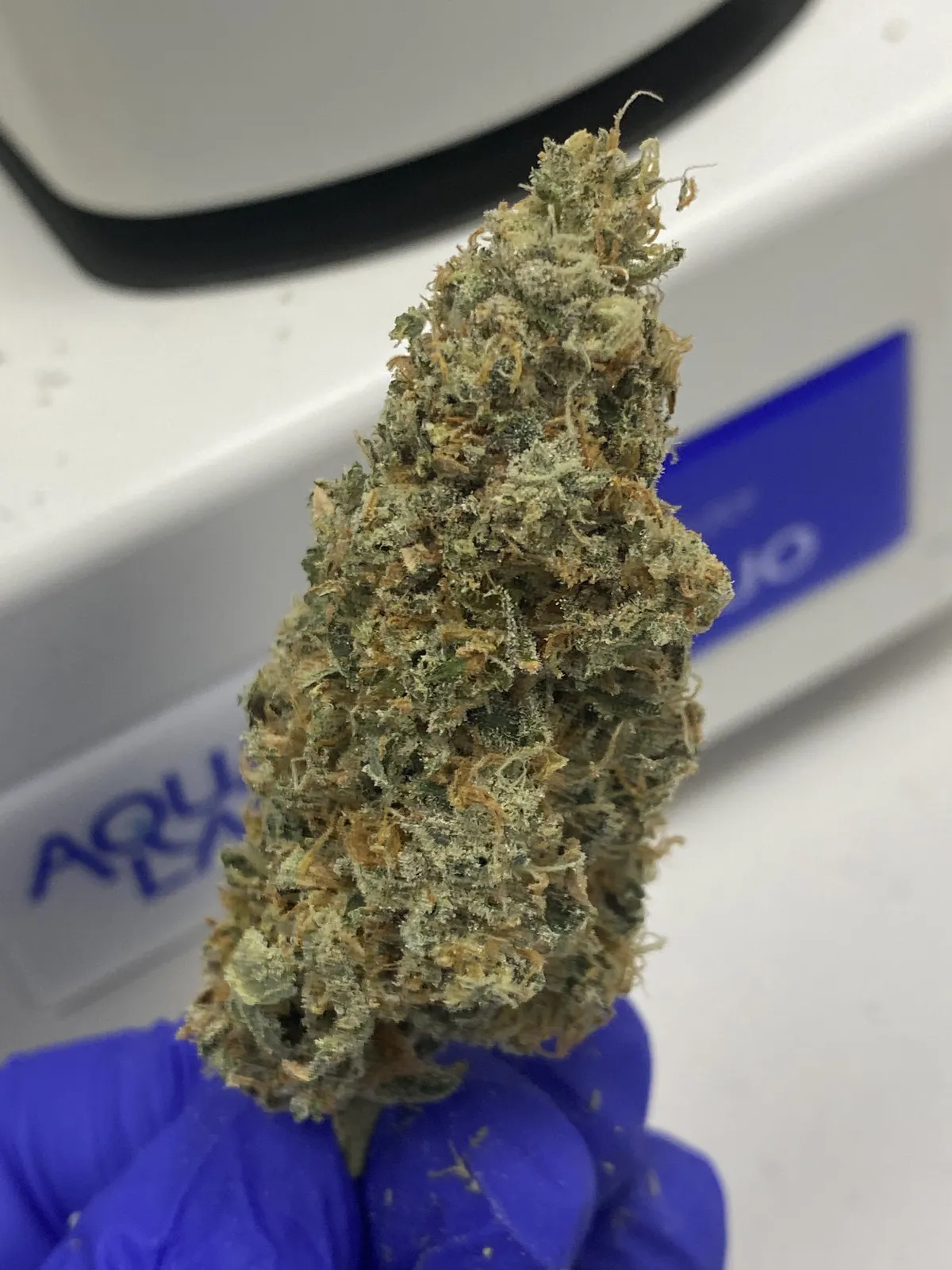
Hemp biomass (plant material)
- Choose ambient/controlled rooms if your priority is low capex and you can tolerate longer cycle times and some volatile loss.
- Choose a freeze dryer if you need premium structure and volatile preservation for high-end R&D outcomes and you can justify long cycles.
- Choose a vacuum oven when you need faster controlled drying in smaller batches (R&D, specialty lots) and want to reduce oxygen exposure compared to open-air rooms.
Key risk: aroma loss and oxidation; microbial risk with long ambient residence time.
Crude oil / viscous extracts
- Choose a vacuum oven when the goal is to reduce residual volatiles/solvents gently and consistently with controllable temperature.
- Freeze drying is generally not the primary tool for viscous oils (unless you’re drying a frozen emulsion or specific formulated intermediate).
- Ambient rooms are typically not appropriate due to oxidation risk, contamination exposure, and poor mass transfer.
Key risk: overheating, bumping/foaming, oxidation, and inconsistent solvent removal without vacuum integrity.
Gummies / high-sugar confections
- Choose ambient/controlled rooms if you’re managing water activity and texture through airflow/humidity control and you have adequate space.
- Choose a vacuum oven for specific R&D or specialty work where you need accelerated moisture reduction without high air velocity (but watch deformation, stickiness, and surface skins).
- Freeze drying can create novel textures, but it’s rarely the most economical choice for standard production gummies.
Key risk: texture collapse, surface tack, case hardening, and inconsistent water activity.
Pharma intermediates (solids, powders, heat-sensitive compounds)
- Choose a vacuum oven when you need a straightforward, documentable drying step with controlled temperature and reduced oxygen exposure.
- Choose a freeze dryer when you must preserve structure, activity, or reconstitution performance (common for biologics and certain formulated products).
- Ambient rooms are generally the last resort for regulated intermediates due to uniformity and contamination control burdens.
Key risk: demonstrating repeatability, avoiding degradation, and meeting residual solvent/moisture specs.
Product plug: a practical vacuum oven option (pre-owned availability)
When the selection points toward vacuum drying, uniform heating and leak-tight vacuum plumbing matter more than most buyers expect.
Recommended gear: https://www.urthandfyre.com/equipment-listings/across-international-vacuum-ovens--elite-e76i---vacuum-oven
The Across International Elite E76i class of ovens is designed around operator pain points that show up in real plants:
- Five-sided chamber jacket heating (better uniformity than single-sided heat designs)
- Stainless steel internal vacuum tubing (durable, cleaner, and less leak-prone than elastomer-heavy routing)
- Up to 250°C operating range for broad R&D and production use cases
- KF25 vacuum connector for robust vacuum connections
Urth & Fyre often helps teams source units like this pre-owned, then close the gap between “installed” and “running correctly” through commissioning support and SOP packages.
“Validation-lite” acceptance tests (what to verify on day one)
You don’t need full pharma validation to run a disciplined operation. But you do need objective acceptance tests that catch the most common issues early. Below are three that translate across botanicals, APIs, and food R&D.
1) Temperature uniformity checks (empty + loaded)
Goal: confirm the oven/room actually holds the setpoint across the working zone.
- Place calibrated probes (or a verified logger) at representative locations.
- Check stability at typical setpoints (e.g., low, mid, high).
- Repeat with a representative load (trays/racks) because loading changes airflow and heat transfer.
Acceptance criteria examples:
- setpoint achieved within a defined time
- steady-state variation within your internal tolerance band
Uniformity mapping is a common expectation in regulated environments and ties into broader qualification concepts (IQ/OQ/PQ). FDA’s process validation guidance describes lifecycle thinking and leveraging commissioning and qualification data: https://www.fda.gov/files/drugs/published/Process-Validation--General-Principles-and-Practices.pdf
2) Vacuum hold / leak rate test (for vacuum ovens and freeze dryers)
Goal: confirm you’re not chasing leaks that stretch cycle time and compromise consistency.
- Pull down to a defined pressure.
- Isolate the system.
- Measure pressure rise over a fixed time.
What this catches:
- door gasket issues
- valve problems
- loose KF fittings
- worn pump oil/backstreaming symptoms (indirectly)
3) Batch documentation practices (simple but consistent)
Goal: produce records that allow you to explain variability.
Minimum batch record fields that “pay for themselves”:
- material ID, starting mass, tray/rack configuration
- starting moisture (if measured)
- setpoints (temp, vacuum level, time)
- ramp/soak profile (even if manual)
- end mass + end moisture/water activity
- operator initials + deviations
- cleaning status and pre-run checks
If you use software logging, consider “21 CFR Part 11-lite” behaviors: controlled access, audit trails, and data retention—even outside formal pharma.
Practical implementation timelines (what realistic looks like)
Vacuum oven deployment (typical)
- Week 1: select model + utilities check + pump/cold trap plan
- Week 2: install + commissioning checks (leaks, temperature stability)
- Week 3: first production lots + refine SOP + acceptance criteria
Freeze dryer deployment (typical)
- Weeks 1–2: define cycle development approach and product constraints
- Weeks 3–6+: cycle development and optimization (often longer)
- Ongoing: condenser maintenance, gasket integrity, and cycle verification
Ambient room deployment (typical)
- Week 1: HVAC/dehumidification plan + airflow design
- Week 2–4: build-out, mapping, and rack configuration
- Ongoing: microbial controls, filter changes, and seasonal re-tuning
Common buying mistakes (and how to avoid them)
- Buying based on chamber volume instead of usable loading configuration
- Under-spec’ing vacuum pumping and vapor handling (no cold trap, wrong plumbing)
- Ignoring temperature uniformity until quality complaints appear
- Not budgeting time for SOPs, operator training, and acceptance tests
Where Urth & Fyre fits: process-aligned sourcing + execution
Urth & Fyre’s value is not just listing equipment—it’s helping teams avoid expensive mismatches by:
- translating product goals into equipment requirements (vacuum drying vs freeze drying selection guide decisions)
- sourcing pre-owned options when they make sense
- providing commissioning support and SOP packages that translate across industries
If you’re deciding between a vacuum oven, freeze dryer, or a controlled ambient room—or you’re trying to rescue an underperforming drying step—explore equipment listings and consulting support at https://www.urthandfyre.com.

Founder of Urth & Fyre. 1M+ square feet of cannabis facilities designed and optimized. Every answer on this site is his.
About Trevor →