
Short Path vs Wiped Film Distillation
Choose a distillation platform by process duty, not by headline throughput alone. A still cannot deliver its advertised rate if the feed is poorly prepared, the vacuum train is undersized, the condenser cannot remove the vapor load, or cleaning consumes the available shift.
| Configuration | Process position | Feed condition | Vacuum range | Throughput | Cleaning | Operator skill | Best use |
|---|---|---|---|---|---|---|---|
| Batch short path | Small campaigns, method development, or final fraction work | Well filtered, solvent-reduced, and conditioned for the selected procedure | Method and glassware specific. Confirm the intended pressure with the manufacturer. | Batch based. Output depends on charge size, heat-up, fraction changes, and turnaround. | Full vessel and glass-path cleaning between campaigns may be practical but labor intensive. | High hands-on attention to heat, pressure, fraction changes, and end point | Flexible development, low-volume production, and changing recipes |
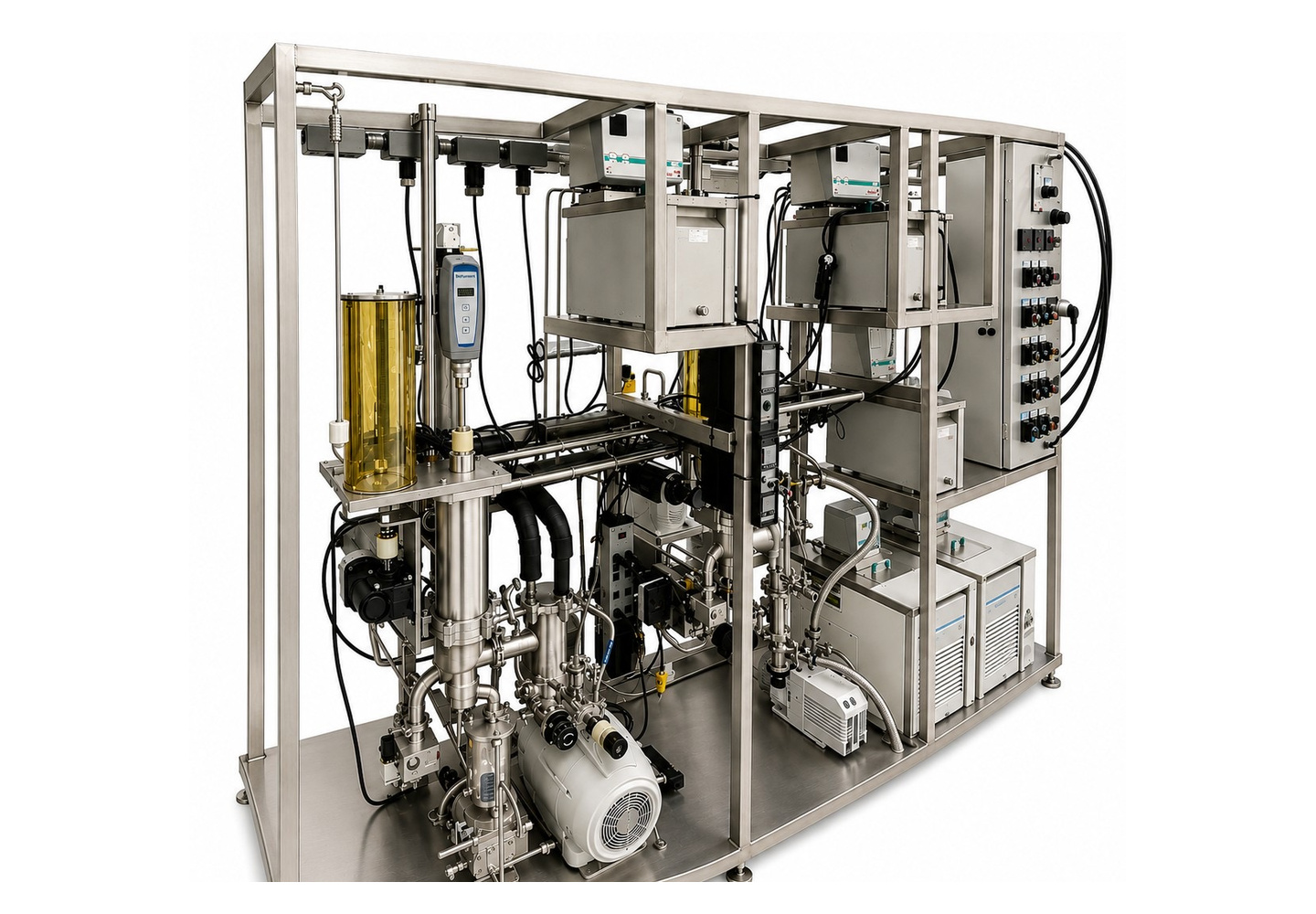
| Wiped-film evaporator | Devolatilization, concentration, or a first pass ahead of deeper separation | Pumpable, filtered feed with a controlled solids and volatile load | Application specific. Medium-vacuum packages may be configured to about 0.05 Torr. | Continuous feed. Size from verified trials, required passes, and effective run hours. | Plan flushes, disassembly access, seal care, and validated changeover steps. | Moderate to high skill in feed control, wall temperature, wiper performance, and mass balance | Continuous removal of lights or solvent and stable feed preparation |
| Wiped-film molecular still | Main-body separation under deeper vacuum | Consistent, degassed, filtered feed within viscosity and temperature limits | Application specific. High-vacuum packages may be configured to about 0.001 Torr. | Continuous feed. Published examples range from pilot scale to multi-liter-per-hour production, but trials govern. | Plan internal condenser access, residue-path cleaning, seal inspection, and cold-trap service. | High skill in vacuum diagnosis, feed and wiper control, fraction balance, and trend review | Repeatable continuous separation where short residence time matters |
The vacuum figures above describe published equipment-system capability, not a process recipe. Pope Scientific lists medium-vacuum and high-vacuum wiped-film packages with capabilities to approximately 0.05 Torr and 0.001 Torr, respectively. Actual conditions depend on product, feed rate, temperature, leak rate, and vacuum configuration. Review the manufacturer's wiped-film system guidance and validate the application before purchase.
Build the Distillation Train, Not Just the Still
A reliable train starts upstream of the evaporator and ends after the vacuum pump. Feed preparation determines viscosity, foaming risk, volatile load, and fouling. Condensers and cold traps determine how much vapor reaches the pump. Heating and cooling utilities determine whether the process can hold its setpoints at the intended feed rate.
- Prepare the feed. Reduce residual solvent, complete any required thermal conditioning, filter particulates, and establish a repeatable feed temperature and viscosity.
- Run the first duty. Remove light compounds or stabilize feed before deeper separation.
- Run the target separation. Hold a stable feed rate, wall temperature, condenser condition, and process pressure while tracking each fraction.
- Capture vapors before the pump. Size condensers and cold traps for expected gas and vapor load, not connection diameter alone.
- Collect and reconcile fractions. Record feed mass, main body, lights, residue, hold-up, and cleaning losses.
Distillation Sizing Checklist
Ask vendors to size against the actual operating window. A nominal liters-per-hour figure is incomplete without feed composition, viscosity, number of passes, cleaning time, and uptime.
- Daily feed mass: Define the normal day, peak day, and expected campaign size.
- Available run window: Subtract heat-up, cool-down, cleaning, inspection, and changeover from the shift.
- Feed properties: Document residual solvent, water, solids, viscosity at feed temperature, and variability.
- Number of passes: Calculate capacity across the whole route. Two passes double the still-hours required for the same incoming mass.
- Turndown: Confirm the lowest stable feed rate as well as peak rate.
- Product hold-up: Ask how much material remains in feed lines, the evaporator, discharge paths, and receivers.
- Yield and fraction plan: Define the expected main body, lights, residue, and acceptable loss.
- Cleaning frequency: Include labor, cleaning agents, drying, inspection, and documented release.
- Maintenance allowance: Reserve time for seals, wipers, bearings, pumps, gauges, and cold-trap service.
- Evidence: Prefer a trial using representative feed, followed by a written mass balance and utility record.
Published throughput can form a shortlist, but it is not a guarantee. Pope publishes model-dependent feed-rate examples across multiple scales. Use those figures as screening data, then require a representative trial and agreed acceptance criteria.
Utility and Facility Checklist
| Utility or facility item | What to confirm | Why it affects output |
|---|---|---|
| Heating system | Fluid type, supply temperature, flow, heat-up time, peak duty, hose rating, and expansion capacity | Insufficient heat transfer can force lower feed or unstable separation. |
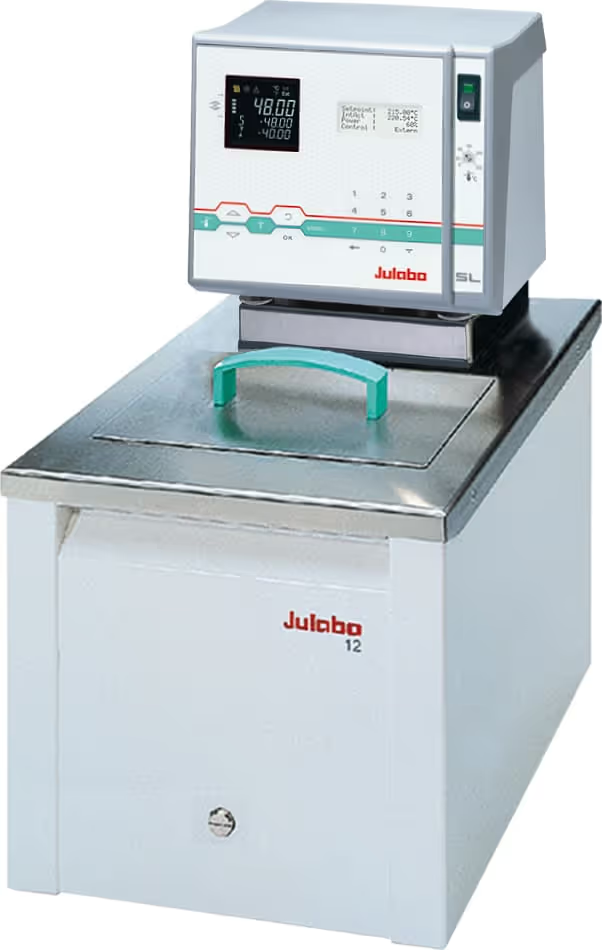
| Chilled fluid | Supply and return temperature, flow, heat load, ambient allowance, and fluid compatibility | A chiller must remove the real condenser load, not only reach a low unloaded temperature. |
| Vacuum system | Pump type, pumping speed at operating pressure, gas ballast or purge needs, oil management, line conductance, and leak-test method | Nameplate capacity can be lost through small lines, vapor load, contamination, or leaks. |
| Cold traps | Expected vapor load, trap temperature, collection capacity, staging, drain method, and service interval | Breakthrough can contaminate the pump and destabilize pressure. |
| Electrical | Voltage, phase, full-load current, disconnects, control power, and panel capacity | Facility power changes can add cost and extend installation time. |
| Ventilation and safety | Heat rejection, exhaust, hazards, local code review, spill control, and receiver handling | Room conditions and safe handling can limit the production window. |
| Space and access | Ceiling height, door path, service clearance, lifting points, drains, and cleaning access | A system that fits the footprint may still be difficult to install or maintain. |
Vacuum Measurement and Protection
Deep vacuum is not a complete specification. Gauge technology, location, cleanliness, and calibration determine whether the displayed number represents pressure at the process. Read the vacuum-gauge selection guide and the comparison of capacitance and Pirani gauges before finalizing instrumentation.
Measure as close to the process as practical, keep vacuum lines short and adequately sized, document leak-testing steps, and trend pressure alongside feed rate and temperatures. A pressure change without surrounding operating data rarely identifies the cause.
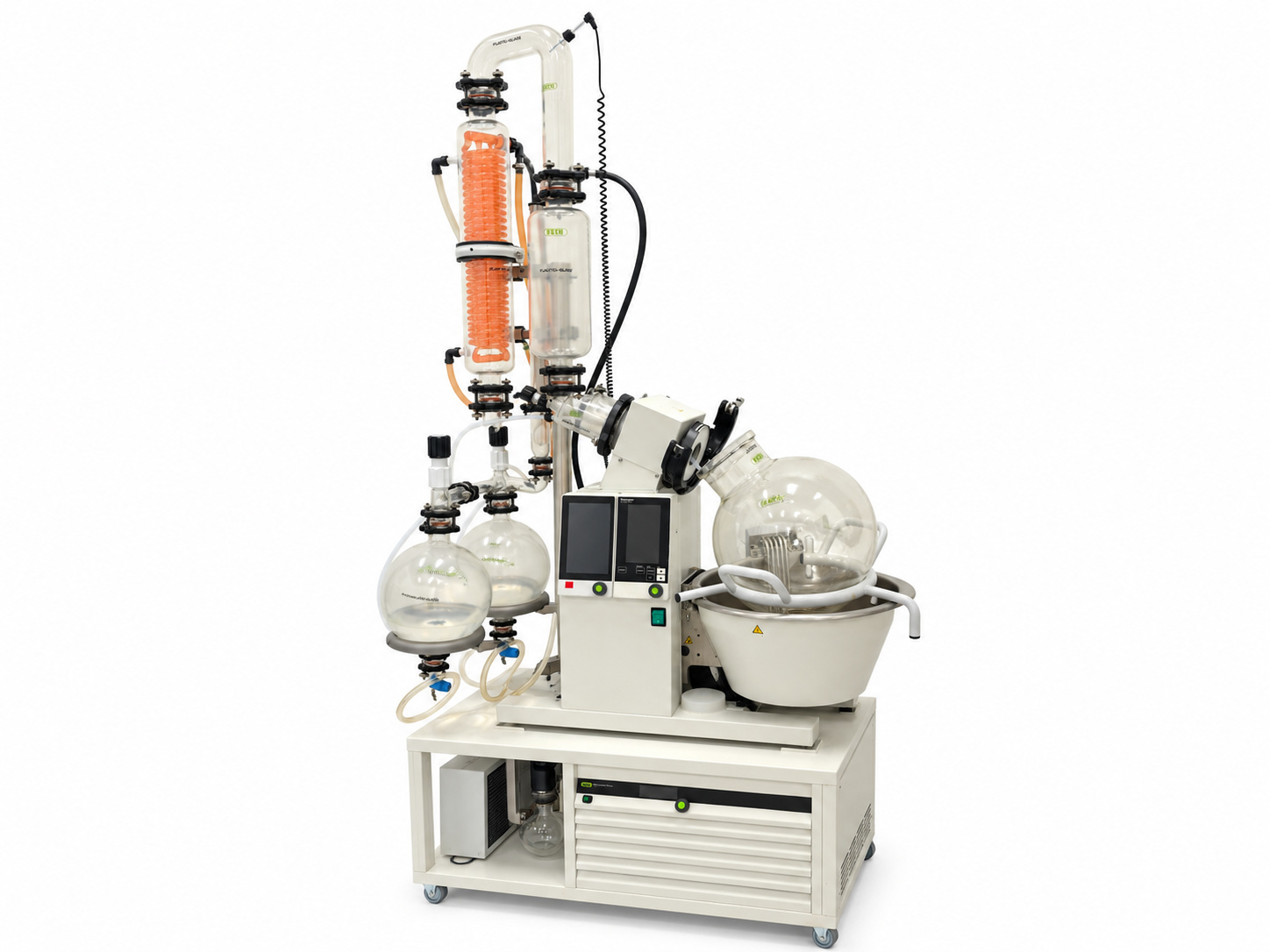
Cold traps work only when their temperature, surface area, capacity, and service interval match the vapor load. The cold-trap sizing and staging guide explains why a second trap or larger collection volume may be necessary. Teams recovering solvent upstream should also review rotary evaporator and chiller matching.
Troubleshooting Dark or Inconsistent Distillate
Color is an outcome, not a diagnosis. Before changing temperature or vacuum, compare the feed lot, preparation history, residence time, feed stability, actual process pressure, condenser condition, oxygen exposure, and equipment cleanliness. Use the dark-distillate root-cause checklist to move from symptoms to evidence.
- Confirm feed preparation and filtration were consistent with the last acceptable run.
- Verify pressure with a suitable, clean, and correctly located gauge.
- Check cold traps, pump condition, seals, clamps, and vacuum-line contamination.
- Compare feed rate, wall temperature, condenser temperature, and product discharge behavior.
- Reconcile fraction weights and equipment hold-up before judging yield.
- Inspect for fouling or residue that could increase residence time and heat exposure.
Preventive Maintenance and Changeover
Create a maintenance plan before commissioning. Stock manufacturer-approved seals, wipers, gaskets, pump consumables, gauge-cleaning supplies, and single-source wear components. Record installed hours and condition so service is triggered by evidence.
Cleaning procedures should identify the safe state, disassembly sequence, compatible agents, inspection points, drying requirements, reassembly checks, leak test, and release record. Review the wiped-film equipment guide for more design and maintenance considerations.
How to Source Distillation Equipment
Separate process design from the current equipment opportunity. Start with a user requirement specification that defines feed, capacity, product goals, utilities, controls, documentation, installation constraints, and acceptance testing. Then compare new, refurbished, and used systems against the same requirements.
- Request model and serial numbers, year, service history, and current condition.
- Confirm all wetted materials, seals, wipers, condenser configuration, pumps, traps, gauges, heaters, chillers, controls, and receivers included.
- Inspect for contamination, corrosion, glass damage, worn seals, pump condition, missing guards, obsolete controls, and incomplete documentation.
- Price freight, rigging, electrical work, utilities, commissioning, training, spares, and validation separately.
- Write acceptance criteria around leak rate, stable feed, utility performance, controls, safety functions, and a documented trial.
Browse current equipment listings only after defining the process requirement. Inventory changes, but the sizing and acceptance logic should remain the same.
Frequently Asked Questions
Is wiped film always better than short path?
No. Wiped film is usually considered when continuous feed, shorter residence time, scale, and repeatability matter. Batch short path can fit smaller campaigns, development work, flexible products, or a team that cannot support a continuous train.
How should throughput be verified?
Use representative feed, agreed preparation, defined operating limits, a timed run, and a complete mass balance. Record fractions, temperatures, pressure, utilities, cleaning time, and operator intervention.
How many passes will the process need?
That depends on the feed and product specification. Treat each planned pass as real capacity demand, and confirm the route through a trial.
What usually limits a distillation system?
Common constraints include feed inconsistency, volatile load, vacuum conductance, pump contamination, cold-trap capacity, heating or cooling duty, cleaning time, and operator availability.
Can used distillation equipment be financed?
Possibly. Approval depends on the buyer, seller, equipment condition, valuation, documentation, jurisdiction, and financing provider. Use the equipment financing guide to prepare the asset and business records a review may require.
Urth & Fyre is an equipment marketplace and advisory resource, not a laboratory, engineering firm, code authority, or equipment manufacturer. Process conditions must be developed and approved by qualified personnel for the actual material, equipment, facility, and jurisdiction.
.jpeg)