.jpeg)

Choose the Extraction Method Before the Machine
| Method | Best Fit | Core Equipment | Primary Facility Consideration |
|---|---|---|---|
| Cold ethanol | High-throughput crude production | Centrifugal extractor, low-temperature chiller, filtration and solvent recovery | Cooling capacity and solvent handling |
| Hydrocarbon | Live resin and terpene-rich extracts | Closed-loop extractor, recovery system, chillers and vacuum equipment | C1D1 room design and fire-code coordination |
| CO2 | Tunable fractions and solvent-free positioning | CO2 extractor, pumps, separators and post-processing equipment | Capital cost, pressure systems and throughput |
| Solventless | Hash and rosin production | Wash system, freeze dryer, cold workspace and rosin press | Cold-chain workflow and input quality |
Size the Complete Process Train
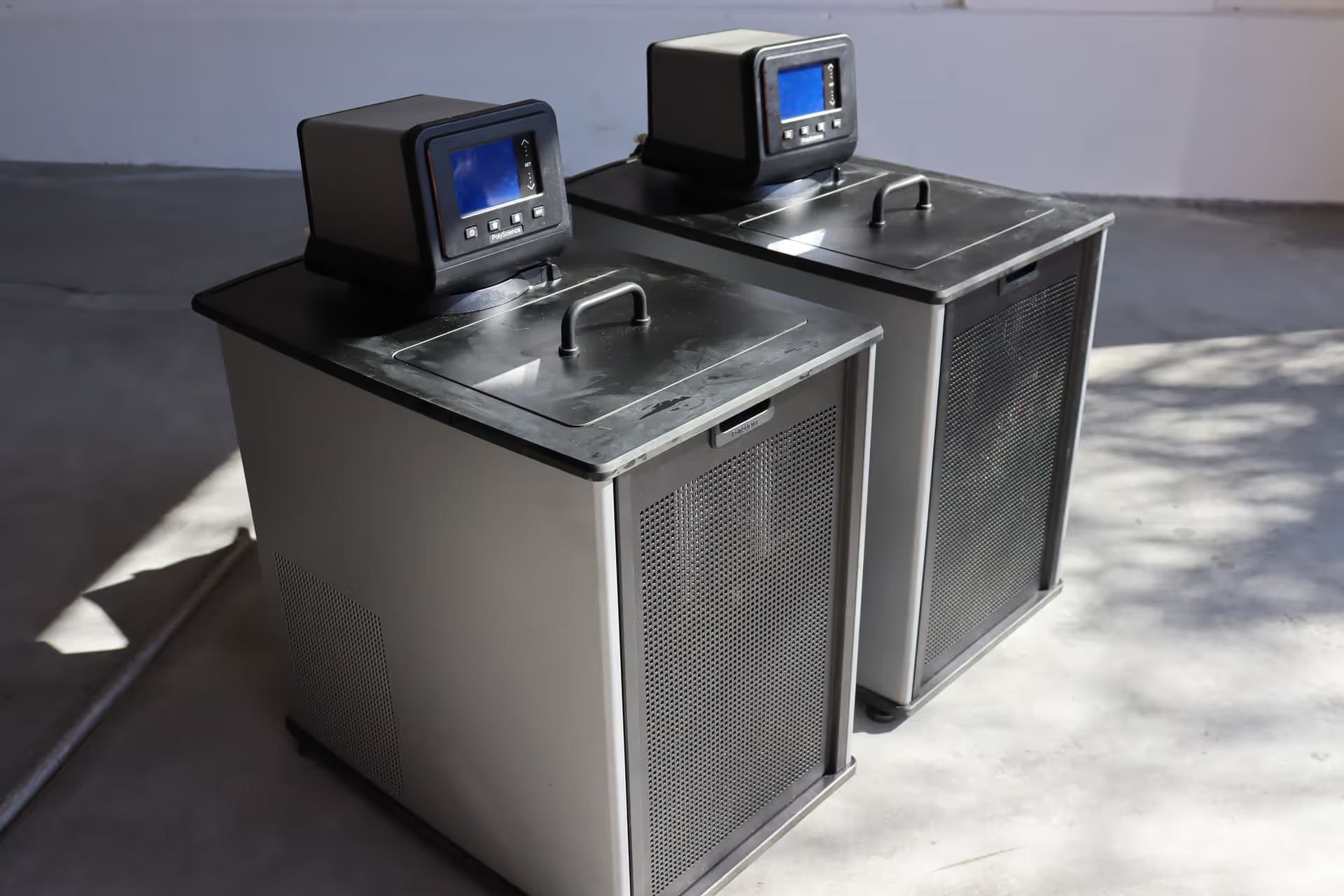
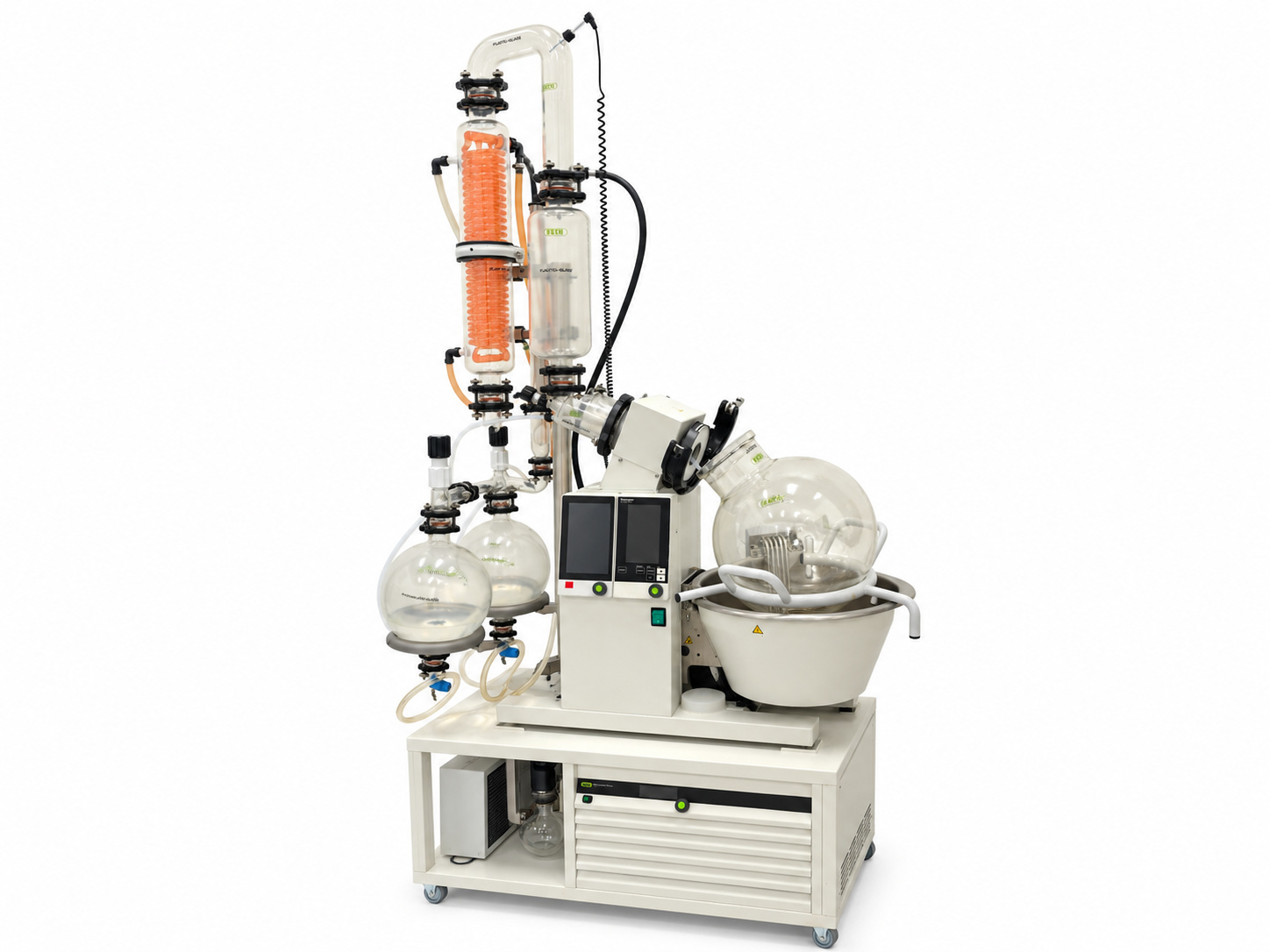
Start with daily biomass volume, target recovery, operating hours and product mix. Then size every connected stage: material preparation, extraction, filtration, solvent recovery, distillation and final product handling. A fast extractor cannot compensate for an undersized chiller, rotovap or filtration skid. For cold-ethanol systems, use the ethanol chiller sizing guide. For solvent recovery, review the rotary evaporator buying guide.
Account for Utilities and Facility Requirements
Confirm electrical service, heating and cooling loads, ventilation, compressed air, solvent storage, drainage, floor loading and room classification before committing to equipment. Hydrocarbon systems require coordinated hazardous-location design. Solventless production avoids solvent recovery but adds cold-room, wash and freeze-drying requirements. Distillation adds deep-vacuum, heating and cold-trap capacity. The distillation equipment guide and commercial rosin equipment guide cover those systems in more detail.
New Versus Used Extraction Equipment
New equipment may provide warranty coverage, current controls and manufacturer commissioning. Used equipment can reduce capital cost, but condition, service history, seals, pumps, controls, pressure components and available documentation must be verified. Before purchasing a used system, follow the used-equipment acceptance testing checklist.
What to Verify Before Requesting a Quote
- Feedstock type and daily volume
- Target products and required purity
- Batch size, cycle time and operating hours
- Available power, cooling, ventilation and room classification
- Downstream filtration, recovery and distillation capacity
- Installation, training, validation and spare-parts requirements
- Condition documentation and acceptance criteria for used equipment
Browse Current Equipment
This guide is the educational resource for extraction-equipment selection. The commercial inventory lives separately at Used Cannabis Extraction Equipment for Sale, where current listings can be reviewed by equipment type and condition.
.jpeg)
.jpeg)