Virginia cannabis licensing, facility design and equipment.
Virginia's adult-use market opens July 1, 2027. Draft rules are out, conversion and microbusiness applications open by February 1, 2027, and the room you design now is the room you inspect next year.
Draft rules out; applications open by February 1, 2027; sales July 1, 2027
Syncing and validating with
Where Virginia is today
Adult possession has been legal in Virginia since 2021. The retail framework was enacted through the 2026 budget bill after the standalone bills were vetoed, and the Virginia Cannabis Control Authority (CCA) regulates the market. Draft regulations were released in September 2026 and are scheduled to take effect in January 2027.
- 2021. Adult possession and home cultivation legal; retail sales left for later.
- June 2026. Retail framework enacted through the budget bill.
- September 2026. CCA releases the draft retail market regulations.
- October to December 2026. Public health advisory council reviews the draft.
- January 2027. Regulations published and effective.
- By February 1, 2027. Conversion applications and some microbusiness applications open.
- By May 1, 2027. CCA issues certain initial licenses.
- July 1, 2027. Retail sales begin.
How to get a Virginia cannabis license
- Know the window. No Virginia adult-use application window is open as of October 2026. The CCA plans to finalize its regulations in December 2026 and publish them, effective, in January 2027. Track the dates against Virginia and the other state programs.
- Check whether you can convert. By February 1, 2027 the CCA opens conversion applications for pharmaceutical processors and industrial hemp processors or growers, and starts the application process for some microbusiness licenses. The CCA must issue certain initial licenses by May 1, 2027.
- Pick the license and the tier. The September 2026 draft sets five cultivation tiers from 5,000 to 35,000 sq ft of canopy, and Tiers III to V are indoor only. Size the business in a cultivation business plan before you size the building.
- Lock the site. Get zoning confirmed in writing by the locality, then check the draft 1,000 ft retail setback from schools and child day programs. A locality can shorten the state's minimum distances by ordinance, so ask before you rule a site out.
- Build the equipment list, then the drawings. Run the room program, MEP loads and equipment schedule together so the application and the build describe the same facility. Design the facility around the equipment list, not the architecture.
- Hold a line for fees. The CCA says it is still setting license costs. Carry a placeholder in the model and update it when the final regulations publish. If you are weighing a second market, the Maryland cannabis license hub covers a program that is already licensing.
- Take the right next step. Retail-only applicants: start with a Virginia cannabis compliance review of the site, setbacks and security plan. Cultivation, processing and microbusiness applicants: start with new license facility planning so the room program matches the tier.
What the state issues, and what each one needs built
The CCA licenses cultivation, processing, testing laboratories, transporters, delivery operators, retail stores, dual-use businesses and microbusinesses.
- Cultivation, draft tiers: Tier I up to 5,000 sq ft of canopy, Tier II up to 10,000, Tier III up to 15,000, Tier IV up to 25,000, Tier V up to 35,000. Tiers III to V are indoor only; the draft caps Tier V at 5 facilities.
- Microbusiness, draft: vertically integrated, about 5,000 sq ft indoor or 10,000 sq ft outdoor canopy, up to two locations within 20 miles.
- Retail, draft: up to 350 stores statewide, 2,500 sq ft of retail floor.
Tier sizes and caps are from the September 2026 draft; the final regulations govern.
What a Virginia facility costs to design and build.
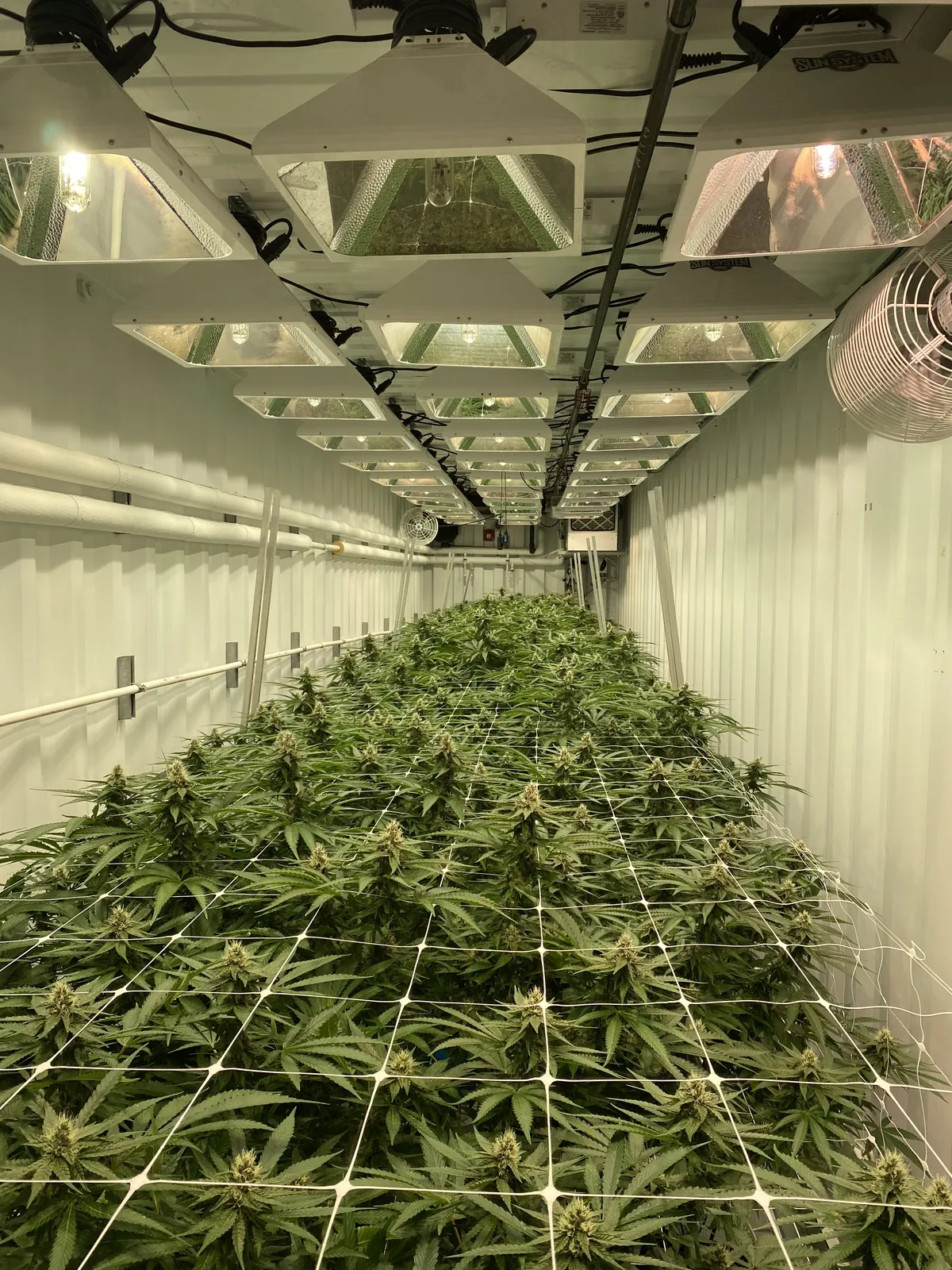
Virginia's draft tiers set the size of the building. Plan on about 2 sq ft of building per sq ft of canopy once veg, mothers, dry and cure, processing, vault and support space are added. At $150 to $500+ per sq ft:
- Tier I, up to 5,000 sq ft of canopy: about 10,000 sq ft of building, $1.5M to $5M+.
- Tier III, up to 15,000 sq ft, indoor only: about 30,000 sq ft, $4.5M to $15M+.
- Tier V, up to 35,000 sq ft, indoor only and capped at 5 facilities in the draft: about 70,000 sq ft, $10.5M to $35M+.
Indoor-only tiers put the operating cost in power. Virginia commercial customers paid an average of 9.95 cents per kWh in 2025, against 13.37 cents nationally (EIA Electric Power Annual, 2025 commercial average). Price lighting, cooling and dehumidification at that rate; the cannabis HVAC design guide covers the loads.
Permitting: Virginia law keeps local zoning, land use and business license requirements with the locality (Va. Code § 4.1-629), so the zoning answer comes before paid drawings. A design package takes 30 to 60 days and the build runs 3 to 6 months after permits. The room-by-room facility design guide shows what goes into each room.
Virginia specifics
The draft requires seed-to-sale tracking from cultivation through delivery, destruction of batches that fail health and safety testing unless they are remediated, and child-resistant, opaque packaging with a QR code linking to the certificate of analysis.
| Topic | Virginia rule | Design response |
|---|---|---|
| Canopy tier | Draft Tiers III to V are indoor only | Room program sized to the tier before the application |
| Testing and labeling | Draft: failed batches destroyed unless remediated; QR code to the COA | In-house QC on the equipment schedule |
| Tracking | Draft: seed-to-sale from cultivation through delivery | Weigh stations and tagging points in the layout |
| Retail setbacks | Draft: 1,000 ft from schools and child day programs | Site check before the design starts |
| Extraction, odor, security, water | Set in the final regulations | Designed to the final rule; C1D1, carbon and HVAC, cameras and drains in the MEP set |
What the same work did for an operator like you
What a Virginia applicant gets from the design desk.
- Tier-matched cannabis facility design for indoor Tiers III to V: HVAC, dehumidification and airflow by room
- A cannabis facility design package in 30 to 60 days: layout, MEP set and equipment schedule for the application and the zoning review
- Cannabis financial modeling built from the room data, with a CCA fee line ready for the final regulations
- New and used equipment options with cannabis equipment financing paths for the build budget
Virginia questions
When do Virginia cannabis applications open?
The CCA's published timeline opens conversion applications and some microbusiness applications by February 1, 2027, and issues certain initial licenses by May 1, 2027. Retail sales begin July 1, 2027. For a program whose licensees are already on a build clock, see Delaware licensing and facility rules.
How much canopy can a Virginia cultivator have?
The September 2026 draft sets five tiers from 5,000 to 35,000 sq ft of canopy, with Tiers III to V indoor only. The final regulations govern. Indoor tiers carry heavy cooling and dehumidification loads; the cannabis HVAC climate guide covers the math.
How much does a Virginia cultivation facility cost?
Indoor builds run $150 to $500+ per square foot depending on the room program and envelope. The design package sets the number for your site. The CCA has not yet published license costs, so the fee line stays open until it does.
How long does design and build take?
A design package takes 30 to 60 days. The build runs 3 to 6 months after permits. The commercial grow room equipment list covers the 12 systems the schedule has to carry.
Where the Virginia rules on this page come from
- Virginia Cannabis Control Authority, Retail Marijuana Market, timeline from the September 2026 draft to July 1, 2027 sales, and the license types
- Virginia Cannabis Control Authority, Frequently Asked Questions, July 1, 2027 sales date, applications for some license types by February 1, 2027, license costs still being set
- Virginia Cannabis Control Authority, initial draft of retail marijuana regulations (September 2026), cultivation tiers, Tier V cap, microbusiness and retail limits, setbacks, testing, packaging and tracking
- Code of Virginia § 4.1-629, local zoning, land use and business license authority over licensees, and local reduction of distance rules (2026, Sp. Sess. I, c. 1)
- Virginia Cannabis Control Authority, History of Cannabis Regulation in Virginia, retail sales begin July 1, 2027
- Virginia Cannabis Control Authority, Metrc chosen for new seed-to-sale tracking system, the CCA's seed-to-sale tracking program
- U.S. Energy Information Administration, Electric Power Annual, Table 2.10, 2025 average commercial electricity price by state and the U.S. average
Regulator: Virginia Cannabis Control Authority. Last reviewed October 23, 2026.
 Record last reviewed May 26, 2026