Maryland cannabis licensing, facility design and equipment.
No new Maryland cannabis license can be applied for as of October 2026: no window is open and Round 2 has no date. Round 1 conditional licensees have 24 months, plus up to two 6-month extensions, to open. That clock now drives every site, design and build decision in the state.
No application window; Round 1 conditional licensees get 24 months plus up to two 6-month extensions
Syncing and validating with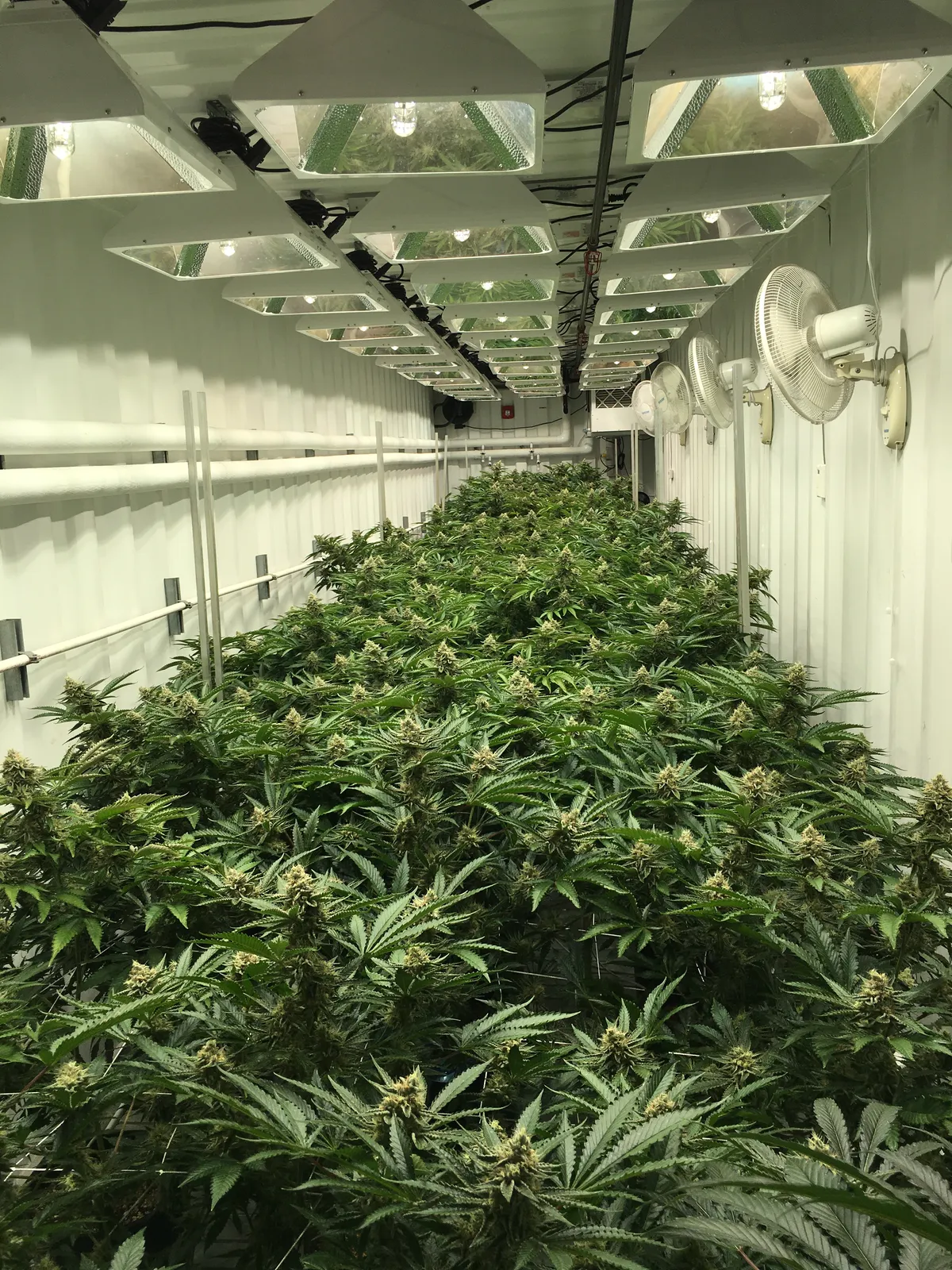
Where Maryland is today
Maryland is an operating adult-use and medical market regulated by the Maryland Cannabis Administration (MCA) under COMAR 14.17. No application window is open as of October 2026, and Round 2 has no date. Round 1, open only to social equity applicants, produced 192 conditional licensees, and 13 had full licenses by the MCA's February 2026 budget testimony. Their 24-month build clock is what separates Maryland from the other programs in our map of cannabis licensing in every state.
- November 8, 2022. Voters approve Question 4, about 67% in favor.
- May 3, 2023. The Cannabis Reform Act is signed.
- July 1, 2023. Adult-use sales begin.
- November 13 to December 12, 2023. Round 1 window, social equity applicants only; more than 1,700 applications.
- March 14 and June 28, 2024. Lotteries select 205 applicants; 192 go on to conditional licenses.
- July 2024. The first conditional licenses are issued.
- October 2025. The conditional license period is extended from 18 to 24 months.
- September 14, 2026. Rules take effect allowing up to two 6-month extensions and requiring a root-cause investigation after repeated failed tests.
How to get a Maryland cannabis license
- Know that no window is open. The MCA has no date for Round 2 and must announce a round 60 days before a 30-day application period. If you need a window sooner, compare the Virginia cannabis license timeline.
- Know what cannot be bought. A conditional license cannot be sold or transferred, control of a Round 1 license is locked for five years after final licensure, and any other transfer needs the MCA's written approval.
- If you hold a conditional license, lock the premises. Location review is the second of the MCA's five licensing phases, and extensions rest on the same site: active interest in or legal control of a premises for the first, legal control or possession for the second.
- File corporate documents and show capital. Corporate review takes about 30 days, or up to 60 if documents are incomplete or revised. Undisclosed financing and unapproved management agreements are common delays, so start from a cannabis cultivation business plan.
- Build to the inspection. Inspectors check security systems and vaults, and the MCA recommends a walk-through before vault walls are closed or drains are covered.
- Take the path for your license type. Dispensary-only: standard dispensaries sit 500 feet from schools, child care centers, playgrounds, libraries, places of worship and parks and 1,000 feet from another dispensary (counties can adjust the spacing), and micro dispensaries deliver only. Start with Maryland cannabis compliance. Cultivation or processing: stay in your awarded region unless you file a co-location agreement, and size rooms to the canopy cap with a cannabis facility design package.
What the state issues, and what each one needs built
The MCA issues standard and micro licenses for growers, processors and dispensaries, plus incubator space and on-site consumption licenses. Each license covers one premises, and one owner may hold one grower, one processor and up to four dispensary licenses.
- Standard grower: up to 300,000 sq ft of indoor canopy or 1,200,000 sq ft outdoor.
- Micro grower: up to 10,000 sq ft of indoor canopy or the outdoor equivalent (1 sq ft indoor equals 4 outdoor). Can apply to convert to standard after 24 months of operation.
- Micro dispensary: delivery only, no storefront, up to 20 registered agents since July 1, 2026.
- Round 1 offered: 75 standard and 8 micro dispensaries, 16 standard and 24 micro growers, 32 standard and 24 micro processors.
- Fees: $5,000 to apply for a standard license, $1,000 for micro. Initial standard license fees are capped at $50,000, with at least 50% off for social equity and micro licenses.
What a Maryland facility costs to design and build.
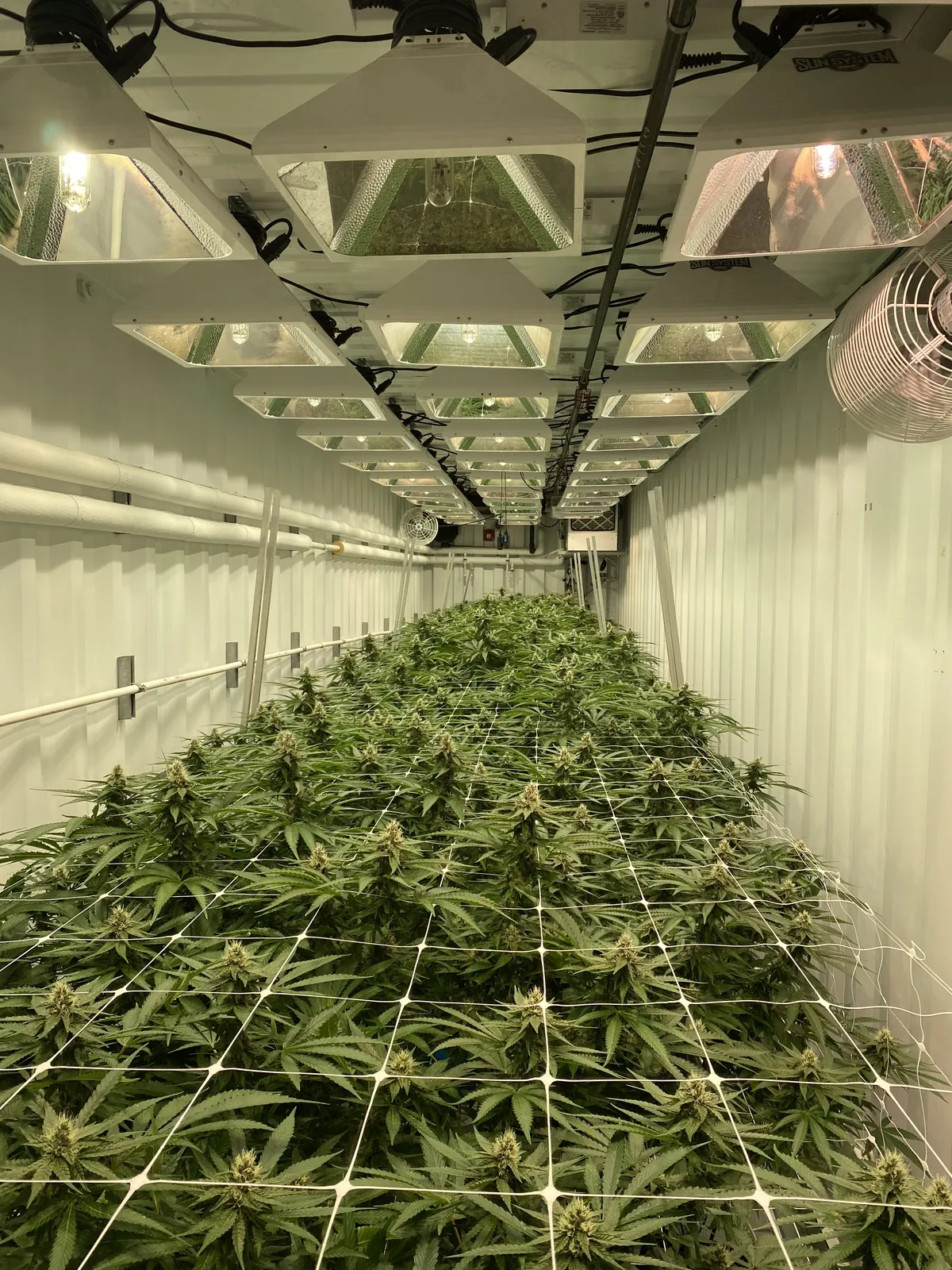
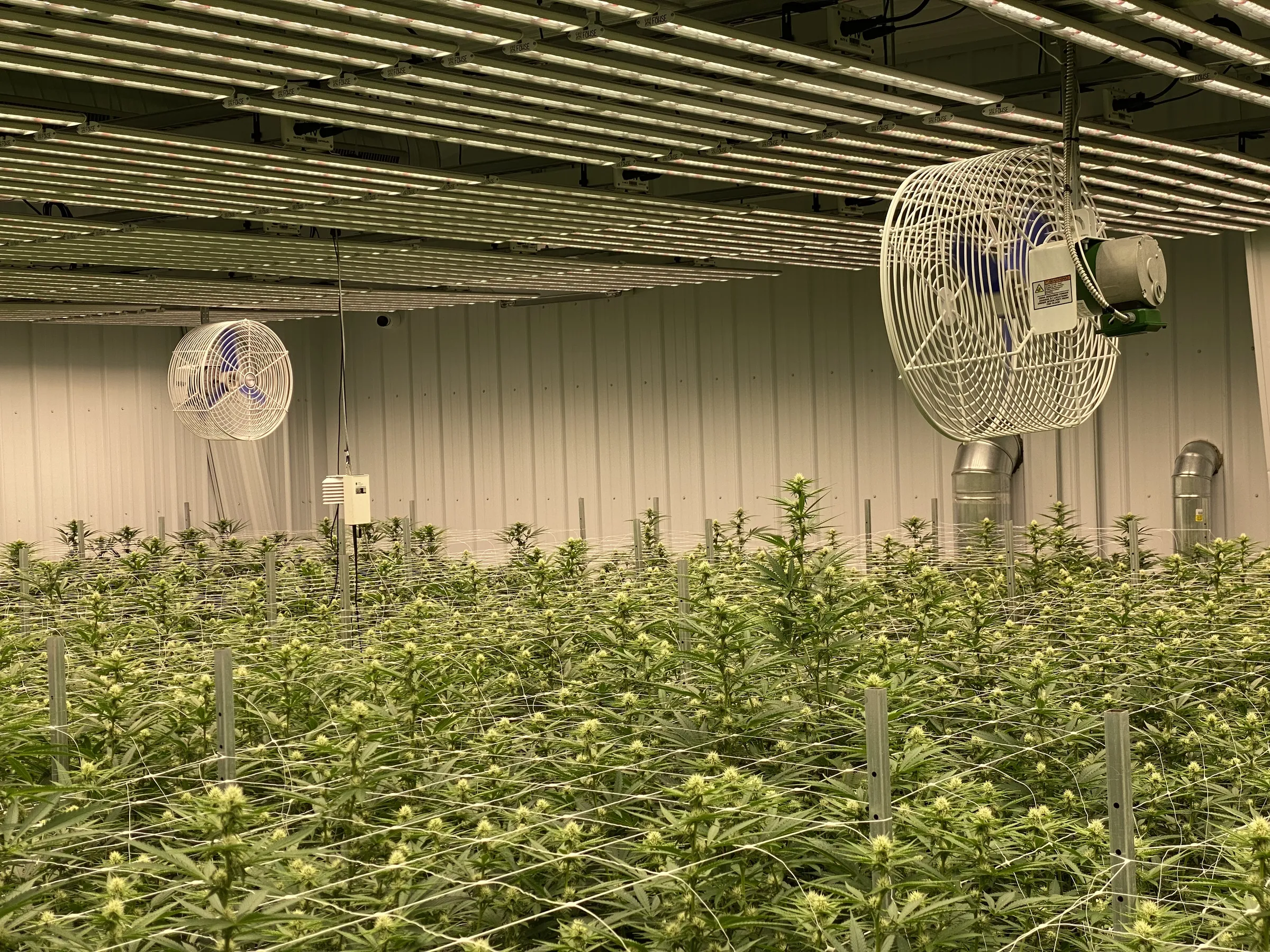
Maryland counts canopy on flowering area only, but every flowering tier counts, so stacked racks add no canopy under the cap. A micro grow's 10,000 sq ft, priced on canopy alone at $150 to $500+ per sq ft, comes to $1.5 million to $5 million or more before veg, drying, trim, vault and packaging rooms add building area.
Maryland's average commercial electricity price was 14.72 cents per kWh in 2025, above the 13.37-cent U.S. average (EIA Electric Power Annual, Table 2.10), so model lighting and dehumidification load before you lock the room count.
Local permitting adds scope. In Queen Anne's County, Ordinance 25-01 sets a 300-foot setback for grower buildings and requires an odor abatement plan prepared by a professional mechanical engineer and a certified industrial hygienist.
Design takes 30 to 60 days and the build 3 to 6 months after permits. A July 2024 award with both extensions runs out in July 2027. Our container cultivation case study took small canopies from 13 to 35 pounds per container, and cannabis equipment financing spreads the equipment cost.
Maryland specifics
Every lot is tested by an MCA-registered independent lab. A pathogen positive stops production and triggers quarantine, decontamination and swabbing, and repeat failures now require a root-cause investigation. Inventory runs in Metrc, and inspectors spot-check it.
Inspectors may ask an operating licensee for 90 days of video. Dispensaries record every exit and every packaging, storage and dispensing area, with 48 hours of security backup power. Outdoor grows need perimeter fencing, a monitored alarm and video of the whole perimeter.
Solvent rooms fall under OSHA and local fire, safety and building codes, so plan ethanol storage to NFPA 30 solvent room design.
| Topic | Maryland rule | Design response |
|---|---|---|
| Canopy | Micro 10,000 sq ft indoor, standard 300,000; each flowering tier counts; reported by October 1 | Flower rooms sized to the cap, designed around the equipment list |
| Extraction | Professional-grade closed loop that recovers solvent; spark-free, ventilated room | Rated room in the MEP set to C1D1 room requirements |
| Testing | A pathogen positive stops production; repeat failures require root cause and decontamination | Protocol before first harvest from cannabis microbial testing compliance |
| Security | 90 days of video; inspectors check security systems and vaults | Camera, vault and power plan in the cannabis facility design guide |
| Odor | Local zoning: Queen Anne's County requires a mechanical engineer and industrial hygienist odor plan | Carbon filtration and exhaust in the cannabis HVAC design |
| Edibles | Adult-use cap of 10 mg THC per serving and 100 mg per package | Dosing and packaging line sized to the cap with edibles production equipment |
What the same work did for an operator like you
What a Maryland applicant gets from the design desk.
- New license facility planning: your lease or letter of intent checked against local zoning before you sign.
- Cannabis facility design sized to the canopy cap, with extraction room, cameras and vault drawn for MCA facility review.
- Cannabis financial modeling built from the room program, for the MCA's capitalization review and your lender.
- Cannabis microbial pathogen mitigation: a testing and sanitation protocol in place before the first lot goes to the lab.
Maryland questions
How do I open a dispensary in Maryland?
You cannot apply for a new Maryland dispensary license as of October 2026, because no window is open and Round 2 has no date. Operating licenses change hands only with the MCA's written approval, conditional licenses not at all, and one owner can hold four dispensary licenses at most. If you are weighing a nearby market, compare Delaware licensing and facility rules.
How do I get a Maryland cannabis license?
Prepare for the next round now, because no application window is open. The MCA must give 60 days' notice before a 30-day application period, and in February 2026 it said it was reviewing the October 2025 MDOT disparity study with counsel before a second round.
How long do Maryland conditional licensees have to open?
Conditional licensees have 24 months from award, plus up to two extensions of up to 6 months each. The MCA asks for requests at least 30 days before expiry, and the license stays in effect during review. A licensee not operational after the second extension can be revoked.
How much does a Maryland cannabis license cost?
The application fee is $5,000 for a standard license and $1,000 for a micro license, and initial standard license fees are capped at $50,000. The building costs far more: indoor builds run $150 to $500+ per sq ft.
How big can a micro grow be in Maryland?
A Maryland micro grow can have up to 10,000 sq ft of indoor canopy, or 40,000 sq ft outdoor at the 1 to 4 ratio. Each flowering tier counts toward the cap.
What happens when a Maryland grow fails microbial testing?
Production stops, affected product is quarantined, and rooms are decontaminated and swabbed; repeat failures add a root-cause investigation. Our guide on how to pass microbial testing covers prevention.
Where the Maryland rules on this page come from
- MCA, Conditional License Extension Requests, 24-month period, first licenses July 2024, filing rules
- MCA, Conditional License Extension Guidance, 18 to 24 months, two 6-month extensions
- Maryland Register, Notice of Final Action, September 4, 2026, rules effective September 14, 2026
- MCA FY2027 budget testimony, lotteries, 192 conditional and 13 full licenses, Round 2 status
- MCA, Adult-Use Cannabis Implementation, 2022 to 2024 milestones
- MCA, Cannabis Policy FAQs, micro canopy, one premises, regions, round notice
- MCA, Canopy Guidance, 300,000 sq ft cap and canopy measurement
- COMAR 14.17.11.19, extraction requirements
- Md. Code, Alcoholic Beverages and Cannabis, Section 36-403, application fees and license fee caps
- MCA, Guidance on Transfers During Pre-Approval or Conditional Licensure, transfer limits
- EIA Electric Power Annual, Table 2.10 (2025), average commercial electricity price by state
Regulator: Maryland Cannabis Administration. Last reviewed October 23, 2026.
 Record last reviewed May 26, 2026