Kansas cannabis licensing, facility design and equipment.
Kansas cannabis has no commercial license as of Nov. 2026: no medical program, no adult use, no decriminalization. The Kansas medical cannabis act, SB 294, sat in a Senate committee from March 2025 until it died on April 10, 2026. What exists is a Kansas Department of Agriculture hemp program with final products capped at 0.3% total THC.
SB 294 medical cannabis act died in committee April 10, 2026; no cannabis license exists
Syncing and validating with
Where Kansas is today
Kansas has no cannabis regulator because it has no cannabis program. The only licensed activity is hemp, run by the Kansas Department of Agriculture under the Commercial Industrial Hemp Act, K.S.A. 2-3901, with producer licenses that expire Dec. 31 each year and final products held to 0.3% total THC. Smokable hemp formats are barred under K.S.A. 2-3908.
The medical path has stalled for five years: the House passed a bill in 2021, a 2024 motion to force SB 135 to the Senate floor failed 12 to 25, and SB 294 died in the Senate Federal and State Affairs Committee on April 10, 2026 without a hearing. Compare Kansas with cannabis licensing in every state.
- 2021. KDA opens the first commercial hemp producer license cycle on Jan. 8; the House passes a medical bill 79 to 42 that the Senate never votes on.
- 2024. Motion to pull medical bill SB 135 from committee fails 12 to 25; a pilot program bill is tabled.
- March 6, 2025. SB 294, the Kansas medical cannabis act, is introduced, then referred to Senate Federal and State Affairs the next day; SB 292 on hemp-derived cannabinoid products is filed the same session.
- April 10, 2026. SB 294 dies in committee without a hearing.
- Jan. 2027. New two-year session begins; any medical bill must be refiled.
How to get a Kansas cannabis license
- Watch the 2027 refile. SB 294 is dead and bills do not carry past the two-year session; a new medical cannabis act needs a Senate Federal and State Affairs hearing to move.
- Hold a KDA hemp producer license if cultivation is the plan: fees were $100 to apply and $1,200 on approval at the 2021 launch, and KDA's page lists a March 15 deadline for the 2024 season, so confirm both with KDA.
- Build next door. See Missouri cannabis licensing for the adult use market where 1,834 Kansans already held medical cards in 2024, or Nebraska for that state's medical program status.
- Prepare the facility plan. A facility design on paper means day one of a program is not day one of design.
- Pick your starting point. Dispensary plans: cannabis financial modeling for a future medical license. Cultivation and processing plans: facility design for new licenses or a hemp fiber and extraction site today.
What the state issues, and what each one needs built
- Cannabis: none. Kansas issues no medical or adult use license and no CBD dispensing license; CBD products are legal only as hemp products at or below 0.3% total THC.
- Commercial hemp producer (KDA). $100 application and $1,200 license fee at the 2021 launch, fingerprint background check within 30 days of filing, calendar-year term ending Dec. 31, acreage reported to USDA FSA. Confirm the current fee with KDA before budgeting.
- Hemp processing. KDA's K.A.R. 4-34-12 lists processor fees of $3,000 (fiber or grain) and $6,000 (floral) per facility under the research program and a $250 THC test fee; a 2024 Kansas Legislature supplemental note on HB 2168 says the State Fire Marshal, not KDA, regulates hemp processors.
What a Kansas facility costs to design and build.
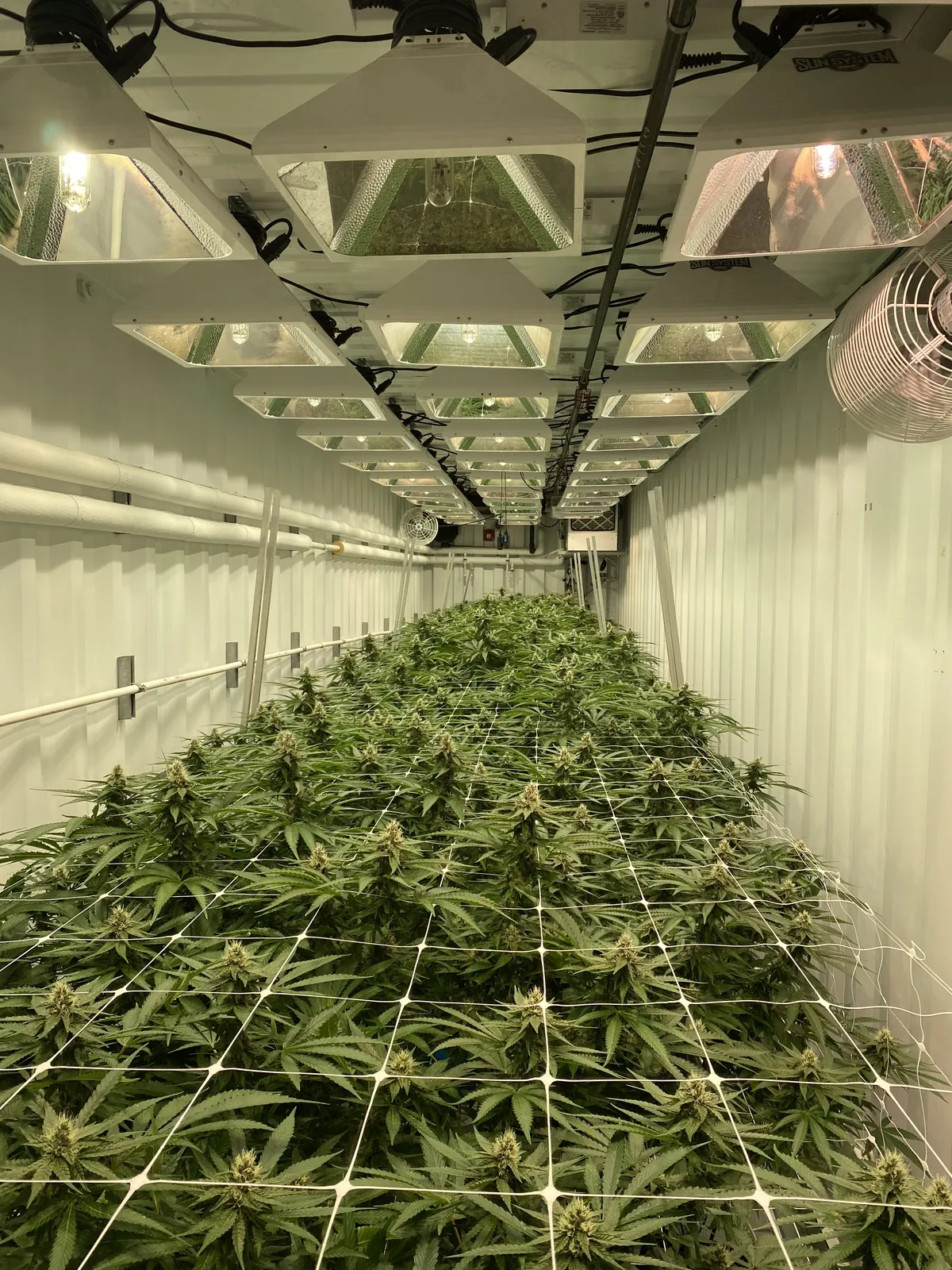
Kansas's average commercial electricity price was 11.19 cents per kWh in 2025 against a 13.37 cent U.S. average, per EIA Electric Power Annual, Table 2.10. Hot, humid summers put dehumidification first in the load calculation and cold winters add heating. If a program opens, an indoor build runs $150 to $500+ per sq ft, so 10,000 sq ft is $1.5 million to $5 million or more, with design in 30 to 60 days and construction 3 to 6 months after permits.
Kansas specifics
Hemp testing. KDA samples licensed hemp against the 0.3% THC limit and charges $250 per THC lab test and $45 per hour for repeat sampling (K.A.R. 4-34-12). KDA reads total THC, delta-9 plus THCA, for final products.
Hemp THC products. No per-serving milligram cap exists in Kansas law; products pass or fail on 0.3% total THC, and smokable or vape hemp is barred under K.S.A. 2-3908. SB 292 (2025) would have added a 21 and over rule, certificates of analysis and tamper-evident and child-resistant packaging; the Kansas Legislature lists it as died, never past introduction.
Fire code. The State Fire Marshal regulates hemp processors; confirm the fire code edition it and the local jurisdiction enforce before designing a solvent extraction room.
| Topic | Kansas rule | Design response |
|---|---|---|
| Hemp extraction | Final product 0.3% total THC; processors would register with the fire marshal under SB 292 | Ethanol line with Buchi rotary evaporators and Across International vacuum ovens (extraction equipment guide) |
| Hemp testing | KDA sampling; $250 per THC test (K.A.R. 4-34-12) | In-house potency screen on Orange Photonics before KDA samples |
| Fire code | State fire marshal and local adoption | C1D1 room drawn before the lease |
| A future program | SB 294 (2025) would have licensed cultivation, processing, distribution and sale under one act | Sealed rooms with HVAC sized for hot, humid summers |
What the same work did for an operator like you
What a Kansas applicant gets from the design desk.
- A compliance review of a hemp processing plan against K.S.A. 2-3901 and the 0.3% total THC rule
- Facility design for a hemp extraction site that converts to medical processing if Kansas passes a program
- A facility design package in 30 to 60 days for a build in Missouri or another licensed neighbor
- Equipment from our distillation guide
Kansas questions
Is weed legal in Kansas in 2026?
No. Kansas has no medical or adult use program and has not decriminalized. Hemp and hemp products at or below 0.3% total THC are legal under the Commercial Industrial Hemp Act, but smokable hemp is not. SB 294, the medical cannabis act, died in committee on April 10, 2026.
What happened to the Kansas medical marijuana bill?
SB 294 was introduced March 6, 2025, referred to the Senate Federal and State Affairs Committee the next day and never received a hearing. It died in committee on April 10, 2026, and the Kansas Legislature's bill page lists its status as died.
Can I open a dispensary in Kansas?
No license exists. The nearest options are Missouri, Colorado and Oklahoma, and in Kansas KDA licenses only commercial hemp producers. In 2024, 1,834 Kansans held Missouri medical cards. Hemp retail needs no state license today.
Can I grow hemp in Kansas?
Yes, with a KDA commercial industrial hemp producer license: $100 application and $1,200 license fee at launch, a fingerprint background check within 30 days of filing and a license that expires Dec. 31. KDA says Kansas planted the fifth-most hemp acreage in the country in 2025, most of it for fiber.
Where the Kansas rules on this page come from
- Kansas Legislature: SB 294 (2025 to 2026), Kansas medical cannabis act, introduced only, died
- SB 294 action history, introduced March 6, 2025, died in committee April 10, 2026
- Kansas Legislature: SB 292 (2025 to 2026), hemp-derived cannabinoid products, status died
- SB 292 (2025) text, hemp-derived cannabinoid products, 21 and over, packaging, fire marshal registration
- KDA: Industrial hemp producer licensing, K.S.A. 2-3901, March 15 deadline, Dec. 31 expiration
- Kansas Legislature: supplemental note on Sub. for HB 2168 (2024), KDA licenses hemp producers, State Fire Marshal regulates processors
- K.A.R. 4-34-12, Fees, application, processor, sampling and THC test fees
- Cannabis Business Times, Jan. 11, 2021, commercial program launch, $100 and $1,200 fees
- EIA Electric Power Annual, Table 2.10 (2025), commercial electricity price by state
Regulator: Kansas Department of Agriculture, Industrial Hemp Program (no cannabis regulator). Last reviewed November 7, 2026.
 Record last reviewed