Hawaii cannabis licensing, facility design and equipment.
A Hawaii medical cannabis dispensary license is one of 8 vertically integrated licenses issued by the Department of Health in April 2016, and none has been issued since. As of Nov. 2026 there is no application window, and the 8 licensees ran 10 production centers and 24 retail locations on Dec. 23, 2025.
8 dispensary licenses, none issued since April 29, 2016; no application window open as of Nov. 2026
Syncing and validating with
Where Hawaii is today
Hawaii is a medical cannabis market with no adult use sales, run by the Department of Health's Office of Medical Cannabis Control and Regulation (OMCCR). HRS 329D-2 fixes the program at 8 licensees, 3 on Oahu, 2 each on Hawaii Island and Maui and 1 on Kauai, and no license has been issued since April 29, 2016. Each licensee may run 3 production centers and 2 retail locations, with up to 7,500 plants per production center and 15,000 in total.
Growth now comes from inside the 8: OMCCR counted 10 production centers and 24 retail locations on Dec. 23, 2025, and interim rule amendments approved Nov. 7, 2025 widened what dispensaries may sell. In 2026, low dose adult use bill SB 3275 cleared two Senate committees and was referred to Ways and Means and Judiciary. Compare Hawaii with cannabis licensing in every state.
- Jan. 12 to Jan. 29, 2016. The only open application period under HRS 329D-4. Eight licenses follow on April 29, 2016, each paying a $75,000 initial license fee.
- 2023. A four factor license fee schedule takes effect; fees collected rise from $400,000 in 2022 to $885,250.
- 2025 session. Act 269 orders a hemp retailer registry by Jan. 1, 2026.
- Nov. 7, 2025. Gov. Green approves HAR 11-850 interim amendments: dry herb vaporizers and rolling papers on dispensary shelves, no 30 day wait on dispensary to dispensary purchase plans.
- Jan. 20, 2026. OMCCR's annual report to the Legislature counts 10 production centers, 24 retail locations and 18 violations in 2025, most for tracking.
- February 2026. Low dose adult use bill SB 3275 clears two Senate committees and is referred to Ways and Means and Judiciary.
How to get a Hawaii cannabis license
- Know there is no window. HRS 329D-2 caps Hawaii at 8 licensees and DOH has issued none since April 29, 2016. Watch the Legislature, not OMCCR, for a change.
- Buy in or partner. The practical path is equity in one of the 8 or a supply, manufacturing or certified laboratory relationship.
- Plan to the plant cap. 7,500 plants per production center sets the room count. Model yield per plant and per room with cannabis cultivation consulting before you size the building.
- Design for one island. HRS 329D-6(m) bars moving cannabis between islands except in listed cases such as lab testing, so production, manufacturing and retail sit in one county. DOH gets the address and lease 30 days before production and 60 days before a retail opening.
- Pick your starting point. Dispensary plans: a new retail location needs 50 day video retention, an ID check at the door and 8 a.m. to 8 p.m. hours, so start with cannabis compliance consulting. Cultivation and processing plans: start new license facility planning for an enclosed indoor production center.
What the state issues, and what each one needs built
- Medical cannabis dispensary license. The only license. Each holder cultivates, manufactures and sells: up to 3 production centers and 2 retail locations (2 more allowed in rural areas), 7,500 plants per production center, 15,000 total. 8 issued, 8 active.
- Fees. $5,000 application (HAR 11-850-18), $75,000 initial license fee in 2016, then renewal fees of $400,000 a year across all 8 through 2022. A four factor schedule since 2023 collected $915,250 in 2025; fees may rise no more than 2.5% a year.
- Capital. Applicants must show at least $1,200,000 in financial resources (HRS 329D-4) and control of at least $1,000,000 to begin operating (HRS 329D-7).
- Certified laboratory. Independent labs certify under HAR 11-850 subchapter 9 and test every batch before dispensing. Not a dispensary license.
What a Hawaii facility costs to design and build.
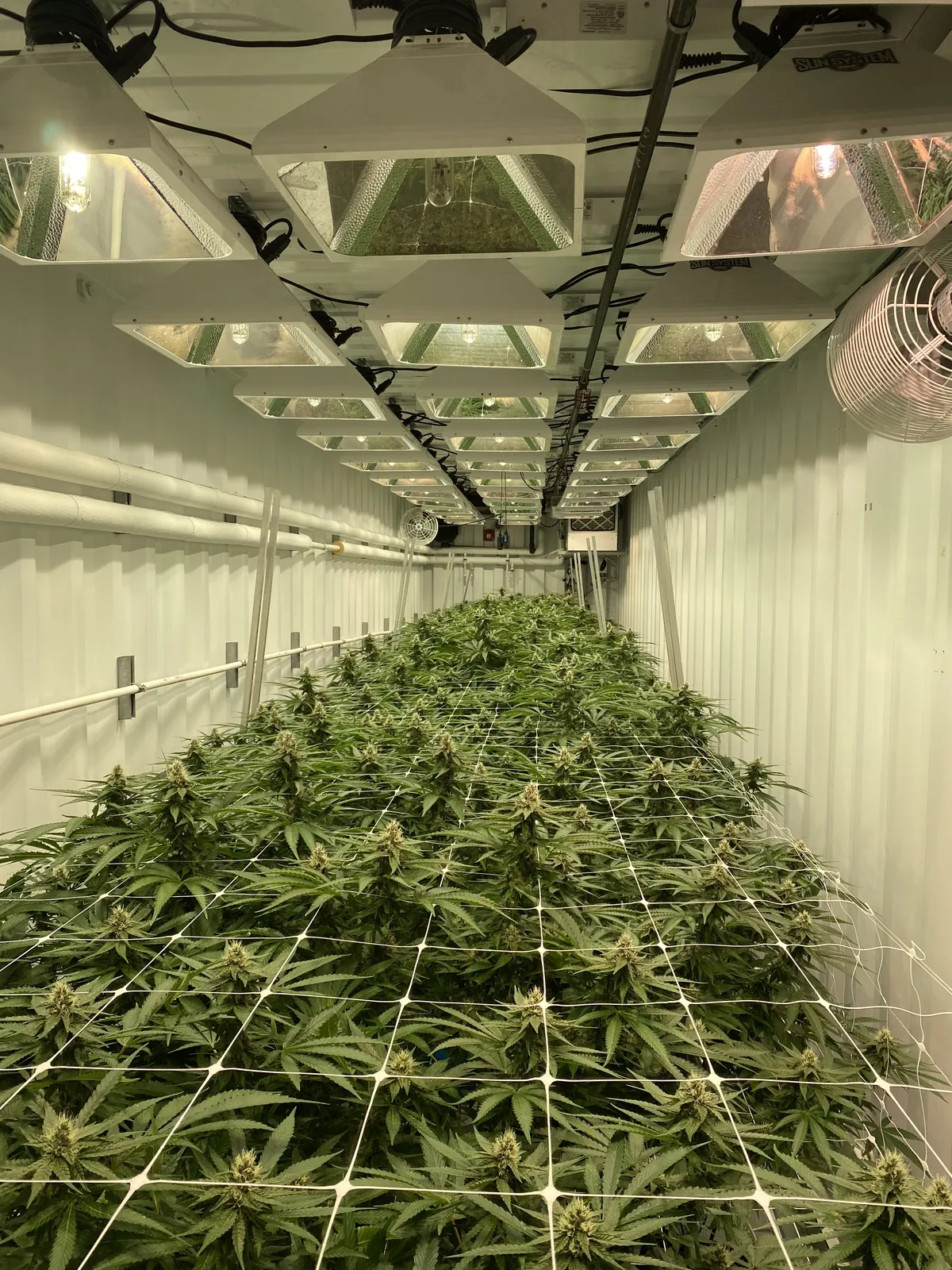
Size to the cap. A production center built for 7,500 plants in a 25,000 sq ft enclosed building runs $3.75 million to $12.5 million or more at $150 to $500+ per sq ft. Design takes 30 to 60 days and the build 3 to 6 months after permits; DOH needs the address and lease 30 days before production starts.
The state's average commercial electricity price was 36.31 cents per kWh in 2025, the highest in the nation and nearly three times the 13.37 cent U.S. average, per EIA Electric Power Annual, Table 2.10. Warm, humid air year round means dehumidification never cycles off, so model kWh per pound before you pick between sealed rooms and a notified greenhouse. Siting is set by statute: enclosed indoor only, no interisland transport, 8 a.m. to 8 p.m. retail hours.
Hawaii specifics
Testing. No product may be dispensed until a certified laboratory meeting HAR 11-850-134(b) has tested it and issued a certificate of analysis (HAR 11-850-78). Dispensaries keep the lab's attestation, batch results and proficiency tests on file.
Security. HRS 329D-7(6) requires video kept 50 days, perimeter fencing that blocks the view of cannabis and an alarm at production centers; retail doors check a government photo ID and DOH card. HRS 329D-6(f) makes every facility an enclosed indoor facility with 24 hour security, and a transparent roof needs DOH notice before construction.
Tracking. DOH runs a real time tracking system with 24 hour access to all dispensary data, and each dispensary must run a compatible system with an automatic purchase stopper (HRS 329D-6(j), (k)). HAR 11-850-61 tracking violations were the most common citation in 2025.
Packaging and edibles. Edibles are capped at 10 mg total THC per serving and 1,000 mg per package, must be homogeneous, and may not look like candy, use the word candy or take human, animal or fruit shapes (HAR 11-850-76). No cartoon characters on any packaging (HRS 329D-7(14)).
| Topic | Hawaii rule | Design response |
|---|---|---|
| Plant cap | 7,500 plants per production center, 15,000 per licensee | Yield per plant drives revenue, so rooms run on Gavita lighting (sourced on request) with Saturn Supply fertigation |
| Enclosed indoor facility | HRS 329D-6(f); transparent roof needs DOH notice | Sealed rooms or a notified greenhouse with Quest dehumidifiers (sourced on request) sized per our cannabis HVAC design guide |
| Edibles | 10 mg THC per serving, 1,000 mg per package, homogeneous (HAR 11-850-76) | Dosing line and tempering specified from our edibles equipment guide |
| Testing | Certified lab COA before dispensing (HAR 11-850-78) | Humid climate airflow and sanitation built for microbial pass rates |
| Security | 50 day video retention, fencing, alarm, ID check (HRS 329D-7(6)) | Camera, fence and vault plan in the facility design before permits |
What the same work did for an operator like you
What a Hawaii applicant gets from the design desk.
- A Hawaii cannabis compliance review against HRS 329D and HAR 11-850 before a new production center or retail location is filed with DOH
- Cannabis facility design for an enclosed indoor production center sized to 7,500 plants on one island
- A cannabis facility design package in 30 to 60 days with a kWh per pound model at 36 cents a kilowatt hour
- Manufacturing rooms specified from our cannabis extraction equipment guide for the 10 mg edibles cap
Hawaii questions
How do I open a dispensary in Hawaii?
You cannot apply for a new one. HRS 329D-2 limits Hawaii to 8 licensees and the Department of Health has issued none since April 29, 2016. The paths are equity in an existing licensee, supplying one as a certified laboratory, or waiting for the Legislature to change HRS 329D.
How much does a Hawaii dispensary license cost?
The 2016 round charged a $5,000 application fee and a $75,000 initial license fee, then $400,000 a year in renewals across all 8 licensees. A four factor schedule since 2023 collected $915,250 in 2025, and HRS 329D-7 caps increases at 2.5% a year. Applicants also showed $1,200,000 in financial resources.
Is recreational cannabis legal in Hawaii 2026?
No. Hawaii licenses only medical cannabis dispensaries under HRS 329D. Low dose adult use bill SB 3275 cleared two Senate committees in February 2026 and was referred to Ways and Means and Judiciary; as drafted it would not take effect before Jan. 1, 2027.
Can a Hawaii dispensary grow outdoors or in a greenhouse?
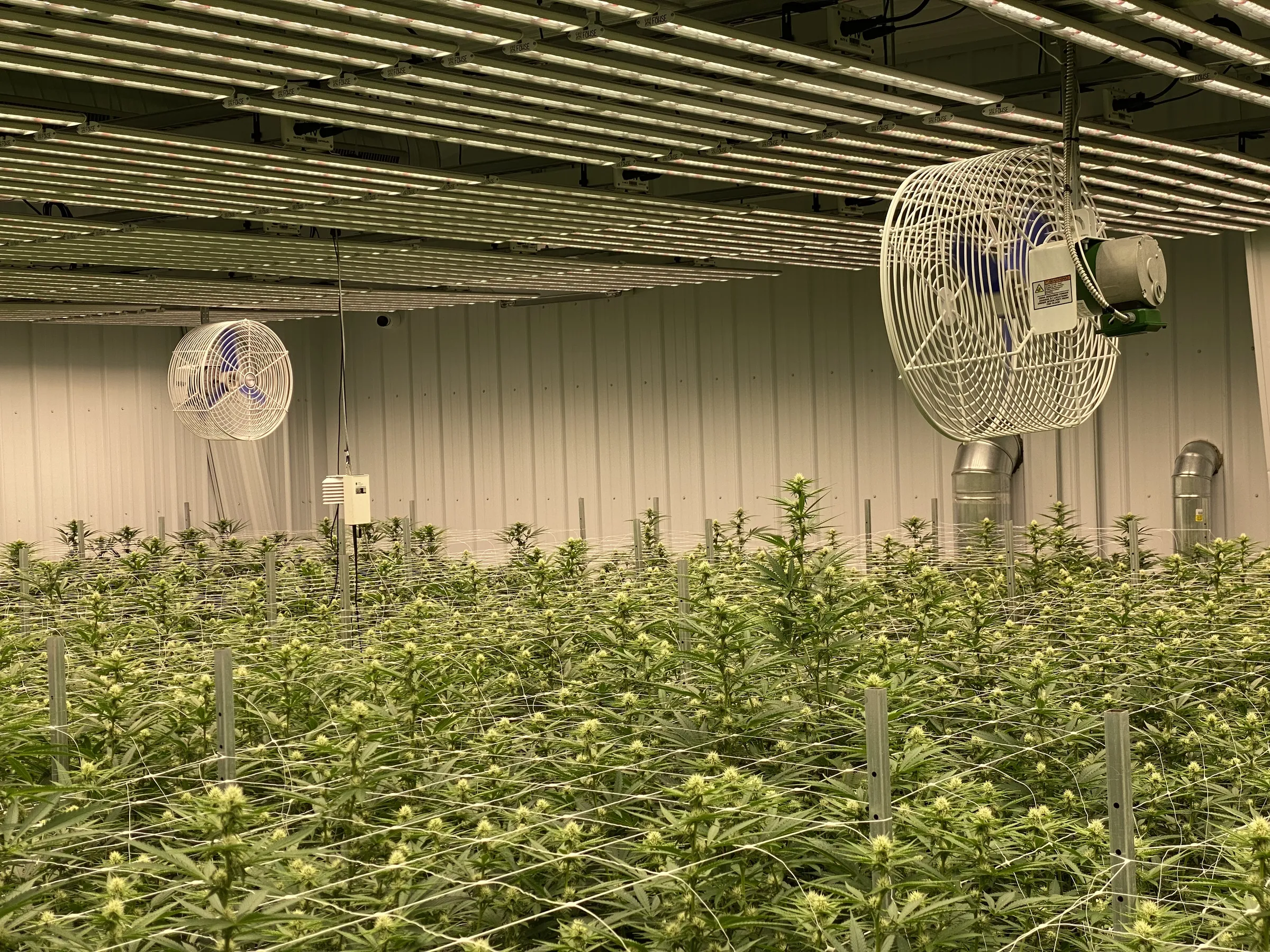
Not outdoors. HRS 329D-6(f) requires every production center to be an enclosed indoor facility. A greenhouse with a transparent or translucent roof is allowed only if the licensee notifies DOH before building it. The 7,500 plant cap still applies, and humid air sets the dehumidifier load.
Can cannabis move between Hawaiian islands?
No. HRS 329D-6(m) bars a dispensary from transporting cannabis or products to another county or island, with narrow exceptions such as laboratory testing. Each licensee's production centers and retail locations sit in one county, so design each island's facility as a complete program, as a Nevada vertical operator does.
Where the Hawaii rules on this page come from
- OMCCR: Medical Cannabis Dispensary Licensing Annual Report to the 2026 Legislature, 8 licensees, facility counts, plant caps, fees collected, Nov. 7, 2025 rule amendments, Act 269
- HRS 329D-4, 2016 application period, license fee timing, $1,200,000 financial resources
- HRS 329D-6, enclosed indoor facilities, hours, tracking system, interisland transport ban, 30 and 60 day notices
- HRS 329D-7, fee rules, $1,000,000 control, 50-day video retention, security, purchase limits, packaging
- HAR 11-850-18, $5,000 application fee
- HAR 11-850-76, edibles 10 mg per serving and 1,000 mg per package
- HAR 11-850-78, laboratory testing documentation before dispensing
- Hawaii Senate, Stand. Com. Rep. No. 2654 on SB 3275 SD1, 2026 low dose bill committee action
- EIA Electric Power Annual, Table 2.10 (2025), average commercial electricity price by state
Regulator: Hawaii Department of Health, Office of Medical Cannabis Control and Regulation. Last reviewed November 7, 2026.
 Record last reviewed