Louisiana cannabis licensing, facility design and equipment.
A Louisiana medical marijuana license is capped at two production licenses by statute and 10 base retail permits by LDH rule, all held, so no application window exists as of Nov. 2026. LDH took over retailers Jan. 1, 2025 and adopted final rules Jan. 20, 2026; hemp THC consumables run under a separate 5 mg per serving permit.
Two production licenses and 10 retail permits, all held; LDH final rules effective Jan. 20, 2026; no window
Syncing and validating with
Where Louisiana is today
Louisiana is a medical-only program run since Aug. 1, 2022 by the Louisiana Department of Health, which also took over retailers from the Board of Pharmacy on Jan. 1, 2025 under Act 693 of 2024. Act 150 of 2024 caps production at two licenses, held by Advanced Biomedics (Ilera) and Good Day Farm Louisiana, and extends the program to July 1, 2030. Retail is 10 base permits across 9 regions with up to 20 satellites; LDH says no new base permits may issue.
Final rules took effect Jan. 20, 2026: a $100,000 annual administration fee per production license, retailer operating rules and point-of-sale tracking. Hemp-derived THC products follow a separate LDH permit capped at 5 mg per serving and 40 mg per package. Compare Louisiana with cannabis licensing in every state.
- Aug. 1, 2022. Acts 491, 492 and 628 of 2022 move production oversight from the Department of Agriculture and Forestry to LDH.
- 2024. Act 150 removes LSU and Southern University from manufacturing, licenses their two contractors directly, sets a $10,000 application fee and $100,000 annual fee, and moves the sunset to July 1, 2030.
- Jan. 1, 2025. Act 693 shifts retailer oversight to LDH; Act 752 hemp rules take effect with 5 mg per serving and no inhalable products.
- March 28, 2025. LDH emergency rule: Louisiana-made products only, 71 g of flower per patient per 14 days, yeast and mold threshold raised to 100,000 CFU/g.
- Jan. 20, 2026. Final rules published: Regulation of Medical Marijuana (LAC 51:XXIX) with the two-license cap and $100,000 fee, plus the consumable hemp rule (LAC 49:I Chapter 5).
- July 1, 2030. Program sunset unless the Legislature extends it again.
How to get a Louisiana cannabis license
- Accept the caps. Two production licenses exist by statute, 10 base retail permits exist by LDH rule, and all are held. A production license opens only if one is revoked or returned, then by competitive bid; watch LDH's rulemaking page.
- Count the satellites. Each base permit may run two satellites, 20 statewide, and 19 are listed, leaving one open slot in Region 3. A Louisiana dispensary plan means partnering with Green Leaf Dispensary, the Region 3 permit holder, or buying into an existing location.
- Use the hemp door. An LDH consumable hemp processor permit is open to new entrants: annual permit, every product registered before sale, 5 mg per serving and 40 mg per package, child-resistant packaging, COAs from an ISO-accredited lab (LAC 49:I Chapter 5).
- Build to Act 150. Producers face at least two LDH inspections a year, staffing in business hours with electronic monitoring after hours, LMMTS tracking, four years of records and a certificate of analysis on every batch.
- Pick your starting point. Dispensary plans: model a satellite partnership with cannabis financial modeling. Cultivation and processing plans: a licensee expanding, or a hemp processor scaling, starts with new license facility planning.
What the state issues, and what each one needs built
- Medical marijuana production license. LDH may issue no more than two; each covers cultivation, extraction, processing, production and transport. $10,000 application fee, $100,000 annual fee, 7% fee on gross sales, annual renewal July 1. Both held; a license is rebid only if revoked or returned.
- Marijuana retailer permit. 10 base permits, two in Region 1 and one in each of Regions 2 to 9, each with up to two satellites for a 20-satellite cap; 19 satellites are listed. LDH says no new base permits may issue. Retailers sell Louisiana-made product only.
- Testing laboratory permit. Accredited labs (NIDA, NELAC, ISO or LDH-approved) using the Louisiana Medical Marijuana Tracking System; three approved: LDAF, Ceres Scientific and Acre Analytical.
- Consumable hemp processor permit. LDH annual permit per facility, $175 to $1,375 by sales, product registration up to $50 each; 5 mg THC per serving, 40 mg per package, no inhalables (R.S. 3:1483).
What a Louisiana facility costs to design and build.
With two producers by statute, Louisiana facility work is expansion inside an existing license or a hemp processing plant. A 20,000 sq ft processing, kitchen and packaging build runs $3 million to $10 million or more at $150 to $500+ per sq ft; a flower expansion of the same size sits at the top of that range. Design takes 30 to 60 days and construction 3 to 6 months after permits, and LDH inspects at least twice a year, so phase the work to pass each inspection.
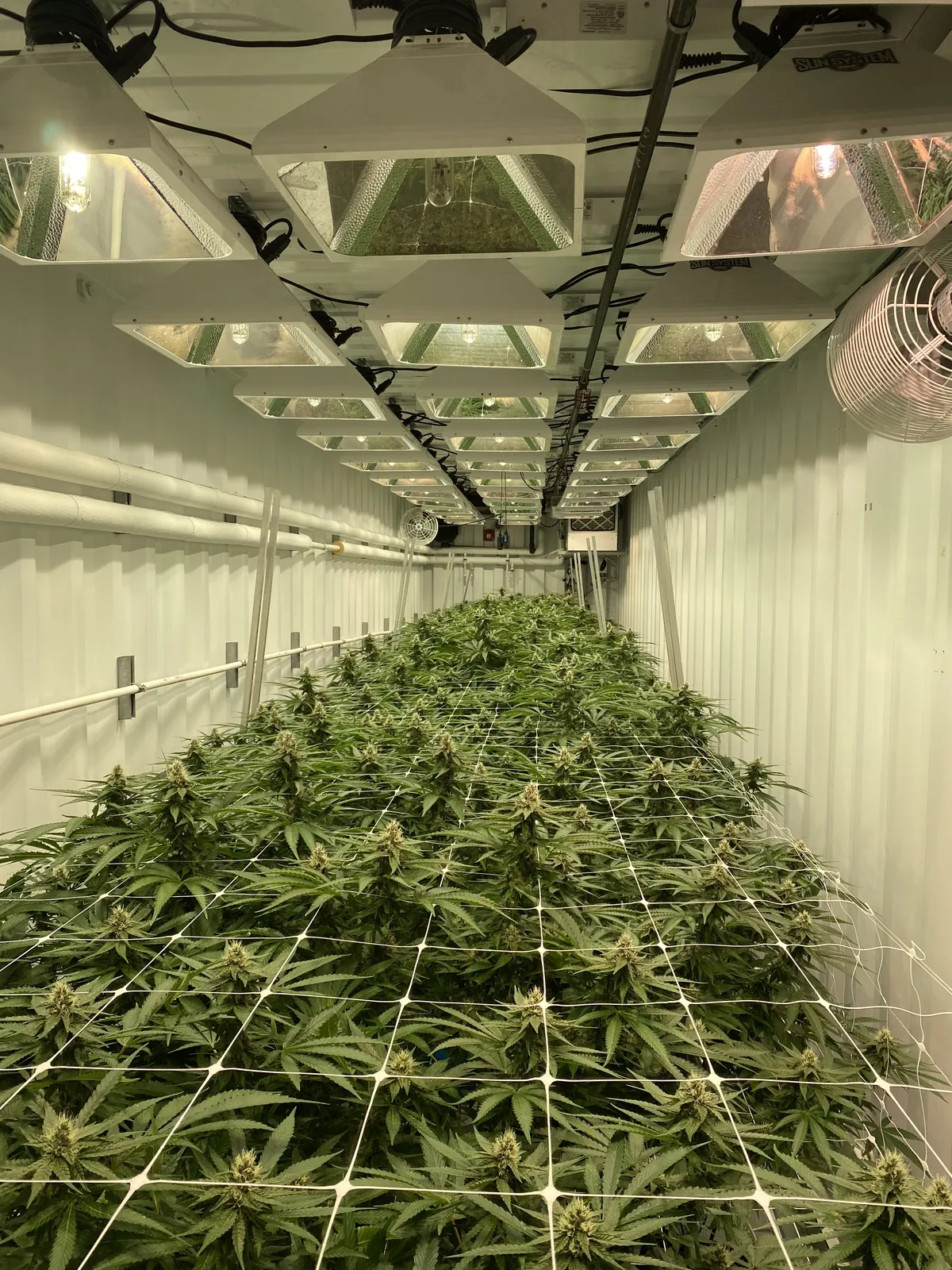
Power is cheap: Louisiana commercial electricity averaged 11.19 cents per kWh in 2025 against a 13.37 cent U.S. average, and industrial power 6.18 cents, per EIA Electric Power Annual, Table 2.10. The Gulf climate is hot and humid most of the year, so dehumidification drives the mechanical budget. Retail siting follows the nine LDH regions, with base permits fixed by region and satellites tied to them; local zoning applies on top.
Louisiana specifics
Testing. Every batch is tested for purity and THC by one of three approved labs with a certificate of analysis; failed samples may be remediated and retested (Act 150). Since March 28, 2025 the yeast and mold threshold is 100,000 CFU/g and pesticide testing follows Oregon's schedule.
Security. Act 150 requires staffing during business hours, electronic monitoring after hours and at least two LDH inspections a year. Camera retention periods sit in the LAC 51:XXIX rule text; confirm them with LDH before the camera schedule is drawn.
Tracking. Producers and labs report into the Louisiana Medical Marijuana Tracking System, and the Jan. 20, 2026 rule adds point-of-sale tracking for retailers. Records are kept four years.
Packaging and edibles. Patients may buy 71 g of flower per 14 days. Hemp-derived products are capped at 5 mg THC per serving and 40 mg per package (beverages 5 mg in at least 12 fl oz; tinctures 1 mg per mL), child-resistant, with a QR code to the COA; no inhalable hemp product can be registered.
| Topic | Louisiana rule | Design response |
|---|---|---|
| Production cap | Two licenses statewide (Act 150; LAC 51:XXIX Section 501); growth happens inside a license | Phased expansion plans with cannabis cultivation consulting so each phase passes LDH inspection |
| Microbial limits | Yeast and mold 100,000 CFU/g since March 28, 2025; COA on every batch | Dry and cure rooms held by water activity with Anden dehumidifiers and Quest units sourced on request |
| Security | Staffed in business hours, electronic monitoring after hours, two inspections a year (Act 150) | Camera, alarm and access layout drawn into the facility design sequence |
| Hemp THC products | 5 mg per serving, 40 mg per package, discrete servings, child-resistant, 15% label tolerance (LAC 49:I Chapter 5) | Dosing line from the edibles equipment guide with Paxiom packaging and NTEP checkweighing |
| Tracking | LMMTS for producers and labs; point-of-sale tracking for retailers (Jan. 20, 2026 rule) | Packaging room laid out for tag, weigh and scan at one station |
What the same work did for an operator like you
What a Louisiana applicant gets from the design desk.
- A cannabis compliance review against Act 150 and the Jan. 20, 2026 LAC 51:XXIX rules before the next LDH inspection
- Cannabis facility design for a producer expansion or a hemp processing and kitchen build
- A cannabis facility design package in 30 to 60 days: room program, MEP set and equipment schedule
- Microbial control built in with microbial and pathogen mitigation and our cannabis HVAC design guide
Louisiana questions
How do I get a Louisiana medical marijuana license?
You cannot apply today. Act 150 of 2024 limits Louisiana to two production licenses, held by Advanced Biomedics (Ilera) and Good Day Farm Louisiana, and LDH rebids one only if it is revoked or returned. Retail is capped at 10 base permits. The open paths are a satellite partnership with a permit holder or an LDH consumable hemp processor permit.
How do I open a dispensary in Louisiana?
Only the 10 base permit holders, two in Region 1 and one in each of Regions 2 to 9, may open stores, each with up to two satellites. LDH says no new base permits may issue, and 19 of the 20 satellite slots are listed. Partner with the permit holder in your region, then design the satellite to LDH's retailer rules.
How much does a Louisiana cannabis production license cost?
$10,000 to apply and $100,000 a year, plus a 7% fee on gross sales, under Act 150 of 2024; the Jan. 20, 2026 rule restates the $100,000 as an annual administration fee renewable each July 1. The facility behind the license is the real spend: expansion or processing space at $150 to $500+ per sq ft.
Can I make THC edibles or drinks from hemp in Louisiana?
Yes, with an LDH consumable hemp processor permit and every product registered before sale. Limits are 5 mg THC per serving and 40 mg per package, beverages 5 mg in a container of at least 12 fl oz, tinctures 1 mg per mL. No inhalable, transdermal or floral hemp products can be registered, and labels carry a QR code to the certificate of analysis.
What changed in Louisiana medical marijuana rules in 2025 and 2026?
LDH took over retailers Jan. 1, 2025; a March 28, 2025 emergency rule limited patients to 71 g of flower per 14 days, allowed Louisiana-made products only and raised the yeast and mold threshold to 100,000 CFU/g; final rules effective Jan. 20, 2026 set the two-license cap, the $100,000 fee and retailer operating standards.
Where the Louisiana rules on this page come from
- Louisiana Department of Health: Medical Marijuana, regulator history, licensed manufacturers, labs, retailer permits and satellites, 2025 emergency rule, 2026 final rule
- Act No. 150 of 2024 (SB 228), enrolled, two-license cap, fees, inspections, security, tracking, records, sunset
- HB 376 (2024) legislative digest, transfer of licenses from the universities to their contractors
- Louisiana Register, Jan. 20, 2026: Regulation of Medical Marijuana (LAC 51:XXIX) and consumable hemp rule (LAC 49:I Chapter 5), $100,000 administration fee, hemp THC caps, registration and testing
- La. R.S. 3:1483, consumable hemp processor permits, fees, THC limits, prohibited forms
- EIA Electric Power Annual, Table 2.10 (2025), average commercial electricity price by state
Regulator: Louisiana Department of Health, Cannabis Program. Last reviewed November 7, 2026.
 Record last reviewed