Minnesota cannabis licensing, facility design and equipment.
How to open a dispensary in Minnesota: hold a cannabis retailer, microbusiness or mezzobusiness license from the Office of Cannabis Management, then register with the city or county. No application window is open as of Nov. 2026; the 2025 window closed March 16, 2025 and OCM has not set the next one. 412 licenses were issued by Nov. 2, 2026.
No cannabis license application window open as of Nov. 7, 2026; 412 licenses issued as of Nov. 2, 2026
Syncing and validating with
Where Minnesota is today
Minnesota is an operating adult-use and medical market regulated by the Minnesota Office of Cannabis Management (OCM) under Minn. Stat. ch. 342 and Minn. R. ch. 9810. State-licensed adult-use sales began Sept. 16, 2025. As of Nov. 2, 2026, OCM had issued 412 cannabis licenses: 303 microbusinesses, 26 mezzobusinesses, 24 cultivators, 3 manufacturers and 20 retailers.
The only application window ran Feb. 18 to March 16, 2025; OCM says additional opportunities to apply have not been determined. Caps of 50 cultivator, 24 manufacturer, 150 retailer and 100 mezzobusiness licenses run to July 1, 2027. Compare Minnesota with cannabis licensing in every state.
- Feb. 18 to March 16, 2025. OCM accepts applications for every cannabis license type; 3,541 applicants enter the cycle.
- April 14, 2025. Minn. R. ch. 9810 takes effect.
- June 5 and July 22, 2025. Lotteries select 50 cultivator, 24 manufacturer, 100 mezzobusiness and 150 retailer applications.
- Sept. 16, 2025. Adult-use sales begin at state-licensed stores.
- May 26, 2026. Gov. Walz signs the omnibus cannabis bill (2026 ch. 123): macrobusiness license, medical endorsements, caps extended to 2027.
- Jan. 1, 2027. Medical combination licenses convert to macrobusiness licenses; medical canopy add-ons take effect.
- July 1, 2027. Date before which OCM may issue up to the capped totals (Minn. Stat. 342.14, subd. 1b); no next window announced.
How to get a Minnesota cannabis license
- Watch for the next window. The 2025 window closed March 16, 2025 and OCM says additional opportunities to apply have not been determined. Check OCM before you sign a lease.
- Match the license to the canopy. Microbusiness (5,000 sq ft) and mezzobusiness (15,000 sq ft) include retail; cultivator (30,000 sq ft) and manufacturer do not.
- Build the application record. Minn. Stat. 342.14 asks for a security plan, business plan, SOPs, a labor peace attestation and ownership disclosures; no premises is required. Start with the cultivation business plan and cannabis business financing options.
- Clear the local gate. Cities may hold retailers to one per 12,500 residents and bar sites within 1,000 feet of a school or 500 feet of a day care, treatment facility or park attraction. They certify zoning, fire and building code within 30 days; you have 18 months after preliminary approval to name the site.
- Pick your starting point. Dispensary plans: price the store with cannabis financial modeling. Cultivation and processing plans: start new license facility planning so rooms, MEP and the Minn. Stat. 342.26 systems certification are ready.
What the state issues, and what each one needs built
- Cannabis microbusiness. Up to 5,000 sq ft indoor canopy or one-half acre outdoor, manufacturing and one store. Uncapped; 303 licensed. Fees $500 application, $0 initial, $2,000 renewal.
- Cannabis mezzobusiness. Up to 15,000 sq ft indoor or 1 acre outdoor, up to three stores. Capped at 100; 26 licensed. Fees $5,000 / $5,000 / $10,000.
- Cannabis cultivator. Up to 30,000 sq ft indoor or 2 acres outdoor; wholesale only. Capped at 50; 24 licensed. Fees $10,000 / $20,000 / $30,000.
- Cannabis manufacturer. Extraction and product manufacturing for other licensees. Capped at 24; 3 licensed. Fees $10,000 / $10,000 / $20,000.
- Cannabis retailer. Up to five stores, one per city and three per county. Capped at 150; 20 licensed. Fees $2,500 / $2,500 / $5,000.
- Wholesaler, transporter, delivery, testing facility, event organizer. Uncapped; testing facility applications are open.
- Medical combination business. 3 licensed; converts to the cannabis macrobusiness license Jan. 1, 2027 with fees of $10,000 / $20,000 / $70,000.
What a Minnesota facility costs to design and build.
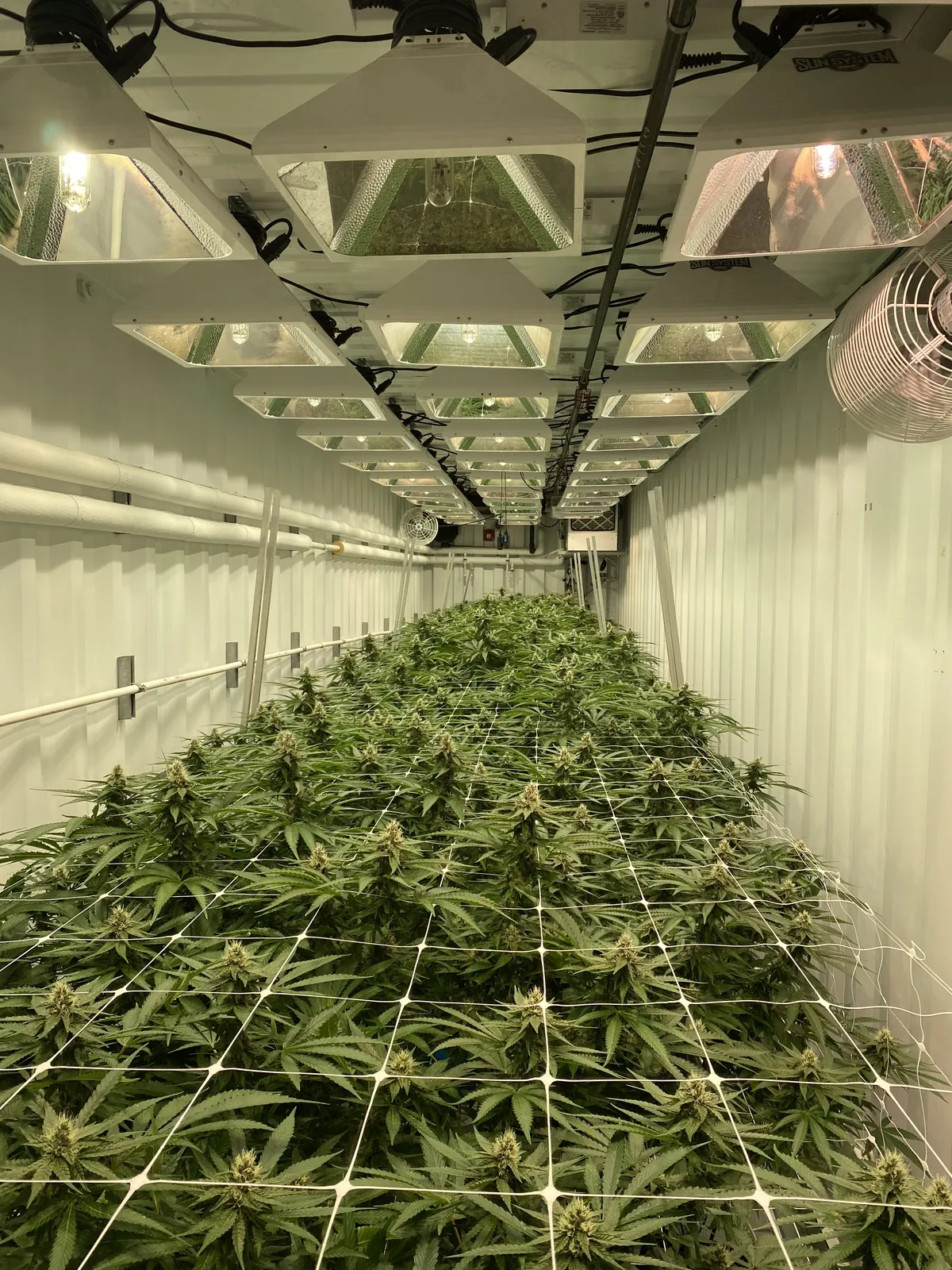
Size the building to the license cap: 5,000 sq ft of canopy for a microbusiness, 15,000 for a mezzobusiness, 30,000 for a cultivator. Example: a 20,000 sq ft grow and processing building at $150 to $500+ per sq ft runs $3 million to $10 million or more. Design takes 30 to 60 days and the build 3 to 6 months after permits, inside the 18 month site clock after preliminary approval.
Power: Minnesota's average commercial electricity price was 12.35 cents per kWh in 2025, against a 13.37 cent U.S. average, per EIA Electric Power Annual, Table 2.10. The Twin Cities average 7,580 heating degree days a year with a January mean of 15.6°F, so makeup air for extraction, drying and packaging rooms must be heated and often humidified, while sealed flower rooms still need dehumidification year round. Size Anden dehumidifiers to the lighting load, not the season, and keep condensate drains inside the heated envelope.
Siting: cities cannot ban licensed cannabis businesses, but they may set 1,000 foot school and 500 foot day care, treatment facility and park buffers and hold retailers to one registration per 12,500 residents (Minn. Stat. 342.13). Nine Tribal Nations hold compacts or cooperative agreements, several allowing up to eight off-reservation stores.
Minnesota specifics
Testing. Minn. R. 9810.3100 fails a batch for foreign material, heavy metals, microbials, mycotoxins, pesticides or residual solvents. OCM's Cannabis Technical Authority v2.0 (July 1, 2026) sets dried flower at total yeast and mold below 100,000 CFU per gram, no Aspergillus, E. coli or Salmonella in 10 g, and water activity below 0.65.
Odor. Minn. R. 9810.1200 defers to local ordinance or Minn. Stat. 116.064. Minneapolis requires an odor control plan; carbon filtration is an approved method.
Security. Minn. R. 9810.1500 requires 720p cameras at 15 frames per second, 90 day retention, coverage within 20 feet of every entry, a monitored alarm and electronic perimeter locks.
Tracking. OCM contracted Metrc as the statewide monitoring system. Every plant and product carries a serialized tag, inventory is reconciled daily (Minn. R. 9810.1302) and licensees pay for the system.
Packaging and edibles. Minn. Stat. 342.62 requires child-resistant, tamper-evident, opaque packaging with no PFAS. Adult-use edibles are capped at 10 mg THC per serving and 200 mg per package, beverages at 10 mg per serving and two servings per container (Minn. Stat. 342.27). Lower-potency hemp edibles stay at 5 mg per serving and 50 mg per package.
| Topic | Minnesota rule | Design response |
|---|---|---|
| Canopy | 5,000, 15,000 or 30,000 sq ft indoor by license; every rack tier counts (Minn. Stat. 342.01, subd. 61) | Single-tier flower rooms on NextGen Benching sized to the cap |
| Climate | Humidity and temperature controls required (Minn. R. 9810.2102, subp. 6); 7,580 Twin Cities heating degree days a year | Sealed rooms on Urban Farms HVAC with Quest dehumidifiers sourced on request, per our cannabis HVAC design guide |
| Extraction | Every method and solvent approved by OCM; electrical, gas, fire suppression and exhaust certified by an industrial hygienist or PE (Minn. Stat. 342.26) | Hazardous-location room in the MEP set with used Precision Extraction systems (C1D1 room requirements) |
| Testing | Yeast and mold below 100,000 CFU/g, Aspergillus not detected, water activity below 0.65 (Technical Authority v2.0) | Dry and cure rooms held to a water activity target with our microbial mitigation service |
| Edibles and packaging | 10 mg THC per serving, 200 mg per package; child-resistant, tamper-evident, opaque (Minn. Stat. 342.27, 342.62) | Dosing line from our edibles equipment guide, NTEP checkweighing at packaging |
What the same work did for an operator like you
What a Minnesota applicant gets from the design desk.
- A Minnesota cannabis compliance review against Minn. Stat. ch. 342, Minn. R. ch. 9810 and OCM's pre-licensure inspection lists
- Cannabis facility design for microbusiness, mezzobusiness and cultivator programs sized to the 5,000, 15,000 and 30,000 sq ft canopy caps
- A cannabis facility design package in 30 to 60 days: room program, MEP set, equipment schedule and the systems documentation certified under Minn. Stat. 342.26
- Extraction rooms specified from our cannabis extraction equipment guide, with every method and solvent listed for OCM approval
Minnesota questions
How do I open a dispensary in Minnesota?
Hold a cannabis retailer, microbusiness or mezzobusiness license from OCM, then register the store with the city or county under Minn. Stat. 342.22. No application window is open as of Nov. 2026; the last one closed March 16, 2025. Until OCM announces the next window, buy into a licensed business or prepare the application record.
When will Minnesota accept new cannabis license applications?
OCM has not said. Its application process page states that additional opportunities to apply have not been determined. Caps of 50 cultivator, 24 manufacturer, 150 retailer and 100 mezzobusiness licenses apply before July 1, 2027; only 24 cultivators, 3 manufacturers and 20 retailers were licensed by Nov. 2, 2026.
How much does a Minnesota cannabis license cost?
State fees run from $500 to apply for a microbusiness ($0 initial, $2,000 renewal) to $10,000 for a cultivator ($20,000 initial). A retailer pays $2,500 to apply and $2,500 initial, plus local registration of up to $500. The build is the real cost at $150 to $500+ per sq ft.
What is a Minnesota cannabis microbusiness?
One license covering up to 5,000 sq ft of indoor canopy or one-half acre outdoors, manufacturing from up to 10,000 lb of material a year and one store with on-site edible consumption. It is uncapped, costs $500 to apply, and accounts for 303 of 412 licenses issued by Nov. 2, 2026.
What does a Minnesota extraction room need?
OCM approval of every extraction method and volatile chemical, plus certification of the electrical, gas, fire suppression and exhaust systems by an independent industrial hygienist or professional engineer before production (Minn. Stat. 342.26; Minn. R. 9810.2205). We draw the room to NFPA 30 solvent room standards with distillation laid out first.
Where the Minnesota rules on this page come from
- OCM: License Types, status and fees
- OCM: Application Process, no future window determined
- OCM: Application and License Holder Data, licenses issued
- OCM: License Lottery Results, 2025 selections
- Minn. Stat. 342.11, license fees
- Minn. Stat. 342.13, local control and buffers
- 2026 Minn. Laws ch. 123, sec. 16, license caps to July 1, 2027
- Minn. Stat. 342.27, edible and beverage THC limits
- Minn. R. 9810.1500, security
- OCM Cannabis Technical Authority v2.0, testing limits
- OCM: Compacts and Cooperative Agreements, Tribal agreements
- EIA Electric Power Annual, Table 2.10 (2025), commercial price
Regulator: Minnesota Office of Cannabis Management. Last reviewed November 7, 2026.
 Record last reviewed