Montana cannabis licensing, facility design and equipment.
A Montana cannabis license for a new business is not available until July 1, 2027. SB 27 froze new licensed premises from July 1, 2025 through June 30, 2027, so only existing licensees may apply, though their premises may move. Plan the facility now: new grows must be indoor and start at Tier 2 (2,500 sq ft) or smaller.
No new licensed premises through June 30, 2027 (SB 27); new applications open July 1, 2027
Syncing and validating with
Where Montana is today
Montana is an operating adult use and medical market run by the Montana Department of Revenue Cannabis Control Division. A moratorium on new dispensary, manufacturer and cultivator licenses has run since Jan. 1, 2022; SB 27 extended it to July 1, 2027 and froze the footprint, so applications until then cover only existing premises.
The state counted 232 licensees on July 1, 2025, and sales ran $28.1 million in Sept. 2026. Compare cannabis licensing in every state.
- Nov. 2, 2020. Voters pass I-190; adult use sales and the license moratorium both begin Jan. 1, 2022.
- May 5, 2025. SB 27 is signed: moratorium to June 30, 2027, no new premises, every green county dispensary may sell adult use from July 1, 2025.
- May 8, 2025. SB 74 sets manufacturer tiers and a 35% total THC cap on adult use flower.
- July 1, 2026. Edibles capped at 5 mg THC per serving and 100 mg per package; new warning labels required.
- July 1, 2027. The division begins accepting applications from new applicants and for new premises.
How to get a Montana cannabis license
- Confirm your path. Until June 30, 2027 only existing licensees may file, for existing premises that may move where local rules allow. New applicants file from July 1, 2027 through the TransAction Portal with a nonrefundable processing fee of 20% of the license fee.
- Qualify. One year of Montana residency; every owner with 5% or more is 21 and fingerprinted; documented approval from a city or county that allows the license type.
- Pick the tier you can fill. New grows open at Tier 2 or lower and climb one tier a year; run the ramp in cannabis financial modeling.
- Pass inspections. Every location passes a local building inspection, a fire inspection and a division inspection before operating; every employee holds a $50 worker permit.
- Design ahead of July 2027. Dispensary plans: lay out the sales floor and vault with cannabis facility design. Cultivation and processing plans: begin facility design for new licenses so an indoor Tier 2 room set is permitted when the window opens.
What the state issues, and what each one needs built
- Cultivator. 13 canopy tiers from Micro (250 sq ft, $1,000 a year) through Tier 2 (2,500 sq ft, $5,000) to Tier 12 (50,000 sq ft across up to 9 indoor facilities, $37,000). New cultivators start at Tier 2 or lower, move up one tier per renewal and must grow indoors. 213 licenses active July 2025.
- Manufacturer. Three tiers by monthly concentrate output: up to 10 lb $5,000, 10 to 15 lb $10,000, 15 lb or more $20,000 a year. 143 licenses.
- Dispensary. $5,000 per location, medical-only or adult-use, in a county that allows it. 203 licenses.
- Testing lab, transporter, combined-use. Lab $5,000 per premises with ISO/IEC 17025; transporter $10,000 for two years; combined-use $7,500 for tribal owned entities. All three are exempt from the moratorium.
What a Montana facility costs to design and build.
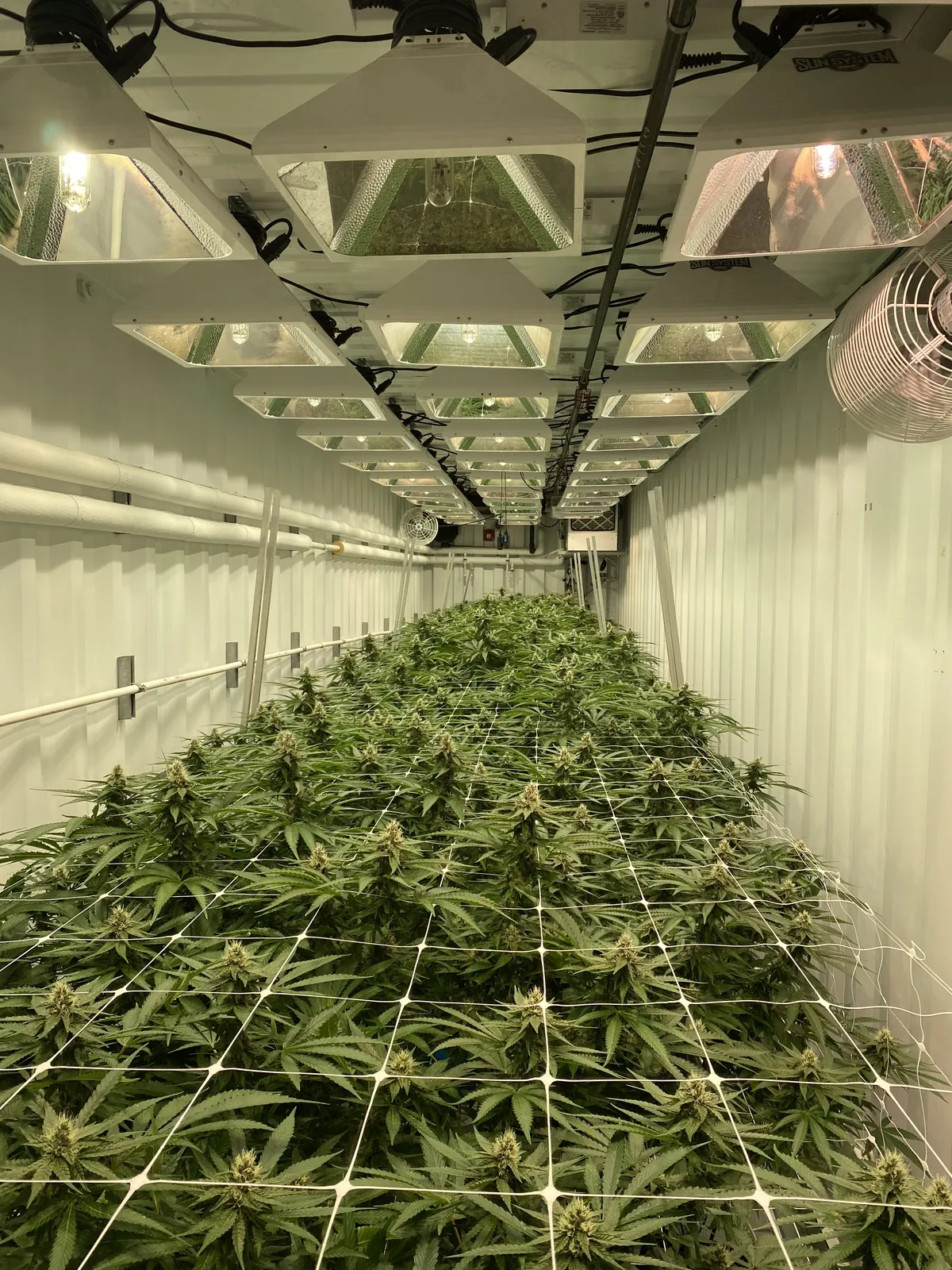
Size to the ramp, not the ceiling. A Tier 2 start is 2,500 sq ft of canopy inside a larger building; at $150 to $500+ per sq ft, a 5,000 sq ft building runs $750,000 to $2.5 million or more, and a 22,000 sq ft shell built for Tier 6 (13,000 sq ft canopy) runs $3.3 million to $11 million or more. Design takes 30 to 60 days and the build 3 to 6 months after permits, so a 2026 design lands a permitted building before July 1, 2027.
Power: Montana's average commercial electricity price was 11.88 cents per kWh in 2025 against a U.S. average of 13.37 cents, per EIA Electric Power Annual, Table 2.10. Indoor rooms in a cold, dry climate need winter heating and humidification and summer dehumidification; model both with Urban Farms HVAC. 27 of 56 counties prohibit adult use sales, and every premises needs city or county approval plus a fire inspection.
Montana specifics
Testing. Labs hold ISO/IEC 17025:2017 and collect their own random samples from harvest batches of up to 5 lb. Moisture fails above 15.0%, results are reported as received, composites across lots are banned and dilution is not remediation (ARM 42.39.610 and 42.39.614 as proposed in MAR Notice 42-1071, May 2024).
Security. Each premises passes a building inspection and a fire inspection before opening and stays subject to division inspection; owners with 5% or more are fingerprinted every five years.
Tracking. Metrc is the seed-to-sale system. Dispensaries file quarterly sales reports within 15 days and the division audits them against Metrc.
Packaging and edibles. Adult use flower is capped at 35% total THC. From July 1, 2026 edibles carry 5 mg THC per serving and 100 mg per package, with warnings beside the universal symbol on every exit package (HB 636, HB 792); concentrates are capped at 800 mg per package.
| Topic | Montana rule | Design response |
|---|---|---|
| Indoor only | All new cultivation sites must be indoor; tiers count canopy and indoor facilities | Sealed rooms with HVAC sized for a cold, dry climate and MicroCool humidification |
| Tier ramp | Start at Tier 2 (2,500 sq ft) or lower; one tier up per annual renewal | Shell sized for Tier 6, fitted out room by room on NextGen rolling benches |
| Extraction | No class 1 solvents (ARM 42.39); fire inspection on every premises | C1D1 room in the MEP set (C1D1 room requirements), used Precision Extraction systems |
| Testing | 5 lb harvest batches, 15% moisture limit, no dilution to pass (proposed in MAR Notice 42-1071) | Dry rooms held by Anden dehumidifiers to the water activity target |
What the same work did for an operator like you
What a Montana applicant gets from the design desk.
- A Montana cannabis compliance review of your premises, tier plan and local approval before July 2027
- Cannabis facility design for an indoor grow that opens at Tier 2 and expands one tier a year
- A cannabis facility design package in 30 to 60 days: room program, MEP set, equipment schedule
- Manufacturing layouts from our cannabis extraction equipment guide sized to the three manufacturer tiers
Montana questions
Can I get a Montana cannabis license in 2026?
Not as a new business. MCA 16-12-201 bars new licensed premises from July 1, 2025 through June 30, 2027, so only existing licensees may apply, though existing premises may move where local rules allow. New applicants may file from July 1, 2027. Testing lab and transporter licenses are the exception.
How do I open a dispensary in Montana?
Wait for the July 1, 2027 window, then apply through the TransAction Portal with one year of Montana residency, fingerprints for every owner with 5% or more, and approval from a city or county that allows adult use. The fee is $5,000 per location: a nonrefundable 20% processing fee at filing and the other 80% on approval.
What are the Montana cultivation license tiers?
Thirteen canopy tiers: Micro at 250 sq ft ($1,000), Tier 1 at 1,000 sq ft ($2,500), Tier 2 at 2,500 sq ft ($5,000), rising to Tier 12 at 50,000 sq ft ($37,000). New cultivators start at Tier 2 or lower and move up one tier at each annual renewal.
When does the Montana marijuana license moratorium end?
June 30, 2027. SB 27, signed May 5, 2025, extended the pause that began Jan. 1, 2022 and froze the licensed footprint. The division's license pages say new cultivator, manufacturer and dispensary applications open July 1, 2027.
Which Montana counties allow cannabis sales?
Green and blue counties allow adult use sales; red counties allow medical only. The division's county table lists 27 of 56 counties as prohibiting adult use sales. For another state's licensing picture, see Nebraska cannabis licensing.
Where the Montana rules on this page come from
- Montana Department of Revenue: 2025 Legislative Updates, SB 27, SB 74, HB 636, HB 792
- MCA 16-12-201 (2025), moratorium dates
- CCD: Cultivator Licenses, tiers, fees, indoor rule
- CCD: Dispensary Licenses
- CCD: General License Information, residency, inspections
- CCD overview, Nov. 5, 2025, licensee counts, Metrc
- CCD: Cannabis Sales Reports
- CCD: FAQs, county status, THC limits
- MAR Notice 42-1071, testing rules
- EIA Electric Power Annual, Table 2.10 (2025)
Regulator: Montana Department of Revenue, Cannabis Control Division. Last reviewed November 7, 2026.
 Record last reviewed