New Mexico cannabis licensing, facility design and equipment.
How to open a dispensary in New Mexico: apply to the Cannabis Control Division for a retailer license at $2,500 a year plus $1,000 per extra premises; there is no license cap and applications are accepted year round. The market is shrinking under enforcement: 948 principal licenses on Oct. 1, 2026, down from 1,556 two years earlier.
Rolling applications, no cap; 948 licenses Oct. 1, 2026 (1,556 in 2024); NMS2S tracking live Sept. 4, 2026
Syncing and validating with
Where New Mexico is today
New Mexico is an operating adult use and medical market licensed by the New Mexico Regulation and Licensing Department Cannabis Control Division. Twelve license types are open year round with no cap, and fees are low: $2,500 a year for a producer, manufacturer or retailer, $7,500 vertically integrated.
The story since 2024 is enforcement. HB 10 (2025) created a peace officer Enforcement Bureau; in nine months of 2026 the division inspected 2,676 locations and destroyed 24,815 lb of cannabis, and between Oct. 2024 and Oct. 2026 principal licenses fell from 1,556 to 948. Compare cannabis licensing in every state.
- April 1, 2022. Adult use retail sales begin; producer licenses had issued from Sept. 1, 2021.
- March 1, 2024. SB 6 is signed: federal background checks and higher penalties for unlicensed activity.
- May 7, 2024. Fee rule 16.8.11 NMAC amended; microbusiness fees become flat.
- July 1, 2025. HB 10 takes effect: RLD Enforcement Bureau with embargo, recall and condemnation authority.
- Sept. 4, 2026. NMS2S replaces the prior seed-to-sale platform.
- Oct. 1, 2026. 948 principal licenses and 1,354 premises; cumulative sales through Aug. 31, 2026 total $2.4 billion.
How to get a New Mexico cannabis license
- Choose the license. Retailer, producer, manufacturer or vertically integrated; a microbusiness caps you at 200 plants but skips the per plant fee. All types take applications year round.
- Fix the three common deficiencies. The division names water rights, premises diagrams and background checks as the usual reasons applications stall.
- Budget plants, not just fees. A Level 2 producer at 3,000 plants pays $2,500 plus $15,000 in plant fees a year; test it in cannabis financial modeling.
- Build for inspection. Penalties run $1,000 to $10,000 per violation and three offenses in 12 months means revocation (16.8.12 NMAC).
- Start the right design. Dispensary plans: lay out the sales floor and vault with cannabis facility design. Cultivation and processing plans: begin facility design for new licenses with the water rights question answered first.
What the state issues, and what each one needs built
- Retailer. $2,500 a year plus $1,000 per additional premises. 171 principal licenses on Oct. 1, 2026.
- Producer. $2,500 a year plus $5 per mature plant ($2.50 medical only), billed by level from Level 1 (201 to 1,000 plants) to Level 4 (6,001 to 8,000). 142 licenses. Producer microbusiness: up to 200 plants for a flat $1,000; 80 licenses.
- Manufacturer. $2,500 a year plus $1,000 per extra premises. 226 licenses, the largest category.
- Vertically integrated and integrated microbusiness. Vertically integrated $7,500 plus premises and plant fees, capped at $125,000; 113 licenses. Integrated microbusiness $2,500 flat; 174 licenses.
- Testing laboratory, courier, consumption area. Lab $2,500 (6 licensed), courier $250, consumption area $2,500.
What a New Mexico facility costs to design and build.
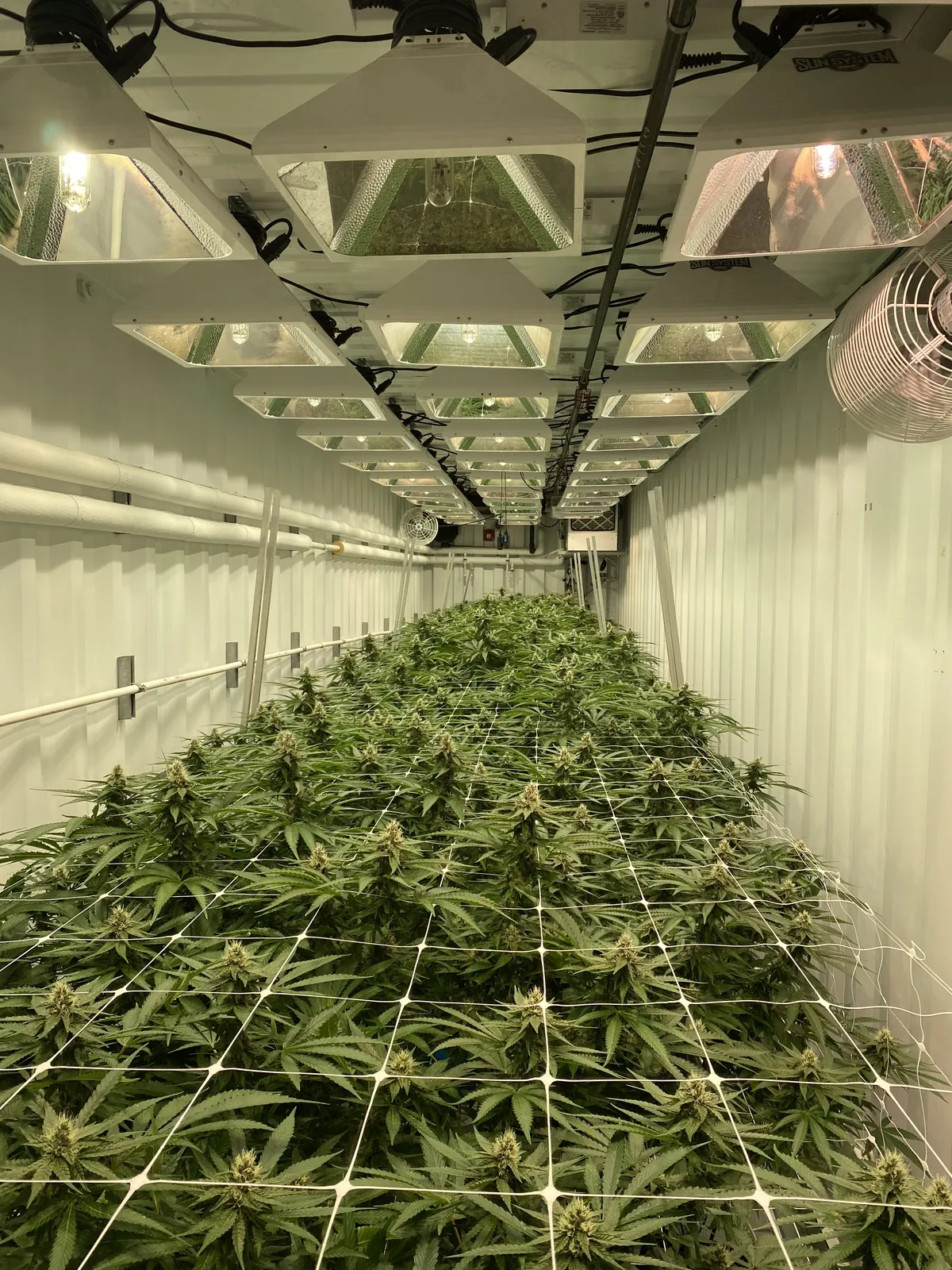
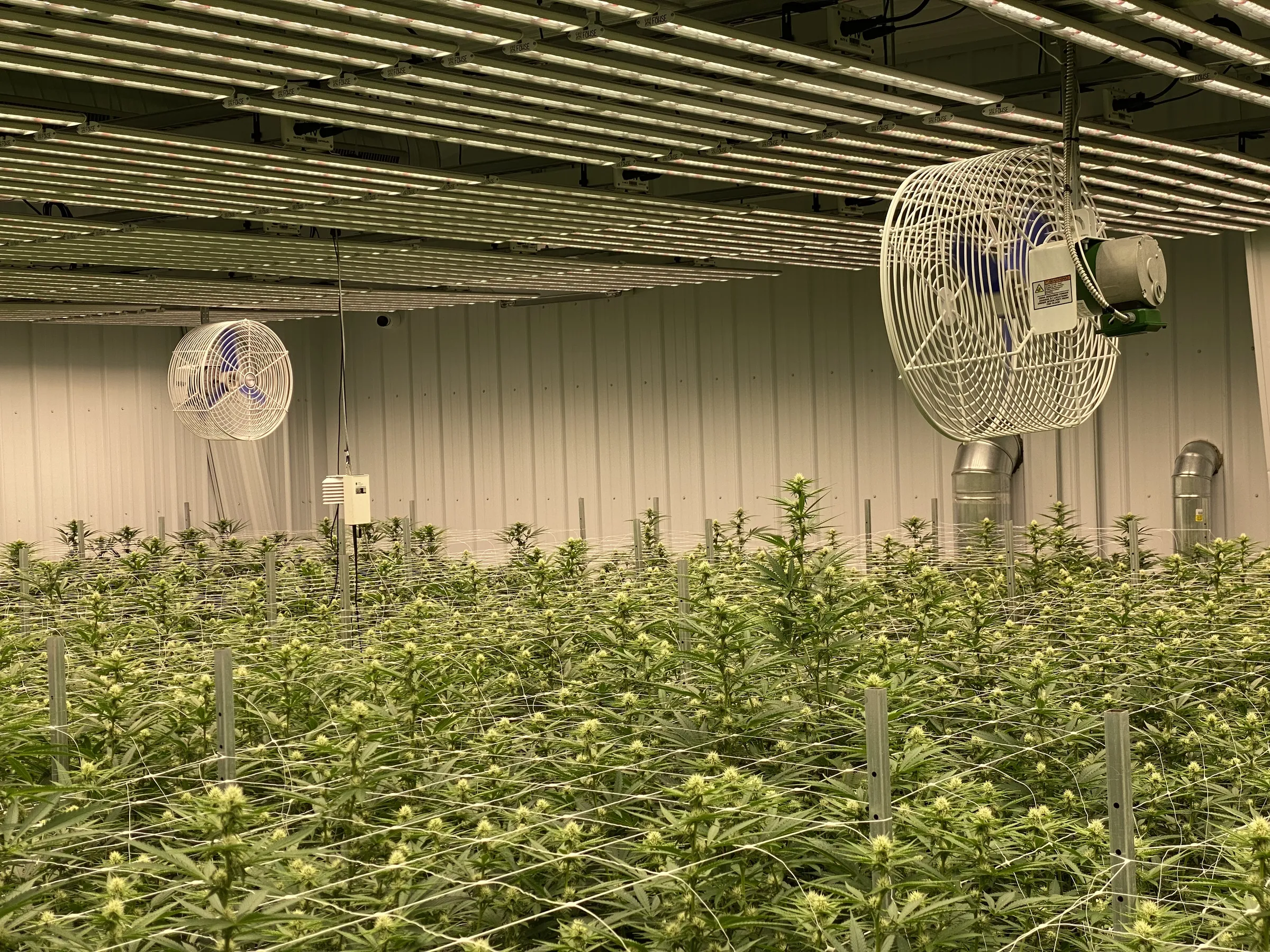
Fees are cheap; the building is not. A Level 2 producer at 3,000 plants still needs a real building; at $150 to $500+ per sq ft, a 10,000 sq ft cultivation floor runs $1.5 million to $5 million or more against $17,500 in annual state fees. Design takes 30 to 60 days and the build 3 to 6 months after permits; with no license cap, water rights and the local building department set the schedule.
Power: New Mexico's average commercial electricity price was 11.01 cents per kWh in 2025 against a U.S. average of 13.37 cents, with industrial at 5.85 cents, per EIA Electric Power Annual, Table 2.10. The high desert cuts dehumidification load but adds humidification and cooling; size both with Urban Farms HVAC. With 948 licenses left from 1,556, used equipment from closed sites is available; see our used extraction equipment buying guide.
New Mexico specifics
Testing. Six licensed laboratories serve the state. Since July 1, 2025 the division may sample product, restrict movement of suspect or misbranded lots and order recalls, and 2026 embargoes covered 2,111 lb of cannabis, 11,173 plants and 56 gallons of product.
Security. Enforcement Bureau agents are peace officers with warrant authority. Embargoed product must sit in a secure location accessible only to the licensee, the division and the bureau, under continuous video monitoring. Concealing embargoed product is a fourth degree felony.
Tracking. NMS2S launched Sept. 4, 2026 as the state seed-to-sale system, built by Real Time Solutions. Plant counts drive annual fees, so inventory in the system must match the license level.
| Topic | New Mexico rule | Design response |
|---|---|---|
| Plant count levels | $5 per mature plant; Level 1 starts at 201 plants, Level 4 ends at 8,000; microbusiness 200 plants | Rooms sized to a level boundary on NextGen rolling benches with HVAC per room |
| Water rights | Proof of water rights is the top application deficiency the division cites | Closed loop Saturn Supply fertigation with condensate recapture |
| High desert climate | Dry air, strong sun and large day to night swings | MicroCool fogging for humidity and evaporative cooling |
| Enforcement | HB 10 embargo: secure room, division access, continuous video | Quarantine room with its own cameras and lock in the floor plan |
| Extraction | Division inspected 1,297 manufacturer sites in 2026 | C1D1 room in the MEP set (C1D1 room requirements), used Precision Extraction systems |
What the same work did for an operator like you
What a New Mexico applicant gets from the design desk.
- A New Mexico cannabis compliance review of your premises diagram, plant count level and inspection readiness under 16.8 NMAC
- Cannabis facility design for high desert cultivation, manufacturing and retail with a quarantine room built in
- A cannabis facility design package in 30 to 60 days: room program, MEP set and equipment schedule
- Extraction rooms specified from our cannabis extraction equipment guide for the state's 226 manufacturers
New Mexico questions
How do I open a dispensary in New Mexico?
Apply to the Cannabis Control Division for a retailer license: $2,500 a year plus $1,000 for each additional premises, a premises diagram, state and federal background checks and local approval. There is no cap and no window; the division counted 171 retailer licenses on Oct. 1, 2026.
How much is a New Mexico cannabis license?
Producer, manufacturer, retailer and testing lab licenses are $2,500 a year plus $1,000 per extra premises. Producers add $5 per mature plant ($2.50 medical only). Vertically integrated is $7,500 with total fees capped at $125,000. A producer microbusiness is a flat $1,000.
What is a New Mexico cannabis microbusiness license?
A producer microbusiness may grow up to 200 plants for $1,000 a year with no per plant fee; an integrated microbusiness adds manufacturing and retail for $2,500. The division had 80 producer and 174 integrated microbusinesses on Oct. 1, 2026.
Is New Mexico still issuing cannabis licenses?
Yes, with no cap, but the market is contracting: principal licenses fell from 1,556 in Oct. 2024 to 948 in Oct. 2026 while the division inspected 2,676 locations and destroyed 24,815 lb of cannabis from January through September 2026. Plan for inspection on day one.
What tracking system does New Mexico use?
NMS2S, launched Sept. 4, 2026 and built by Real Time Solutions, replaced the earlier seed-to-sale platform. Plant counts reported in the system set your producer fee level. For a neighboring medical market, see Texas cannabis licensing.
Where the New Mexico rules on this page come from
- RLD Cannabis Update, Oct. 20, 2026, license counts, enforcement, NMS2S
- RLD Cannabis Update, Oct. 15, 2024, 1,556 licenses
- 16.8.11 NMAC, Fees
- 16.8.12 NMAC, Penalties
- NMSA 26-2C-6, twelve license types
- HB 10 (2025), enrolled, Enforcement Bureau
- RLD release on SB 6, March 1, 2024
- CCD licensing presentation, plant count levels
- EIA Electric Power Annual, Table 2.10 (2025)
Regulator: New Mexico Regulation and Licensing Department, Cannabis Control Division. Last reviewed November 7, 2026.
 Record last reviewed