North Dakota cannabis licensing, facility design and equipment.
A North Dakota medical marijuana license is a compassion center registration from the Department of Health and Human Services, capped by N.D.C.C. 19-24.1-12 at 2 manufacturing facilities and 8 dispensaries. All 10 were registered in the FY2024 report, and the 2025 code keeps both caps. Certification costs $75,000 for a manufacturing facility and $60,000 for a dispensary.
All 2 manufacturing and 8 dispensary slots registered (FY2024 report); 2025 code keeps both caps
Syncing and validating with
Where North Dakota is today
North Dakota runs a medical program with no adult use sales under the Department of Health and Human Services, Division of Medical Marijuana. N.D.C.C. 19-24.1-12 caps the state at 2 compassion centers operating as manufacturing facilities and 8 operating as dispensaries, and all 10 are registered: Grassroots Cannabis in Fargo and Pure Dakota in Bismarck grow and process for 8 dispensaries owned by three companies.
The department may register more centers only if it finds patient access requires it, or reopen an application period if a registration is revoked or not renewed. Neither had happened as of the FY2024 report, when sales were $22.4 million to 9,934 patients. Compare North Dakota with cannabis licensing in every state.
- Nov. 2016. Voters approve the North Dakota Compassionate Care Act; the 2017 Legislative Assembly rewrites it as SB 2344 and N.D.C.C. 19-24.1.
- 2019. The program begins operating; centers are chosen through competitive application periods (N.D.C.C. 19-24.1-12).
- Aug. 1, 2023. The 30 day THC purchase limit rises from 4,000 mg to 6,000 mg; N.D.A.C. 33-44-01 fee rules are amended Oct. 1, 2023.
- June 30, 2024. 9,934 registered patients; FY2024 dispensary sales $22,424,000, 62% dried flower.
- Nov. 5, 2024. Adult use Measure 5, certified for the ballot by the Secretary of State on Aug. 12, 2024, goes to voters; the program remains medical only.
How to get a North Dakota cannabis license
- Watch for an access finding. With all 10 slots full, a new period opens only if the department finds more centers are needed for patient access or a registration is revoked or not renewed (N.D.C.C. 19-24.1-12).
- Prepare for a competitive review. Applications are scored in a competitive process set by rule (N.D.A.C. 33-44-01-06). Build the cultivation business plan before a period is announced, not after.
- Budget the certification. $3,000 to apply and $75,000 to certify a manufacturing facility; $2,000 and $60,000 for a dispensary; plus a financial assurance bond. Model it with cannabis financial modeling.
- Or buy a registered center. Three companies hold the 8 dispensaries and two hold the manufacturing facilities, so an acquisition is the only near term entry.
- Pick your starting point. Dispensary plans: a dispensary needs 90 day video retention in year one and a 3,500 ounce inventory ceiling, so start with cannabis compliance consulting. Cultivation and processing plans: start new license facility planning for a facility that passes the certificate of occupancy and fire code check at certification.
What the state issues, and what each one needs built
- Manufacturing facility (compassion center). Grows and processes usable marijuana for dispensaries. Cap 2, both registered. $3,000 application, $75,000 certification (N.D.A.C. 33-44-01-07.2 and 07.3). No plant cap; the facility must grow enough to meet patient demand and may hold 50 R&D plants.
- Dispensary (compassion center). Sells to registered patients and caregivers. Cap 8, all registered across Fargo, Bismarck, Grand Forks, Minot, Williston, Dickinson, Jamestown and Devils Lake. $2,000 application, $60,000 certification. May hold no more than 3,500 ounces of usable marijuana at any time.
- Production only and processor only manufacturing facility. Rule categories certified at $40,000 and $20,000 respectively (33-44-01-07.3), available only if the department opens a period under 19-24.1-12(4).
- Financial assurance. A financial assurance or security bond and a certificate of occupancy showing state and local fire code compliance are due at certification (N.D.C.C. 19-24.1-15).
What a North Dakota facility costs to design and build.
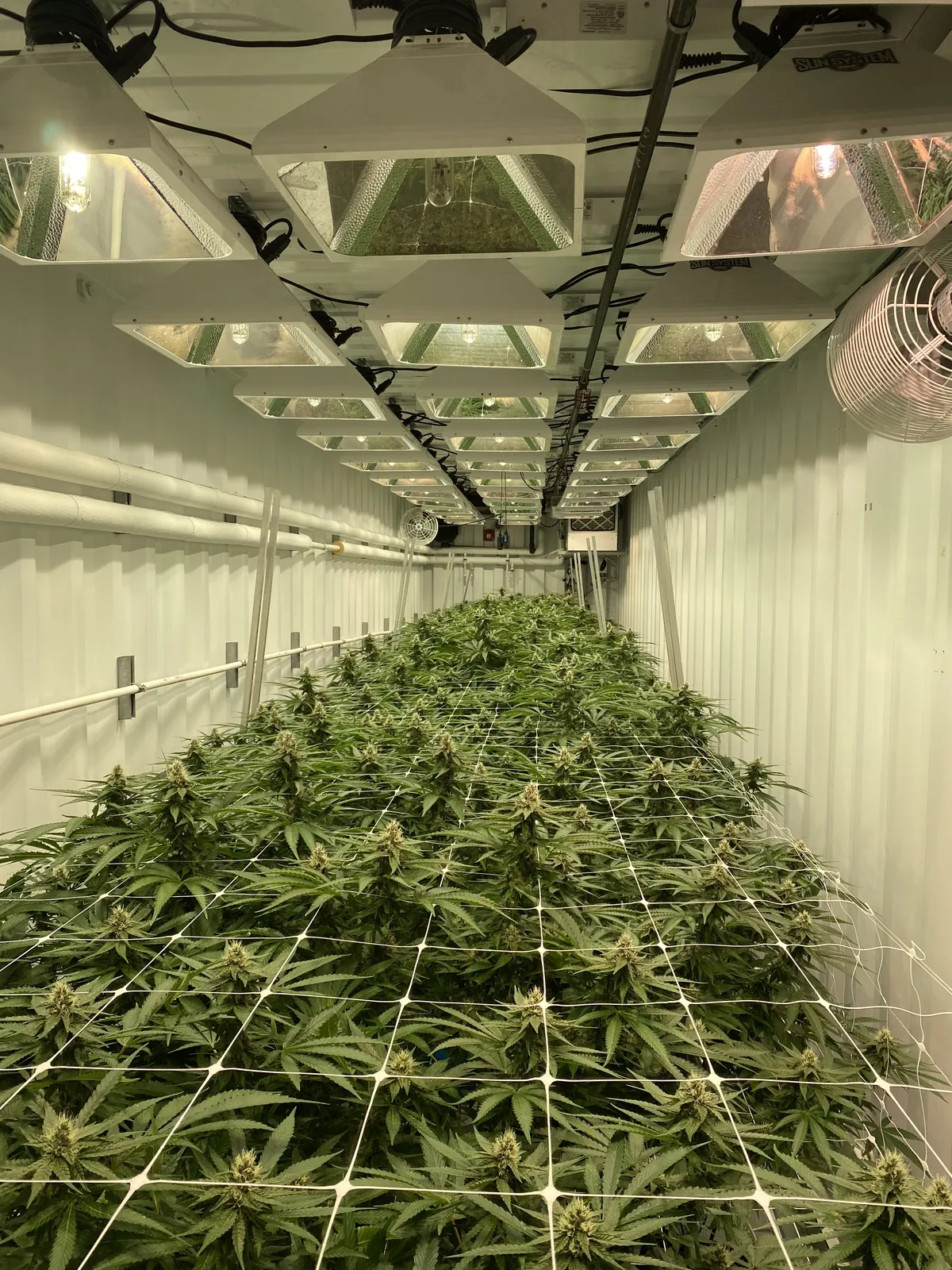
Size to the market. Two manufacturing facilities supplied $22.4 million in FY2024 dispensary sales, so a new or expanded facility is built for statewide demand, not a cap. A 20,000 sq ft cultivation and processing building runs $3 million to $10 million or more at $150 to $500+ per sq ft, plus $75,000 to certify and a financial assurance bond. Design takes 30 to 60 days and the build 3 to 6 months after permits.
North Dakota's average commercial electricity price was 7.36 cents per kWh in 2025, about 55% of the 13.37 cent U.S. average per EIA Electric Power Annual, Table 2.10. Long, dry winters make heat recovery and humidification the design problem, with dehumidification a short summer load. Siting is a certification item: state and local fire code compliance proven by a certificate of occupancy, and any added structure within 500 feet of the original site needs written approval.
North Dakota specifics
Testing. A department procured laboratory tests products under N.D.A.C. 33-44-01-36 to 54. Microbial limits: total yeast and mold 1,000 CFU/g in concentrates and 10,000 CFU/g in medical cannabinoid products, pathogenic E. coli and Salmonella not detected in 1 g, aflatoxins and ochratoxin A under 20 µg/kg (33-44-01-48).
Security. Closed circuit cameras run at all times on production, processing, entries, sales areas, garages, the surveillance room door and the parking lot, with clear color stills that identify anyone entering or leaving. Recordings are kept at least 90 calendar days in the first year and 60 days after with department approval, viewable by the department over a secure connection (33-44-01-17).
Tracking. Inventory control and counting rules (33-44-01-19 and 20) tie to the dispensary ceiling of 3,500 ounces and the 50 plant R&D limit at manufacturing facilities (33-44-01-08). Patients are capped at 6,000 mg THC per 30 days, enforced at the register.
Packaging and edibles. Manufacturing facilities must hold a department approved certificate of authenticity for every ingredient in a medical cannabinoid product (33-44-01-24.1), and usable marijuana packaging and labeling follow 33-44-01-25 and 26.
| Topic | North Dakota rule | Design response |
|---|---|---|
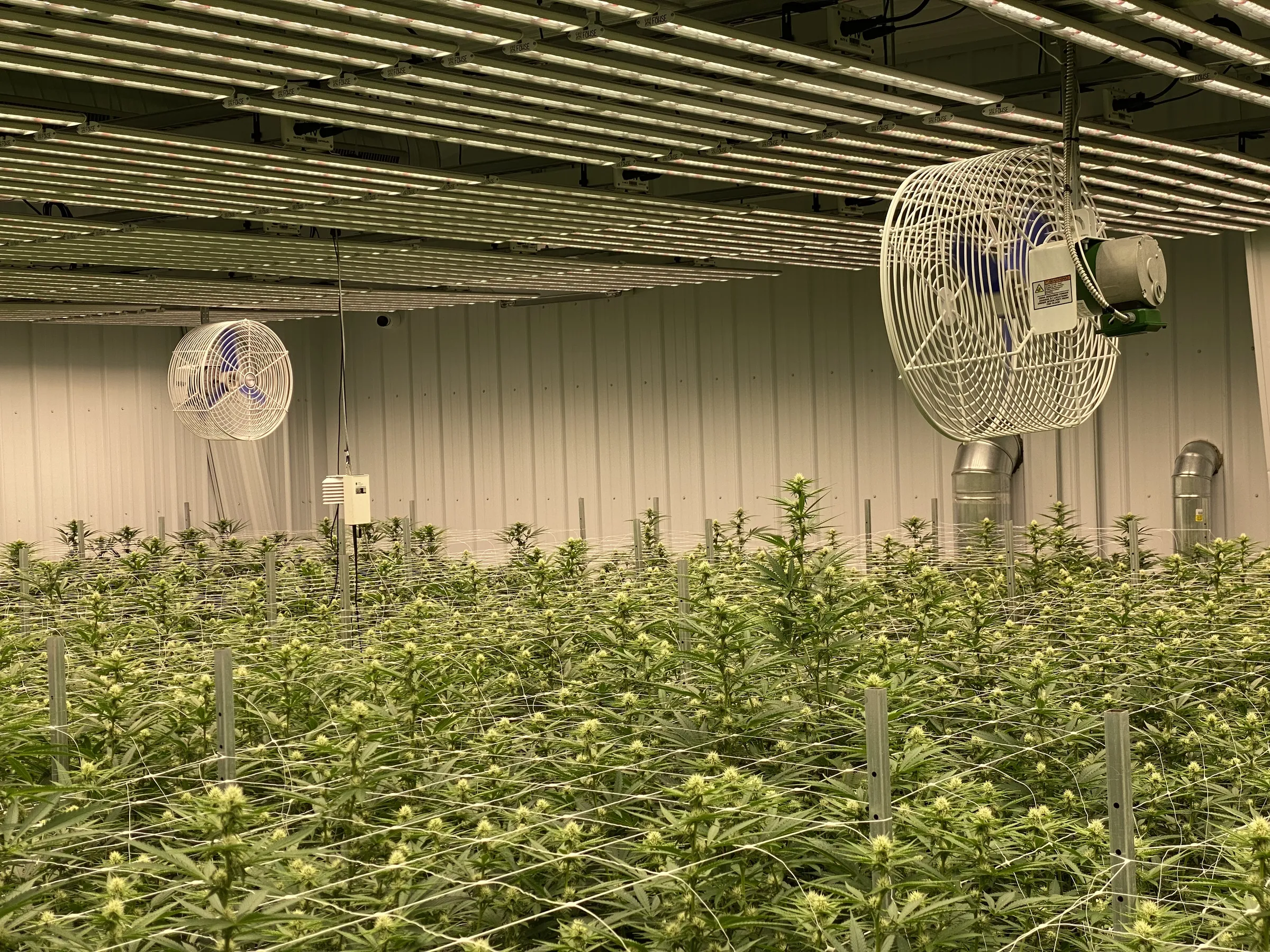
| Two manufacturing facilities | Grow enough to meet statewide patient demand; 50 R&D plants (33-44-01-08) | Flower rooms on NextGen Benching under Thrive Agritech LEDs, sized to a 9,900 patient market |
| Cold, dry climate | No odor rule in 33-44-01; local code governs | Sealed rooms with heat recovery and Anden dehumidifiers for the short humid season, per our cannabis HVAC design guide |
| Microbial testing | Yeast and mold 1,000 CFU/g concentrates, 10,000 CFU/g products (33-44-01-48) | Airflow and sanitation built for microbial pass rates |
| Surveillance | 90 day retention year one, 60 days after; department remote access (33-44-01-17) | Camera and storage plan in the facility design before the certificate of occupancy |
What the same work did for an operator like you
What a North Dakota applicant gets from the design desk.
- A North Dakota cannabis compliance review against N.D.C.C. 19-24.1 and N.D.A.C. 33-44-01 before certification
- Cannabis facility design for a manufacturing facility that grows and processes for all 8 dispensaries
- A cannabis facility design package in 30 to 60 days: room program, MEP set and equipment schedule built for 7 cent power and cold winters
- Concentrate rooms specified from our cannabis extraction equipment guide to the 1,000 CFU/g concentrate microbial limit
North Dakota questions
How do I get a North Dakota medical marijuana license?
Apply to the Department of Health and Human Services during an open application period as a compassion center, then win a competitive review. The state caps registrations at 2 manufacturing facilities and 8 dispensaries and all 10 were taken in the FY2024 report, so a period opens only if the department finds more are needed or a registration is revoked or not renewed. Certification costs $75,000 or $60,000 after a $3,000 or $2,000 application fee.
How do I open a dispensary in North Dakota?
Only by acquiring one of the 8 registered dispensaries or waiting for the department to find that patient access requires more. A dispensary pays $60,000 to certify, holds no more than 3,500 ounces at a time and keeps 90 days of video in its first year. Compare Missouri or Nebraska next door.
Is recreational marijuana legal in North Dakota?
No. The program remains medical only; adult use Measure 5 went to voters on Nov. 5, 2024, and no adult use sales exist. Registered patients may buy up to 6,000 mg of THC in concentrates and medical cannabinoid products and 2.5 ounces of dried flower per 30 days (N.D.C.C. 19-24.1-01). Only the 2 manufacturing facilities and 8 dispensaries may produce or sell.
How much does a North Dakota cannabis manufacturing facility license cost?
$3,000 to apply and $75,000 to certify under N.D.A.C. 33-44-01-07.2 and 07.3, plus a financial assurance bond and a certificate of occupancy proving fire code compliance. Production only and processor only categories certify at $40,000 and $20,000 if the department ever offers them.
What testing does North Dakota require for medical marijuana?
A department procured laboratory tests for microbiological contaminants and mycotoxins (N.D.A.C. 33-44-01-48), solvents (33-44-01-49) and cannabinoid concentration (33-44-01-51). Total yeast and mold may not exceed 1,000 CFU/g in concentrates or 10,000 CFU/g in medical cannabinoid products, and failed samples follow the remediation path in 33-44-01-52.
Where the North Dakota rules on this page come from
- N.D.C.C. chapter 19-24.1, caps of 2 manufacturing facilities and 8 dispensaries (19-24.1-12), 6,000 mg THC and 2.5 ounce flower limits per 30 days (19-24.1-01), certification fee ceilings (19-24.1-15)
- North Dakota Secretary of State, Aug. 12, 2024, adult use initiative certified for the Nov. 5, 2024 ballot as Measure 5
- HHS Medical Marijuana Program: FY2024 Annual Report, patient count, center names and cities, sales, fee revenue, 6,000 mg limit
- N.D.A.C. 33-44-01-07.2, application fees
- N.D.A.C. 33-44-01-07.3, certification fees
- N.D.A.C. 33-44-01-08, inventory limits, 50 R&D plants, 3,500 ounce dispensary ceiling, 500 foot structure rule
- N.D.A.C. 33-44-01-17, surveillance and retention
- N.D.A.C. 33-44-01-48, microbiological and mycotoxin limits
- North Dakota Legislature: SB 2201 testimony, Jan. 18, 2023, program history, three owners of 8 dispensaries, fee reduction
- EIA Electric Power Annual, Table 2.10 (2025), average commercial electricity price by state
Regulator: North Dakota Department of Health and Human Services, Division of Medical Marijuana. Last reviewed November 7, 2026.
 Record last reviewed