South Dakota cannabis licensing, facility design and equipment.
A South Dakota medical cannabis license is a Department of Health registration certificate for a cultivation, manufacturing, dispensary or testing establishment, issued after the city or county certifies local compliance. As of Nov. 2026 the program is medical only, with 29 cultivation, 14 manufacturing and 60 dispensary establishments listed.
Medical only; voters rejected adult use Nov. 5, 2024 and no cannabis question was on the Nov. 3, 2026 ballot
Syncing and validating with
Where South Dakota is today
South Dakota's program is medical only, set by SDCL 34-20G and ARSD 44:90. The South Dakota Department of Health Medical Cannabis Program issues one registration certificate per establishment type per address. Its May 12, 2026 list shows 29 cultivation, 14 manufacturing and 60 dispensary establishments.
Caps are local: cities and counties may limit establishments and charge local fees, but no local government may prohibit a dispensary. Adult use failed again with IM 29 in 2024, and the Nov. 3, 2026 ballot carried no cannabis question. Compare South Dakota with cannabis licensing in every state.
- Nov. 3, 2020. Voters approve Initiated Measure 26 (SDCL 34-20G), effective July 1, 2021.
- Nov. 24, 2021. The state Supreme Court voids Amendment A, the 2020 adult use amendment.
- Sept. 9, 2024. A DOH rule under SB 43 raises the state certificate fee from $5,310 to $9,000.
- Nov. 5, 2024. Voters reject adult use IM 29, 237,228 to 189,916.
- Oct. 1, 2025. Labeling rule 44:90:10:12 adds an expiration date.
- Nov. 3, 2026. Four constitutional amendments on the ballot, none on cannabis.
How to get a South Dakota cannabis license
- Read the local ordinance. SDCL 34-20G-58 lets cities and counties cap establishments, set setbacks from schools, child care, parks and churches, and require a local license.
- Get Form E. The city or county certifies local compliance; without Form E, DOH treats the application as incomplete. Where a local cap is oversubscribed, DOH weighs the local preference (SDCL 34-20G-56).
- Write the operating procedures. Each type has its own rule (44:90:03:06 to 44:90:03:09); a missing item is grounds for denial.
- File with DOH. One application per type per address. At least one principal officer must live in South Dakota, and all must be 21 or older and pass background checks.
- Pick your starting point. Dispensary plans: start with cannabis compliance consulting on the ordinance. Cultivation and processing plans: start new license facility planning priced with cannabis financial modeling.
What the state issues, and what each one needs built
- Cultivation facility. Grows for manufacturers and dispensaries; DOH lists 29. The application asks for plant count, building specifications and chemicals used.
- Product manufacturing facility. Extracts and makes products; DOH lists 14. Edibles also need a food service establishment license and a Certified Food Service Manager (44:90:07:09).
- Dispensary. The only legal point of sale, in view of security cameras (44:90:08:04). DOH lists 60.
- Testing facility. Tests every batch before retail transfer.
- Fees. $9,000 nonrefundable per initial or renewal application as set Sept. 9, 2024, rising annually by index (44:90:03:17), plus local fees.
What a South Dakota facility costs to design and build.
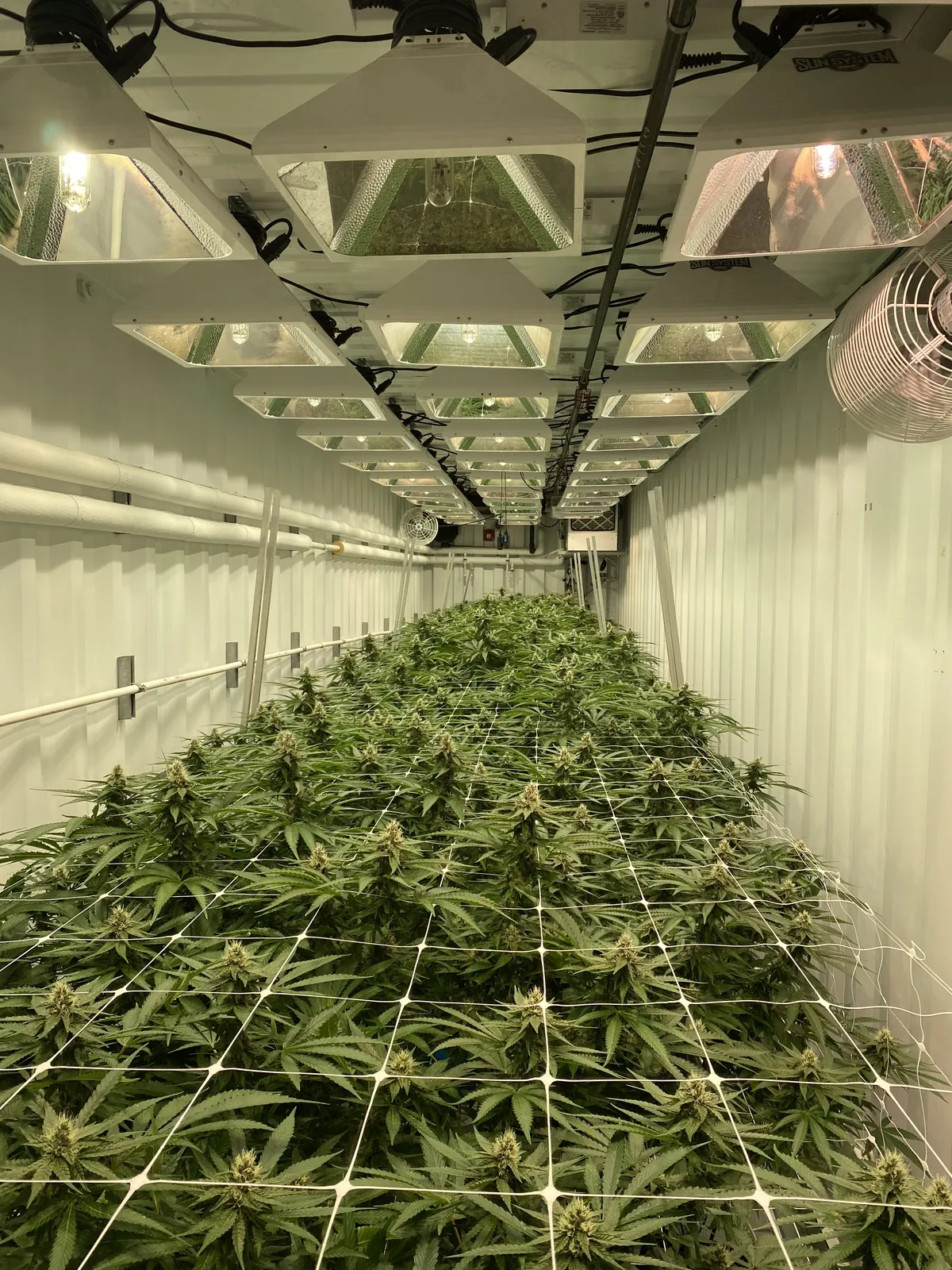
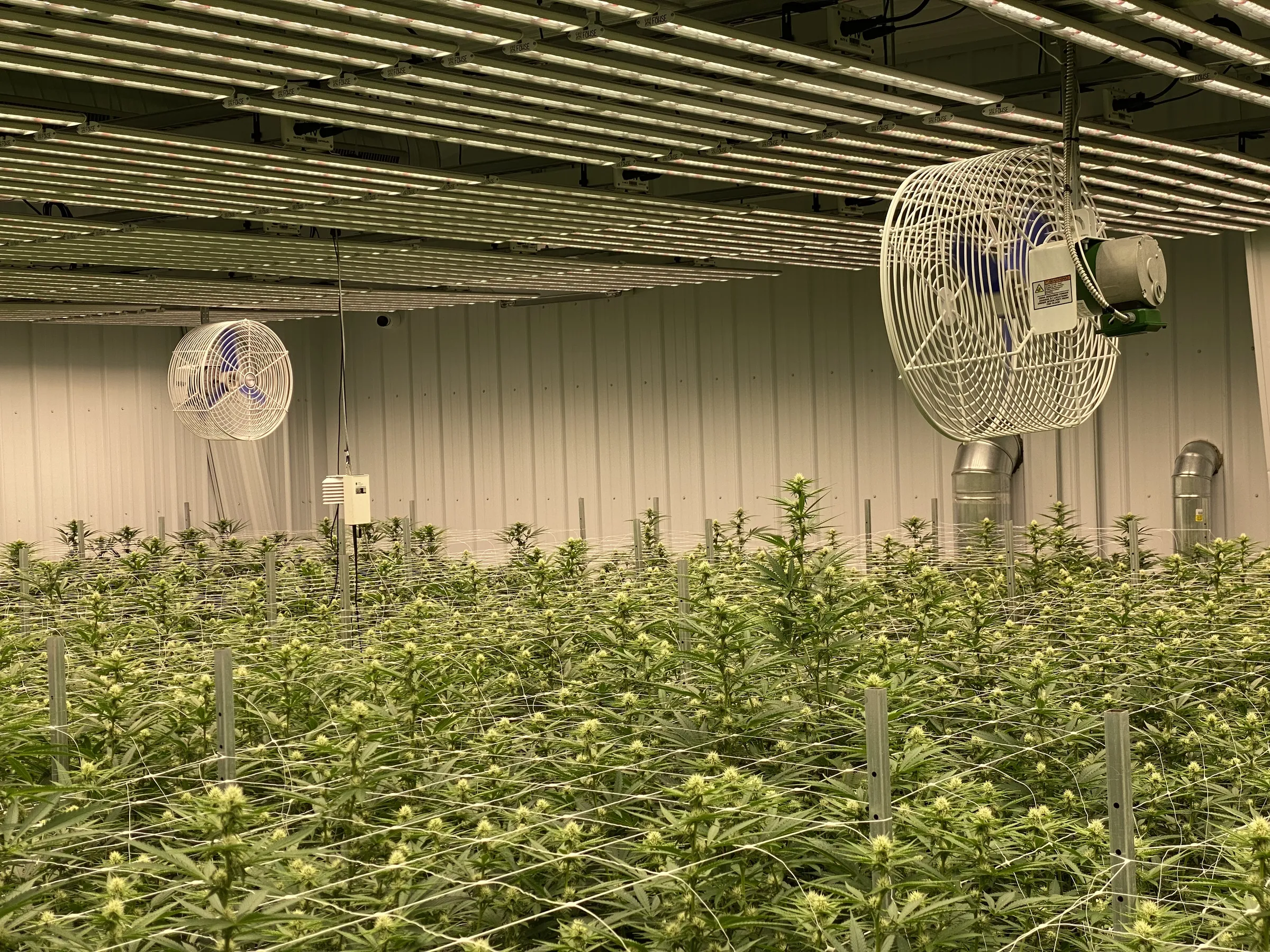
Size to the market: 20,040 patients and 60 dispensaries in 2026. Example: a 10,000 sq ft building at $150 to $500+ per sq ft runs $1.5 million to $5 million or more, plus state and local fees. Design takes 30 to 60 days and the build 3 to 6 months after permits, so start the room plan before Form E is signed.
Power: South Dakota's average commercial electricity price was 10.61 cents per kWh in 2025, against a U.S. average of 13.37 cents, per EIA Electric Power Annual, Table 2.10. Sealed flower rooms carry dehumidification load in every season, so size the plant for heating and cooling months.
South Dakota specifics
Testing. Every batch is tested before retail transfer (ARSD 44:90:09:01): THC potency within 10% of the label, plus microbials, mycotoxins, metals, pesticides and solvents. Any change after testing creates a new final form.
Security. Fixed cameras (44:90:04:07) with recordings kept at least 90 days (44:90:04:09), an alarm system (44:90:04:10) and controlled access with identity checks (44:90:04:13).
Tracking. DOH requires its official seed-to-sale system. Agents get at least 2 hours of recordkeeping training and one administrator 4 hours (44:90:04:16); records are kept 18 months (44:90:11:02).
Packaging and edibles. Retail packaging is child-resistant under 16 C.F.R. 1700.15 (ARSD 44:90:10). A single serving edible may hold up to 100 mg THC, a multiple serving container up to 500 mg (44:90:10:03).
| Topic | South Dakota rule | Design response |
|---|---|---|
| Local siting | Local caps, setbacks and licenses (SDCL 34-20G-58); Form E first | Site and room plan drawn together, room by room, so both filings match |
| Hydrocarbon extraction | Butane, propane, acetone, heptane and pentane need a licensed engineer's written approval (44:90:07:08) | C1D1 room requirements in the MEP set before the engineer visit; used Precision Extraction systems for closed loop work |
| CO2 and ethanol | Permitted at 99% purity with adequate exhaust and fire suppression (44:90:07:07) | Ethanol rooms to NFPA 30 solvent room design, with Pope Scientific distillation downstream |
| Microbial testing | Every batch tested for microbials and mycotoxins (44:90:09:01) | Sealed rooms with Anden dehumidifiers and a microbial prevention protocol |
| Edibles | Food service license; 100 mg per serving, 500 mg per container (44:90:07:09, 44:90:10:03) | Kitchen sized to the caps (edibles equipment) |
What the same work did for an operator like you
What a South Dakota applicant gets from the design desk.
- A South Dakota cannabis compliance review against SDCL 34-20G, ARSD 44:90 and your local ordinance
- Cannabis facility design for a cultivation or manufacturing facility sized to a 20,000 patient market
- A cannabis facility design package in 30 to 60 days: room program, MEP set and equipment schedule matching your operating procedures
- Extraction rooms specified from our cannabis extraction equipment guide, ready for 44:90:07:08 engineer approval
South Dakota questions
How do I get a South Dakota medical cannabis license?
Get Form E from your city or county certifying local compliance, then apply to the Department of Health for an establishment registration certificate: cultivation, manufacturing, dispensary or testing, one per type per address. The state fee was set at $9,000 per initial or renewal application on Sept. 9, 2024 and rises annually by index, so confirm the current figure with DOH.
How do I open a dispensary in South Dakota?
Find a city or county with an open local license; none may ban dispensaries, but they may cap them. Win the local license and Form E, file operating procedures under ARSD 44:90:03:09 and build to the 44:90:04 security rules. Compare Nebraska and Missouri.
Is recreational marijuana legal in South Dakota?
No. The state Supreme Court voided the voter approved Amendment A on Nov. 24, 2021, and voters rejected IM 29 on Nov. 5, 2024, 237,228 to 189,916. The Nov. 3, 2026 ballot carried no cannabis question, so only registered medical establishments may grow, make or sell.
How much does a South Dakota cultivation license cost?
The state set the fee at $9,000 per initial or renewal application on Sept. 9, 2024, rising each year by index; confirm the current figure with DOH. Your city or county adds its own fee. The building is the real cost at $150 to $500+ per sq ft, so 10,000 sq ft starts near $1.5 million.
Can a South Dakota manufacturer use hydrocarbon extraction?
Yes. ARSD 44:90:07:08 allows butane, propane, acetone, heptane and pentane at 99% purity after an inspection and written approval by a licensed engineer of the electrical, gas monitoring, fire suppression and exhaust systems. CO2 and ethanol need adequate systems under 44:90:07:07.
Where the South Dakota rules on this page come from
- South Dakota Department of Health: Medical Cannabis Program, regulator, patient count (Sept. 2026), seed-to-sale requirement
- DOH: Medical Cannabis Establishments List, establishment counts by type (May 12, 2026)
- DOH: Local Government Guidance, local caps, no dispensary ban, SDCL 34-20G-56 to 34-20G-60
- South Dakota Administrative Rules: DOH Medical Cannabis rule package, fee increase to $9,000 under SB 43, effective Sept. 9, 2024
- DOH: Establishment Application Checklist, certificate per type and address, officer residency, processing time
- ARSD Article 44:90 (Justia mirror), registration, security, extraction, testing and record rules
- South Dakota Secretary of State: 2024 Official Election Returns, IM 29 result
- EIA Electric Power Annual, Table 2.10 (2025), average commercial electricity price by state
Regulator: South Dakota Department of Health, Medical Cannabis Program. Last reviewed November 7, 2026.
 Record last reviewed