Alaska cannabis licensing, facility design and equipment.
An Alaska marijuana license comes from the Alcohol and Marijuana Control Office (AMCO) in six types: retail store, standard or limited cultivation, product or concentrate manufacturing, and testing. Applications are accepted year round. As of Nov. 2026 the $50 per ounce cultivator excise tax stands, and no bill to replace it with a sales tax has become law.
Applications accepted year round; $50 per ounce excise tax unchanged as of Nov. 2026
Syncing and validating with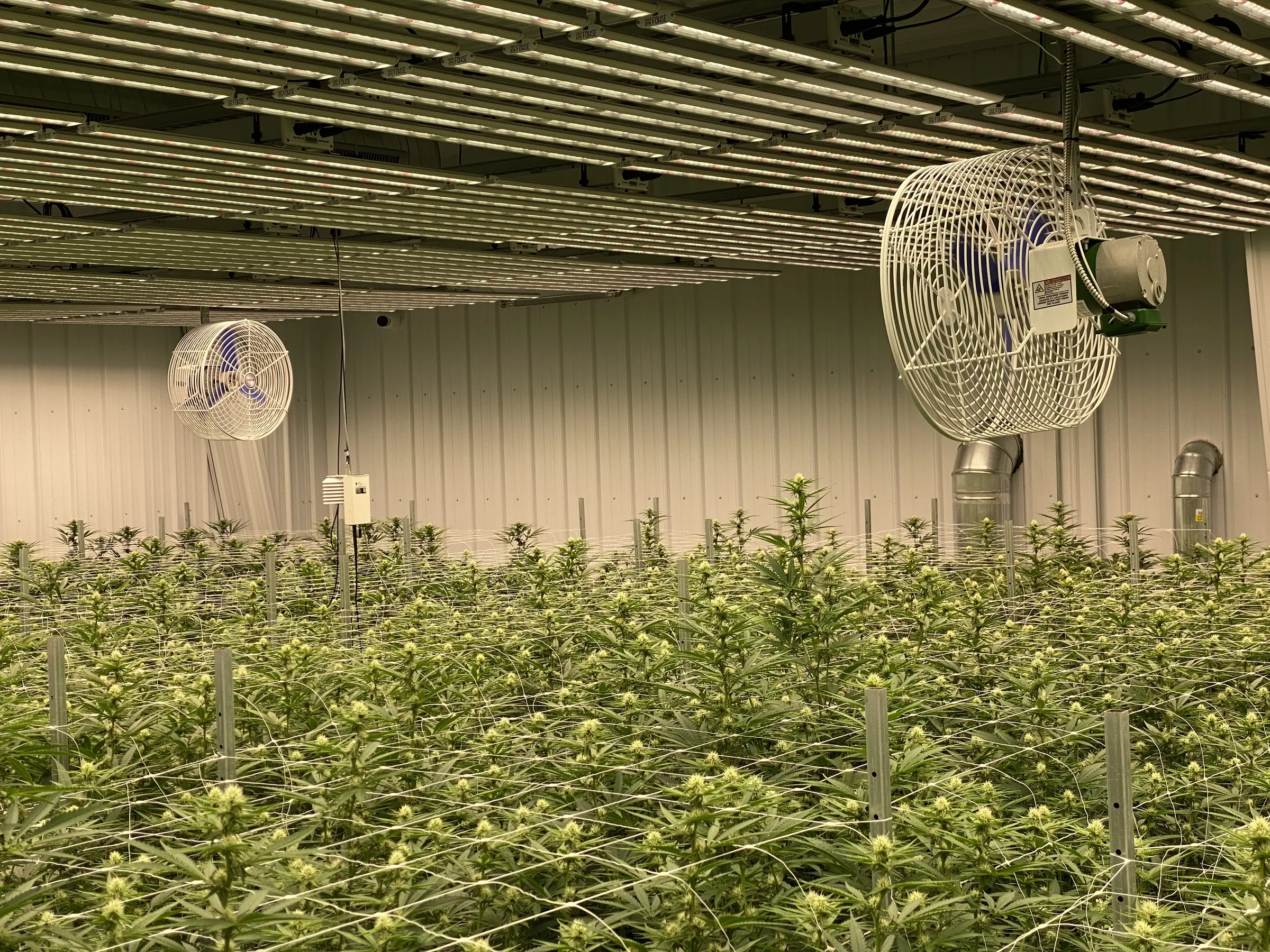
Where Alaska is today
Alaska has run an adult use market since 2016 under the Alcohol and Marijuana Control Office (AMCO) and its Marijuana Control Board. There is no application window; AMCO takes applications year round under 3 AAC 306. 481 licenses came up for renewal in the 2025 to 2026 cycle, with 419 issued by April 7, 2026.
The pressure is on the grow side. Twenty cultivation licenses were surrendered or not renewed in that cycle against five retail stores, and the $50 per ounce excise tax that cultivators pay has not changed; HB 91, a 34th Legislature bill to swap it for a sales tax, had not become law as of Nov. 2026. Compare Alaska with cannabis licensing in every state.
- Feb. 21, 2016. 3 AAC 306 takes effect, setting rules for retail stores, cultivation, manufacturing and testing facilities.
- Jan. 19, 2024. 3 AAC 306.100, as amended that day, sets renewal fees at $7,000 for retail, standard cultivation and product manufacturing licenses.
- May 2024. The House passes HB 119, 36 to 3, to replace the $50 per ounce excise with a retail sales tax; the bill stalls in Senate Finance.
- May 29, 2025. Amended 3 AAC 306.100 cuts renewal fees to $5,000 for retail, standard cultivation and product manufacturing and $1,000 for limited cultivation, concentrate manufacturing and testing.
- April 7, 2026. AMCO reports 481 licenses up for renewal, 26 surrendered (20 of them cultivation) and 419 issued.
How to get a Alaska cannabis license
- Check the local option first. Article 2 of 3 AAC 306 sets local options, so confirm the municipality allows your license type before you sign a lease.
- Pick the license to the room count. Fewer than 500 sq ft under cultivation is a limited license at $1,000 a year; larger is standard at $5,000. Extraction alone is a $1,000 concentrate manufacturing license; edibles need the $5,000 product manufacturing license.
- File the complete packet. AMCO will not review an application until every form is in: premises diagram, operating plan, $1,000 fee. Later changes to the diagram or plan cost $250 each.
- Build to pass the preliminary inspection. Cameras on every restricted area, entrance and point of sale with 40 days of retention (3 AAC 306.720); a second inspection after a failure costs $500. Price it with cannabis financial modeling that carries the $50 per ounce tax.
- Pick your starting point. Dispensary plans: start with cannabis compliance consulting on the local option and premises rules. Cultivation and processing plans: start new license facility planning so the grow survives the excise tax.
What the state issues, and what each one needs built
- Standard and limited cultivation facility. Standard $5,000 a year with no size cap; limited $1,000 a year with fewer than 500 sq ft under cultivation (3 AAC 306.410). Cultivators pay the $50 per ounce excise on transfer.
- Product and concentrate manufacturing facility. Product manufacturing $5,000 a year covers edibles and concentrates; concentrate manufacturing $1,000 a year covers extraction only. Edibles capped at 10 mg THC per serving and 100 mg per package.
- Retail marijuana store. $5,000 a year; onsite consumption endorsement $2,000 a year plus a $1,000 application.
- Testing facility. $1,000 a year. Cultivators and manufacturers must use one for required testing (3 AAC 306.455, 306.550).
What a Alaska facility costs to design and build.
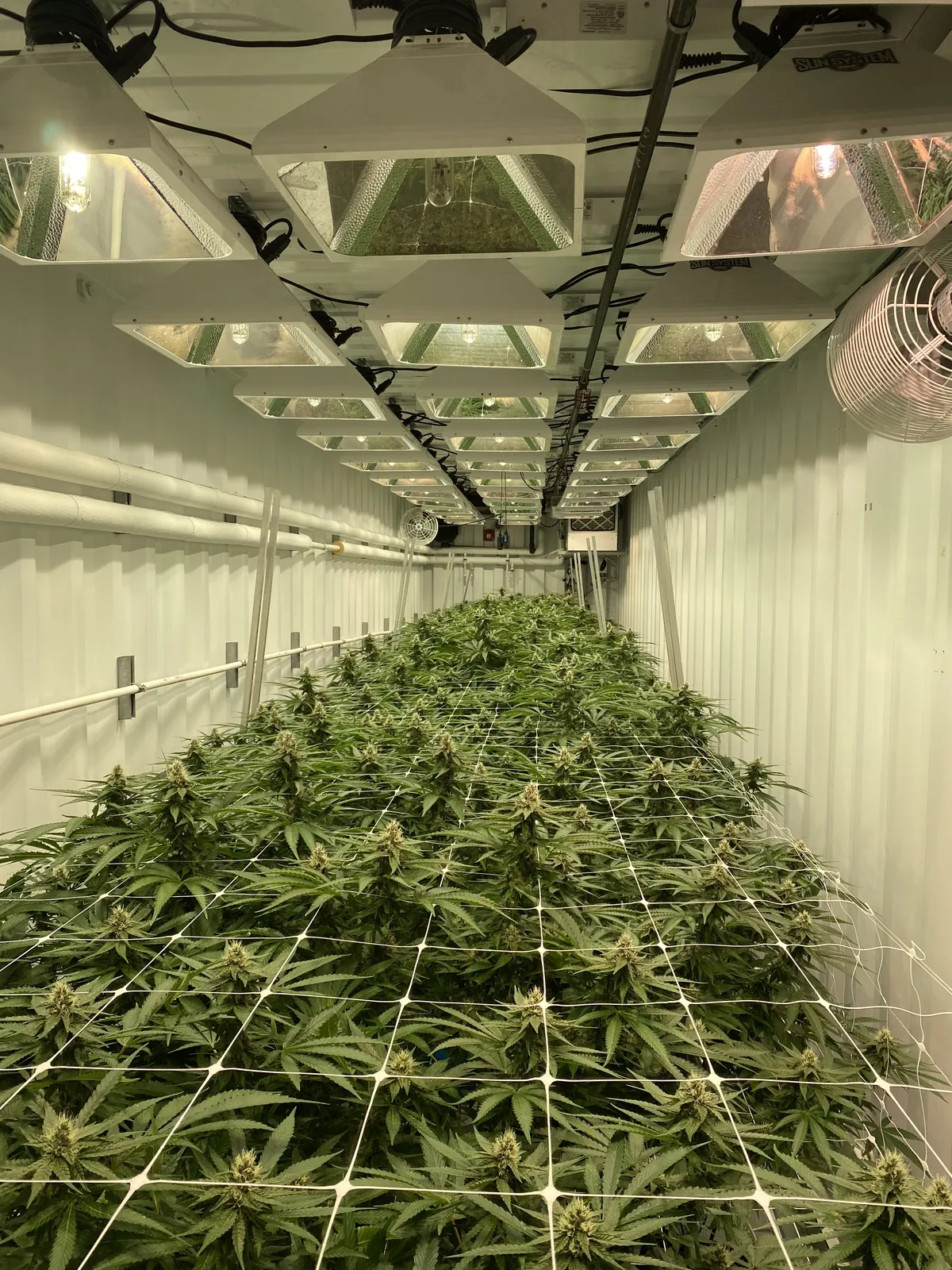
The tax sets the floor. At $50 per ounce, a pound of flower carries $800 in excise before it leaves the grow, so a standard cultivation facility has to produce at low cost per pound or not at all. A 5,000 sq ft flower canopy in a 10,000 sq ft building runs $1.5 million to $5 million or more at $150 to $500+ per sq ft, plus $5,000 a year in license fees. Design takes 30 to 60 days and the build 3 to 6 months after permits.
Alaska's average commercial electricity price was 22.35 cents per kWh in 2025, against a 13.37 cent U.S. average per EIA Electric Power Annual, Table 2.10. Long cold winters shift the HVAC problem from dehumidification to heat recovery and humidification, so model both seasons before you size the plant. Siting is local under the local option rules in Article 2 of 3 AAC 306, so confirm the borough or city before you sign a lease.
Alaska specifics
Testing. Cultivators (3 AAC 306.455) and manufacturers (3 AAC 306.550) must have product tested by a licensed testing facility to the standards in 3 AAC 306.645, and 3 AAC 306.465 covers random sampling.
Security. 3 AAC 306.720 requires cameras on each restricted access area and its entrances, each exterior entrance and each point of sale, a view clear enough to identify any individual, recordings kept at least 40 days in a format that prevents alteration, and grow and manufacturing cameras placed so lighting hoods do not block the view.
Tracking. Every establishment runs an inventory tracking system that shares data with the board's system and follows each plant from seed or cutting to sale or disposal (3 AAC 306.730). Incoming marijuana is weighed on a scale registered under 3 AAC 306.745.
Packaging and edibles. Edibles may not exceed 10 mg active THC per serving or 10 servings and 100 mg per package, and THC must be homogenous (3 AAC 306.560). Hydrocarbon extraction needs 99% pure solvent in a closed loop system certified by a licensed engineer and approved by the local fire code official (3 AAC 306.555).
| Topic | Alaska rule | Design response |
|---|---|---|
| Limited vs standard cultivation | Fewer than 500 sq ft under cultivation is limited, $1,000 a year (3 AAC 306.410) | Stack canopy on NextGen Benching under Thrive Agritech LEDs so a standard room earns its $50 per ounce |
| Extraction | 99% pure hydrocarbons, closed loop, licensed engineer certification, fire code official approval (3 AAC 306.555) | Used Precision Extraction systems in a C1D1 room with the engineer letter in the permit set |
| Cold climate | No odor or climate rule; local code governs | Sealed rooms with heat recovery and Anden dehumidifiers, sized per our cannabis HVAC design guide |
| Edibles | 10 mg per serving, 100 mg per package, homogenous (3 AAC 306.560) | Dosing line specified from our edibles equipment guide |
| Video and scales | 40 day retention; registered scales (3 AAC 306.720, 306.745) | Camera plan and NTEP checkweighing drawn before the preliminary inspection |
What the same work did for an operator like you
What a Alaska applicant gets from the design desk.
- An Alaska cannabis compliance review against 3 AAC 306 and the local option before you file with AMCO
- Cannabis facility design for a standard cultivation and manufacturing facility built for cost per pound under the $50 per ounce tax
- A cannabis facility design package in 30 to 60 days: room program, MEP set and equipment schedule, with heat recovery sized for the climate
- Closed loop extraction rooms specified from our cannabis extraction equipment guide with the engineer certification 3 AAC 306.555 requires
Alaska questions
How do I get an Alaska marijuana license?
Apply to AMCO at any time with a complete packet, a $1,000 application fee and a premises the local government allows. The Marijuana Control Board approves after review and a preliminary inspection. Annual fees are $5,000 for retail, standard cultivation and product manufacturing and $1,000 for limited cultivation, concentrate manufacturing and testing.
How do I open a dispensary in Alaska?
Hold a retail marijuana store license: $1,000 to apply, $5,000 a year, cameras on every entrance and point of sale with 40 day retention, and a $2,000 a year onsite consumption endorsement if you want a lounge. Check the local option first, then compare the Nevada cannabis license process.
What is the difference between a limited and standard cultivation license in Alaska?
Size. A limited cultivation facility has fewer than 500 sq ft under cultivation and pays $1,000 a year; a standard facility has no size cap and pays $5,000. Both pay the $50 per ounce excise on transfer, and 13 limited and 7 standard licenses were surrendered or not renewed in the 2025 to 2026 renewal cycle.
Is Alaska changing its marijuana tax in 2026?
Not yet. The excise is still $50 per ounce paid by cultivators. HB 119 passed the House 36 to 3 in May 2024 but stalled in Senate Finance, and HB 91 in the 34th Legislature had not become law as of Nov. 2026.
Does Alaska require a closed loop extraction system?
Yes for solvents. 3 AAC 306.555 requires 99% pure butane, propane, isobutane or heptane in a professional grade closed loop system, proper ventilation, ignition control, a licensed engineer's certification and approval by the local fire code official. Ethanol must be recaptured, not vented. See our NFPA 30 solvent room guide.
Where the Alaska rules on this page come from
- AMCO: Marijuana License Application, license types and fees, year round applications, 2026 to 2027 renewal notice
- AMCO: MCB Licensing Statistics, April 7, 2026, 481 renewals, 26 surrenders by type, 419 issued
- 3 AAC 306.100 Fees, application, annual, endorsement and handler fees, 2024 and 2025 versions
- 3 AAC 306.410, limited cultivation facility under 500 sq ft
- 3 AAC 306.720, video surveillance and 40-day retention
- 3 AAC 306.555, concentrate production, closed loop, engineer and fire code approval
- 3 AAC 306.560, edible potency limits
- 3 AAC 306.730, inventory tracking system
- Alaska Legislature: HB 119 (33rd Legislature), $50 per ounce excise in AS 43.61.010, proposed $12.50 and 3% sales tax
- EIA Electric Power Annual, Table 2.10 (2025), average commercial electricity price by state
Regulator: Alcohol and Marijuana Control Office (AMCO), Marijuana Control Board. Last reviewed November 7, 2026.
 Record last reviewed