Arkansas cannabis licensing, facility design and equipment.
An Arkansas medical marijuana license comes from the Arkansas Medical Marijuana Commission, and as of Nov. 2026 all 8 cultivation licenses are issued, 37 dispensaries operate and processor licenses are uncapped. No grow or retail window is open, Issue 3 was struck from the 2024 count by the Arkansas Supreme Court, and 2025 sales set a record at $291.1 million.
8 cultivators, 37 dispensaries, no grow or retail window; 2025 sales a record $291.1 million (DFA, Jan. 2026)
Syncing and validating with
Where Arkansas is today
Arkansas is a medical-only market created by Amendment 98 in Nov. 2016. The Arkansas Medical Marijuana Commission issues cultivation facility and dispensary licenses, the Alcoholic Beverage Control Division writes and enforces the operating rules, and the Department of Health runs the patient registry, which counted 115,113 active cards in Jan. 2026. The Commission released its last two cultivation licenses on June 30, 2020, bringing cultivators to 8, and 37 dispensaries operate.
The Arkansas Supreme Court ordered votes on Issue 3 not counted on Oct. 21, 2024, so the 2024 expansion did not happen, and no 2025 law opened new licenses. Compare Arkansas with cannabis licensing in every state.
- Nov. 2016. Voters approve Amendment 98, 53% to 47%; medical only, no home grow, dispensaries and cultivation facilities licensed by a new Commission.
- May 10, 2019. First dispensary opens in Hot Springs.
- June 30, 2020. Commission releases the last two cultivation licenses (eight total) and four more dispensary licenses.
- Oct. 21, 2024. Arkansas Supreme Court, No. CV-24-652, rules the Issue 3 ballot title misleading; votes are not counted.
- April 8, 2025. Act 491 requires finished-form testing of every processed medical marijuana product; the Governor vetoes HB 1889 (delivery and drive-through) on April 16.
- Jan. 23, 2026. DFA reports record 2025 sales of $291.1 million and 79,223 pounds across 37 dispensaries.
How to get a Arkansas cannabis license
- Know which caps are full. All 8 cultivation licenses are issued and 37 dispensaries operate under a rule cap of 40, with no grow or retail window open. Commission rules (Section VI) set no cap on processor licenses, so ask the Commission whether it is taking processor applications. Otherwise entry is a license transfer approved by the Commission, or a new vote: the 2024 expansion died in court.
- Watch the ballot and the Capitol. Arkansans for Patient Access qualified in 2024 and lost on ballot language; a 2028 measure would need a new petition.
- Underwrite a transfer. Price the target against the DFA sales data (37 dispensaries sold $291.1 million in 2025) with cannabis financial modeling.
- Plan the retrofit. Arkansas's first dispensary opened May 10, 2019 and its last two cultivation licenses issued June 30, 2020; a change of ownership is the moment to fix dehumidification, airflow and the testing bottleneck from Act 491. See cannabis profitability consulting.
- Pick your starting point. Dispensary plans: scope the back-of-house and any on-site grow with cannabis facility design. Cultivation and processing plans: start facility planning for the acquired site so capacity, not the license, becomes the constraint.
What the state issues, and what each one needs built
- Cultivation facility. Grows and sells to dispensaries; Commission rules allow 4 to 8 facilities and all 8 licenses are issued. $15,000 application fee, $100,000 license fee, $100,000 annual renewal and a $500,000 performance bond (Section IV).
- Dispensary. Sells to registered patients and may grow a limited plant count on site; Commission rules allow 20 to 40 and 37 operate. $7,500 application fee, $15,000 license fee, $22,500 annual renewal and a $100,000 performance bond (Section V). Municipalities may ban dispensaries and cultivation facilities, so local approval decides the site.
- Processor and transporter. Commission rules (Section VI) license processors to manufacture products and supply dispensaries and cultivation facilities; a processor may not grow or dispense. $5,000 license fee, $5,000 renewal and a $100,000 performance bond. Transporters hold a separate Commission license, and Act 491 of 2025 requires every processed product to be tested in finished form.
What a Arkansas facility costs to design and build.
With eight cultivators supplying 37 dispensaries and $291.1 million in 2025 sales, Arkansas capital goes into acquisitions and expansions rather than new licenses. A 20,000 sq ft cultivation expansion at $150 to $500+ per sq ft runs $3 million to $10 million or more. Design takes 30 to 60 days and the build 3 to 6 months after permits, and the retrofit should be scoped before the transfer closes.
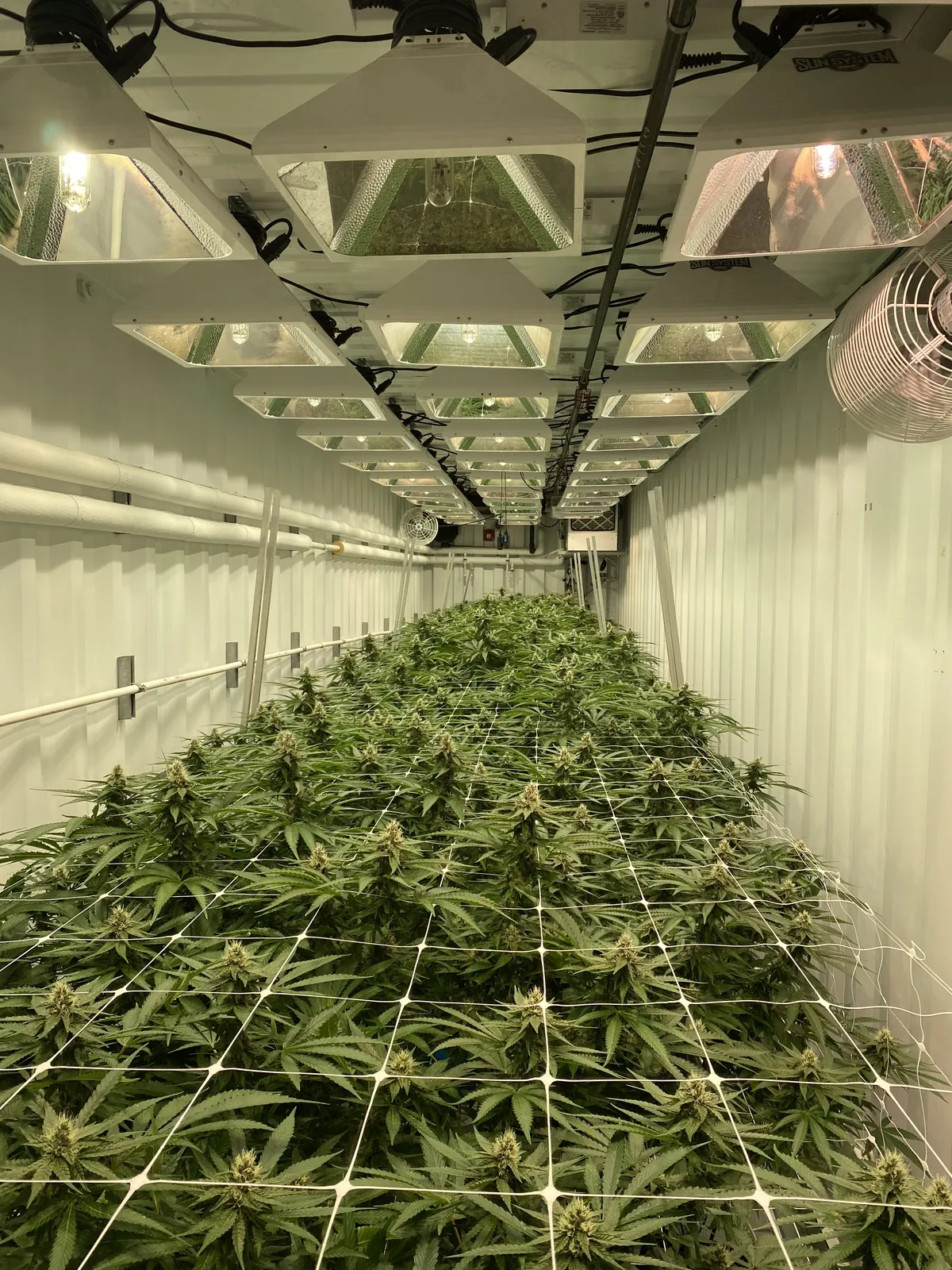
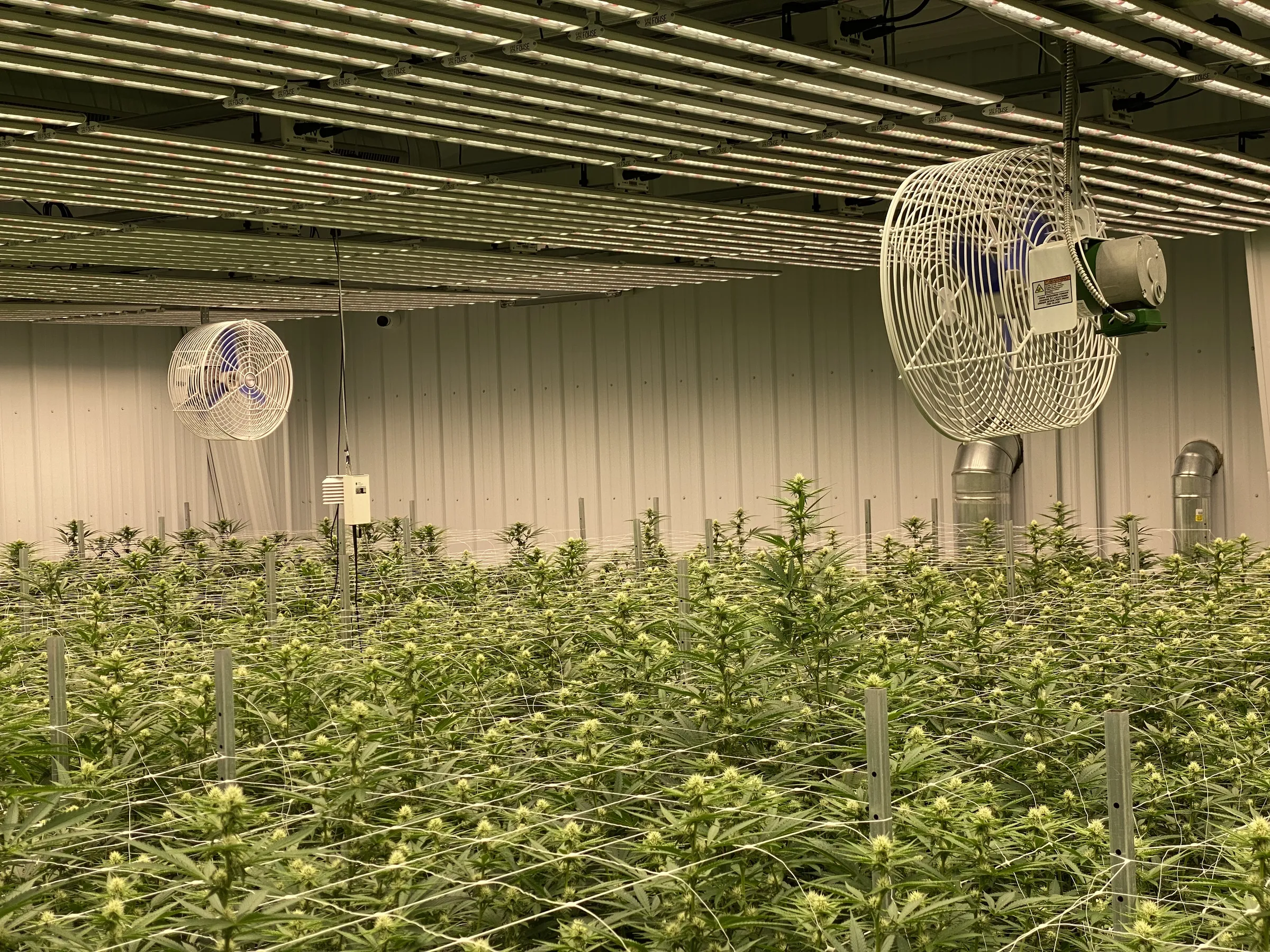
Power: Arkansas's average commercial electricity price was 10.76 cents per kWh in 2025, well below the 13.37 cent U.S. average, per EIA Electric Power Annual, Table 2.10. The humid subtropical climate puts summer dew points in the dehumidification budget, so size Quest dehumidifiers, sourced on request, to latent load. Siting: municipalities may ban dispensaries and cultivation facilities, so confirm the local ordinance before a lease or purchase.
Arkansas specifics
Testing. Act 491 of 2025 (Ark. Code 20-56-309) requires every processed product sold as medical marijuana, including edibles, oils, tinctures, topicals and inhalables, to be tested in finished form ready for packaging for pesticides, heavy metals, microbiological contaminants, residual solvents and THC and CBD concentration under Department of Health rules.
Security. ABC's operating rules (ABC-1) require biometric access control with two factor authentication on exterior locks, alarms that signal a central station or police, and cameras recording at least 10 frames per second that keep running in a power outage. Video archives are kept one year at cultivation facilities and processors (sections 6.5 and 8.5) and 90 days at dispensaries (section 7.5).
Tracking. Every plant and sale goes into ARSTEMS, the state's BioTrack system licensed to the Department of Health. ABC-1 section 12 requires each transaction to be entered immediately, with discipline possible after 24 hours, plus weekly plant counts and a full inventory every six months.
Packaging and edibles. ABC-1 section 15.1 requires sealed, traceable, food compliant containers that children cannot readily open, packaging that does not appeal to minors and labels to Department of Health standards. Section 14.4 caps edibles at 10 mg of active THC per portion, or 10 mg for the whole item when portions cannot be determined.
| Topic | Arkansas rule | Design response |
|---|---|---|
| Finished-product testing | Every processed product tested in finished form for five analyte groups (Act 491 of 2025) | In-house potency screening with Orange Photonics analyzers before the lab sample, per our testing equipment guide |
| Microbial contaminants | Microbiological testing on every finished product (Act 491) | Anden dehumidifiers, carried by Urth & Fyre, and airflow built for microbial prevention |
| Residual solvents | Residual solvent testing on every processed product, inhalables and oils included (Act 491) | Used Cascade Sciences vacuum ovens in a purge room drawn to C1D1 requirements |
| Fixed license count | 8 cultivators supply 37 dispensaries; all 8 cultivation licenses issued | Yield per room is the lever: Breeza fans and canopy layout from the grow room design guide |
What the same work did for an operator like you
What a Arkansas applicant gets from the design desk.
- An Arkansas cannabis compliance review of an acquisition target against Act 491 testing and the ABC rules before close
- Cannabis facility design for cultivation expansions and processing rooms inside the existing license
- A cannabis facility design package in 30 to 60 days: room program, MEP set and equipment schedule
- Dehumidification and airflow fixes specified from our cannabis HVAC design guide for a humid climate
Arkansas questions
How do I get an Arkansas medical marijuana license?
For cultivation or retail, buy one. The Medical Marijuana Commission has issued all 8 cultivation licenses, 37 dispensaries operate under Amendment 98, and no grow or retail window is open as of Nov. 2026. Commission rules set no cap on processor licenses, so ask the Commission about a processor application. A change of ownership goes to the Commission for approval, and the ABC rules govern the facility from the day you take over.
Can I open a dispensary in Arkansas?
Only by acquiring one of the 37 operating dispensaries, since Commission rules cap dispensaries at 40 and the Commission has no open round. Municipalities may also ban dispensaries, so a relocation needs a willing city. For a Southeast market with a licensing clock, compare Florida.
Did Arkansas expand medical marijuana in 2024?
No. Issue 3 collected enough signatures, but on Oct. 21, 2024 the Arkansas Supreme Court ruled its ballot title misleading and ordered the votes not counted. Home grow, telemedicine certification, three-year cards and a federal trigger for adult use all fell with it, so the 2016 structure stands.
How big is the Arkansas medical marijuana market?
DFA reported $291.1 million in 2025 sales, a record and up 5.5% from 2024, on 79,223 pounds sold through 37 dispensaries to 115,113 active patients. Two state taxes raised $32.3 million in 2025. Eight cultivators supply the whole market, which is why cultivation capacity is the asset buyers price.
What testing does Arkansas require?
Act 491 of 2025 requires every processed medical marijuana product to be tested in its finished, ready-to-package form for pesticides, heavy metals, microbiological contaminants, residual solvents and THC and CBD content. That moves the testing hold to the end of the line, so we design the packaging room and quarantine storage around it, with microbial compliance built in upstream.
Where the Arkansas rules on this page come from
- Arkansas Medical Marijuana Commission, licensing authority for cultivation facilities and dispensaries
- Medical Marijuana Commission licensing rules (2022), license caps, fees and performance bonds for cultivation facilities, dispensaries and processors
- ABC-1 operating rules for cultivation facilities, processors and dispensaries (2022), security, video retention, inventory entry, packaging and the 10 mg edible cap
- ARSTEMS Medical Marijuana Tracking System, state seed-to-sale system operated under license to the Department of Health
- SB 305 of 2025, enacted as Act 491, finished-form testing of processed products, Ark. Code 20-56-309
- University of Arkansas Cooperative Extension, Oct. 28, 2024, Supreme Court ruling No. CV-24-652 on Issue 3
- Ballotpedia: Arkansas Medical Marijuana Expansion Initiative (2024), Issue 3 provisions, Amendment 98 structure, local bans
- Talk Business and Politics, Jan. 23, 2026 (DFA release), 2025 sales, pounds, patients, dispensary count, taxes
- Cannabis Business Times, July 1, 2020, Commission vote releasing the last two cultivation licenses
- HB 1889 of 2025 action history, veto of delivery and drive-through bill
- EIA Electric Power Annual, Table 2.10 (2025), average commercial electricity price by state
Regulator: Arkansas Medical Marijuana Commission (Department of Finance and Administration). Last reviewed November 7, 2026.
 Record last reviewed