District of Columbia cannabis licensing, facility design and equipment.
A DC cannabis license is a medical license from the Alcoholic Beverage and Cannabis Administration (ABCA): cultivation center, manufacturer, retailer, internet retailer, courier or testing laboratory. No application window is open as of Nov. 2026; the last closed Aug. 29, 2024. Adult use sales stay blocked by the federal rider renewed Feb. 3, 2026.
No ABCA application window open as of Nov. 2026; federal rider blocking adult use sales renewed Feb. 3, 2026
Syncing and validating with
Where District of Columbia is today
The District of Columbia runs a medical program with no adult use sales under the Alcoholic Beverage and Cannabis Administration (ABCA). ABCA counted 69 licensed retailers in June 2026 and lists 9 cultivation centers, 10 manufacturers, 1 courier and 1 testing laboratory. Caps ended March 22, 2023, but every application period is closed; the last ended Aug. 29, 2024, and none is posted for 2025 or 2026.
Adult use sales stay blocked. Section 809 of the Consolidated Appropriations Act, 2026, signed Feb. 3, 2026, bars the District from spending funds to legalize recreational sales, and ABCA had padlocked 113 unlicensed I-71 shops between July 15, 2024 and June 15, 2026. Compare DC with cannabis licensing in every state.
- November 2014. Initiative 71 passes: adults 21 and over may possess 2 ounces, grow 6 plants and transfer 1 ounce, with no sales.
- March 22, 2023. Medical Cannabis Amendment Act of 2022 takes effect: caps removed, manufacturer, internet retailer and courier licenses created, 50% of new licenses set aside for social equity applicants.
- Nov. 1, 2023 to Jan. 29, 2024. Unlicensed operator window: I-71 shops apply for cultivation center, retailer or internet retailer licenses.
- July 15, 2024. ABCA's padlock authority takes effect; the first testing laboratory is licensed Aug. 16, 2024, and the last application period closes Aug. 29, 2024.
- Feb. 3, 2026. Consolidated Appropriations Act, 2026 is signed with the Section 809 rider. An emergency act in force July 30 to Oct. 28, 2026 let conditional licensees convert on a zoning certificate.
- Dec. 31, 2026. Retailer and internet retailer licensure period ends; cultivation center and manufacturer periods run through 2028.
How to get a District of Columbia cannabis license
- Watch the open application schedule. Every ABCA period is closed and none is posted for 2025 or 2026. Testing lab licenses and retailer endorsements are accepted any time.
- Qualify the entity. A corporation incorporated in the District, owners 21 and over, District taxes current. At least 50% of new licenses are set aside for social equity applicants.
- Site to the 400 foot rules. Retailers may not sit in a residential district or within 400 feet of a preschool, school, recreation center or another retailer. An emergency act in force July 30 to Oct. 28, 2026 let a zoning certificate convert a conditional license; confirm the current rule with ABCA and lock the site early.
- Budget fees and the 45 day comment period. Fees are due within one business day of acceptance, then 45 days of public comment and a Board vote. Run cannabis financial modeling first.
- Pick your starting point. Dispensary plans: 69 retailers already serve 41,000 patients a month, so price an acquisition with cannabis compliance consulting. Cultivation and processing plans: start new license facility planning for the tier you can fund.
What the state issues, and what each one needs built
- Cultivation center. Six canopy tiers, Tier 1 (up to 10,000 sq ft) to Tier 6 (over 100,000 sq ft). $8,000 application; $11,000 to $36,000 a year by tier. Maximum 2 per licensee, and a manufacturer license is needed to make products. 9 listed.
- Manufacturer. Type 1 (manufacturing only) $4,000 a year; Type 2 (manufacturing and extraction) $8,000 a year; $4,000 application; no cap. 10 listed.
- Retailer and internet retailer. $8,000 application, $16,000 a year, 3 combined per licensee. 69 retailers as of June 2026.
- Courier and testing laboratory. Courier $4,000 application, $8,000 a year. Testing lab $0 application, $7,500 a year, accepted any time. One of each operating.
- Conditional license. $2,000 with 3 years to secure a site. Social equity applicants pay 25% of fees for 3 years.
What a District of Columbia facility costs to design and build.
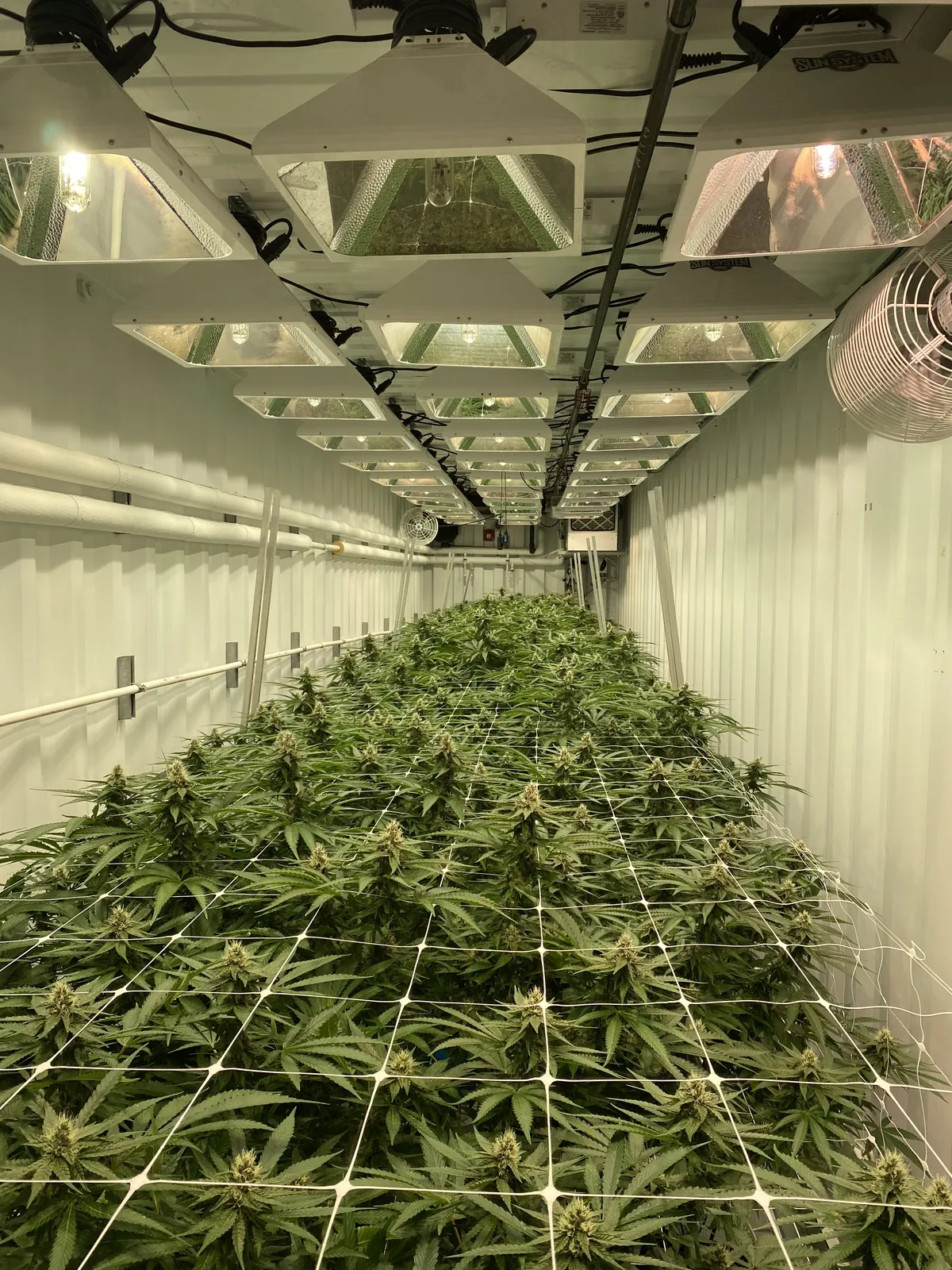
Size the program to the fee tier. A Tier 1 cultivation center with 10,000 sq ft of canopy in a 16,000 sq ft building runs $2.4 million to $8 million or more at $150 to $500+ per sq ft, plus $8,000 to apply, $11,000 a year and $8,000 a year for a Type 2 manufacturer license if you extract. Design takes 30 to 60 days and the build 3 to 6 months after permits; a conditional license is cancelled 3 years after approval if no complete application is in.
The District's average commercial electricity price was 20.43 cents per kWh in 2025, up from 17.07 in 2024, against a 13.37 cent U.S. average per EIA Electric Power Annual, Table 2.10. Hot, humid summers push the dehumidification load, so model kWh per pound before you pick a tier. Siting is statutory: no residential districts, 400 feet from schools, preschools, recreation centers and other retailers, and the Board may cap licenses by Ward or ANC.
District of Columbia specifics
Testing. Cultivation centers and manufacturers must have every product tested by a District licensed laboratory before transfer, in force since Aug. 16, 2024. Untested cannabis is grounds to padlock a shop under D.C. Code 7-1671.08(g)(2)(B).
Security. ABCA's facility checklist calls for 24 hour cameras, 30 days of video retention, a professionally monitored alarm, a vault, a safe for cash and records, outdoor lighting sunset to sunrise and security training within 30 days of hire. Nothing may be visible from public property (D.C. Code 7-1671.06(p)).
Tracking. METRC is the District's real time records system, and 22-C DCMR 5615.3 requires every entry to be true and complete. A Feb. 11, 2026 Board order suspended a retailer 30 days for false METRC entries and dispensing to a person who was not a registered patient.
Packaging and edibles. During the 2023 to 2024 unlicensed operator window, products or packaging especially appealing to children still drew cease and desist orders. Testing must clear before any package leaves a manufacturer, so sequence labeling after lab release.
| Topic | District of Columbia rule | Design response |
|---|---|---|
| Cultivation tiers | Annual fee set by mature plant canopy, $11,000 up to 10,000 sq ft | Multi tier rooms on NextGen Benching under Thrive Agritech lighting |
| Humid climate | No odor rule on ABCA pages; local code governs | Sealed rooms with Anden dehumidifiers, sized per our cannabis HVAC design guide |
| Extraction | Manufacturer Type 2 license covers extraction, $8,000 a year | Used Precision Extraction systems in a C1D1 room drawn into the MEP set |
| Testing | District licensed lab test before any transfer | Airflow and sanitation built for microbial pass rates |
What the same work did for an operator like you
What a District of Columbia applicant gets from the design desk.
- A DC cannabis compliance review against D.C. Code 7-1671.06, Title 22-C DCMR and the ABCA facility checklist
- Cannabis facility design for a cultivation center and manufacturer under one roof in a Ward 5 industrial building
- A cannabis facility design package in 30 to 60 days: room program, MEP set and equipment schedule sized to your canopy tier
- Extraction rooms specified from our cannabis extraction equipment guide for the Type 2 manufacturer license
District of Columbia questions
How do I get a DC cannabis license?
Apply to ABCA during an open application period for a cultivation center, manufacturer, retailer, internet retailer, courier or testing laboratory license. Every period is closed as of Nov. 2026 and none is posted. Testing lab licenses are accepted any time; a conditional license gives you 3 years to find a site.
How do I open a dispensary in DC?
You need an ABCA retailer license: $8,000 to apply, $16,000 a year, and a site outside residential districts and 400 feet from schools, recreation centers and other retailers. With no window open, buy into one of the 69 licensed retailers or compare the Maryland cannabis license next door.
Is recreational cannabis legal in DC?
Possession, home grow and gifting are legal for adults 21 and over under Initiative 71, but sales are not. Section 809 of the Consolidated Appropriations Act, 2026, signed Feb. 3, 2026, bars the District from legalizing sales, and ABCA and MPD had padlocked 113 unlicensed shops by June 15, 2026.
How much does a cultivation license cost in Washington DC?
$8,000 to apply, then $11,000 a year for Tier 1 (up to 10,000 sq ft of canopy) rising to $36,000 for Tier 6 (over 100,000 sq ft). Social equity applicants pay 25% for 3 years. Add a manufacturer license at $4,000 or $8,000 a year, and plan $150 to $500+ per sq ft for the build.
Does DC use METRC?
Yes. METRC is the District's real time electronic records system, and 22-C DCMR 5615.3 requires every entry to be true and complete. In Feb. 2026 the Board suspended a retailer 30 days over false entries, so design intake, vault and packaging rooms around scan points and NTEP checkweighing.
Where the District of Columbia rules on this page come from
- ABCA: Open Application Schedule, every past period and the absence of a 2025 or 2026 window
- ABCA: Medical Cannabis Business Fee Schedule, application, annual, tier, endorsement and transfer fees, licensure period end years
- D.C. Code 7-1671.06, license limits, 400-foot siting rules, social equity set aside, security plan, 8-ounce limit
- ABCA: Medical Cannabis Program Report, June 2026, 69 retailers, patients served, monthly sales, closures by ward
- ABCA release, June 15, 2026, 113 unlicensed shops padlocked since July 15, 2024
- ABCA: Mayor signs Emergency Amendment Act of 2026, zoning certificate conversion, conditional license expiration
- Board Order No. 2026-211, Feb. 11, 2026, METRC rule 22-C DCMR 5615.3, testing and dispensing rules
- CRS: FY2026 District of Columbia Budget and Appropriations, P.L. 119-75 Section 809 rider, signed Feb. 3, 2026
- EIA Electric Power Annual, Table 2.10 (2025), average commercial electricity price by state
Regulator: Alcoholic Beverage and Cannabis Administration (ABCA). Last reviewed November 7, 2026.
 Record last reviewed