Georgia cannabis licensing, facility design and equipment.
A Georgia medical cannabis license means one of six production licenses (2 Class 1, 4 Class 2) or a dispensing license tied to them, and the Commission has no open application window as of Nov. 2026. SB 220 took effect July 1, 2026, replacing the 5% THC cap with a 12,000 mg possession limit and allowing vaporization.
SB 220 in effect July 1, 2026; 5% THC cap removed; no production or dispensing window open as of Nov. 2026
Syncing and validating with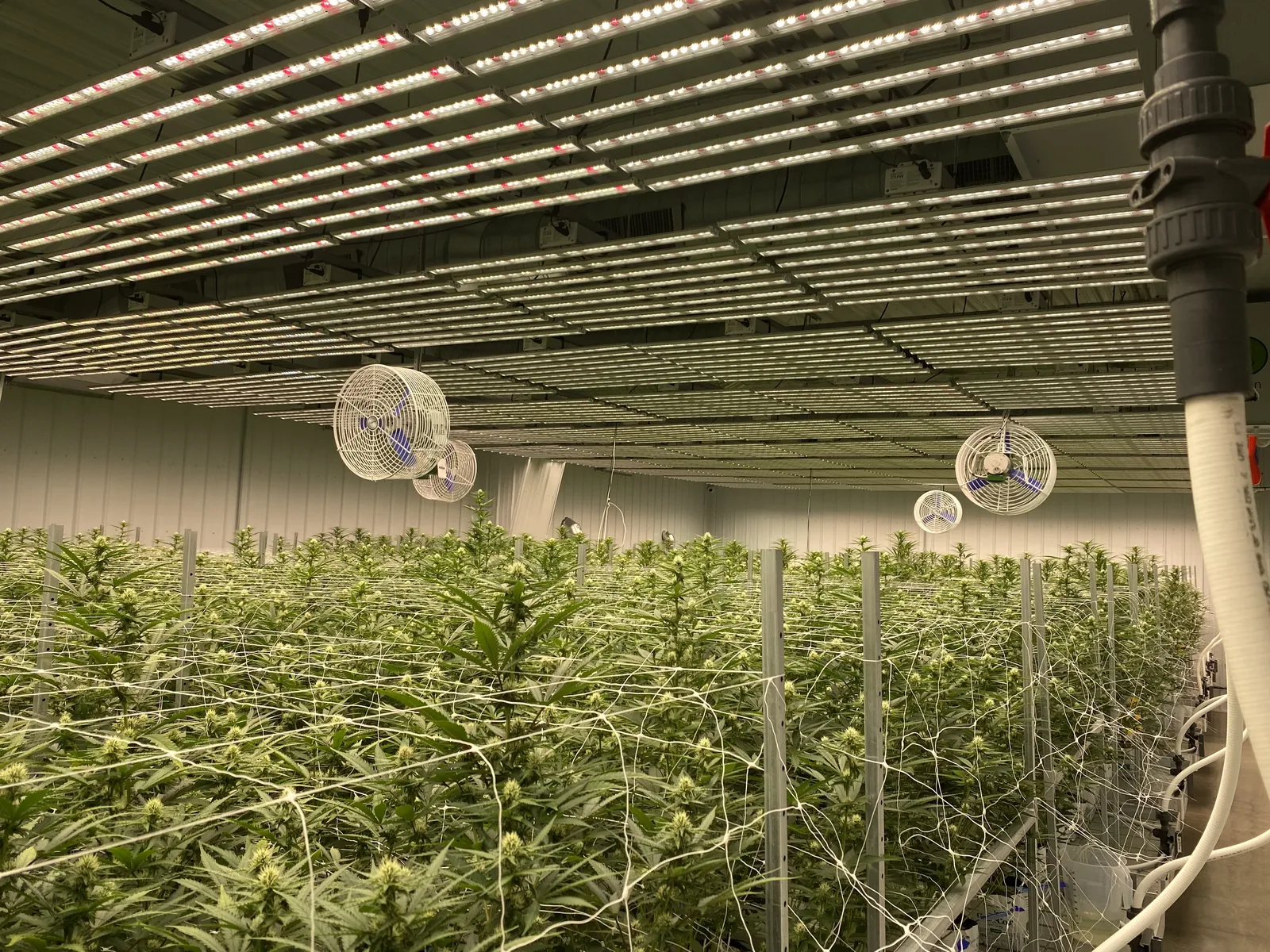
Where Georgia is today
Georgia runs a limited medical program under the Georgia Access to Medical Cannabis Commission. Statute caps production at 2 Class 1 and 4 Class 2 licenses, all six active as of Nov. 4, 2026, and dispensing licenses go only to those producers or to independent pharmacies through the State Board of Pharmacy. The Commission lists no open request for proposals.
SB 220 took effect July 1, 2026: low THC oil became "medical cannabis," the 5% THC cap gave way to a 12,000 mg possession limit and 1,200 mg per package, and vaporizer products, including flower for vaporization, opened to patients over 21. Amended production rules followed Oct. 26, 2026. Compare Georgia with cannabis licensing in every state.
- 2019. HB 324 passes; the Commission lists it with HB 1 (2015), SB 195 (2021) and SB 220 (2026) as the law behind O.C.G.A. 16-12-200 to 16-12-236.
- Sept. 21, 2022. Class 1 production licenses awarded from the RFP that closed Jan. 27, 2021; Class 2 awards follow in November 2023.
- April 26, 2023. First five dispensing licenses issued.
- Nov. 15, 2024. Registry passes 25,000 patients, releasing one more dispensing license per producer, then one per additional 10,000 patients (O.C.G.A. 16-12-206).
- July 1, 2026. SB 220 takes effect: 5% cap removed, vaporization allowed, new qualifying conditions.
- Oct. 26, 2026. Amended production rules (Chapter 351-4) take effect. The patient card fee rises to $75 on Dec. 5, 2026.
How to get a Georgia cannabis license
- Confirm the window is closed. No open RFP, and the caps of 2 Class 1 and 4 Class 2 are full. New licenses need a statute change or a vacated license; watch the Commission's rules page and meeting notices.
- Track the dispensing formula. Each producer earns one more dispensing license per 10,000 patients added to the registry (O.C.G.A. 16-12-206). Producers open those stores, so a Georgia dispensary plan means a producer partnership.
- Check the pharmacy route. An independent pharmacy with a registered office in Georgia may request a specialty dispensing license from the State Board of Pharmacy, the only path outside the six producers.
- Site to the setbacks. Production sits 3,000 feet and dispensing 1,000 feet, property line to property line, from schools, early care programs and pre-existing places of worship (O.C.G.A. 16-12-215). Local zoning applies on top.
- Pick your starting point. Dispensary plans: model the partnership and county tier fees with cannabis financial modeling. Cultivation and processing plans: start new license facility planning toward the 50,000 or 100,000 sq ft cap.
What the state issues, and what each one needs built
- Class 1 production. Up to 2 licenses; indoor cultivation capped at 100,000 sq ft, plus manufacturing. $25,000 application, $200,000 license fee, $100,000 annual renewal, a $1.5 million bond or letter of credit and $2 million in cash reserves; operational within 12 months or revoked. Both held (Botanical Sciences, Glennville; Trulieve GA, Adel).
- Class 2 production. Up to 4 licenses; indoor cultivation capped at 50,000 sq ft. $5,000 application, $100,000 license, $50,000 renewal, a $625,000 bond and $1.25 million in reserves. All four held.
- Dispensing license. Producers only: 5 each, plus one at 25,000 registered patients and one per additional 10,000. $5,000 application; license $15,000 to $30,000 and renewal $25,000 to $40,000 by county tier. 28 active as of Nov. 4, 2026. Independent pharmacies may hold a Board of Pharmacy specialty dispensing license.
- Independent laboratory. $10,000 registration; one lab registered (SJ Labs and Analytics, Macon).
What a Georgia facility costs to design and build.
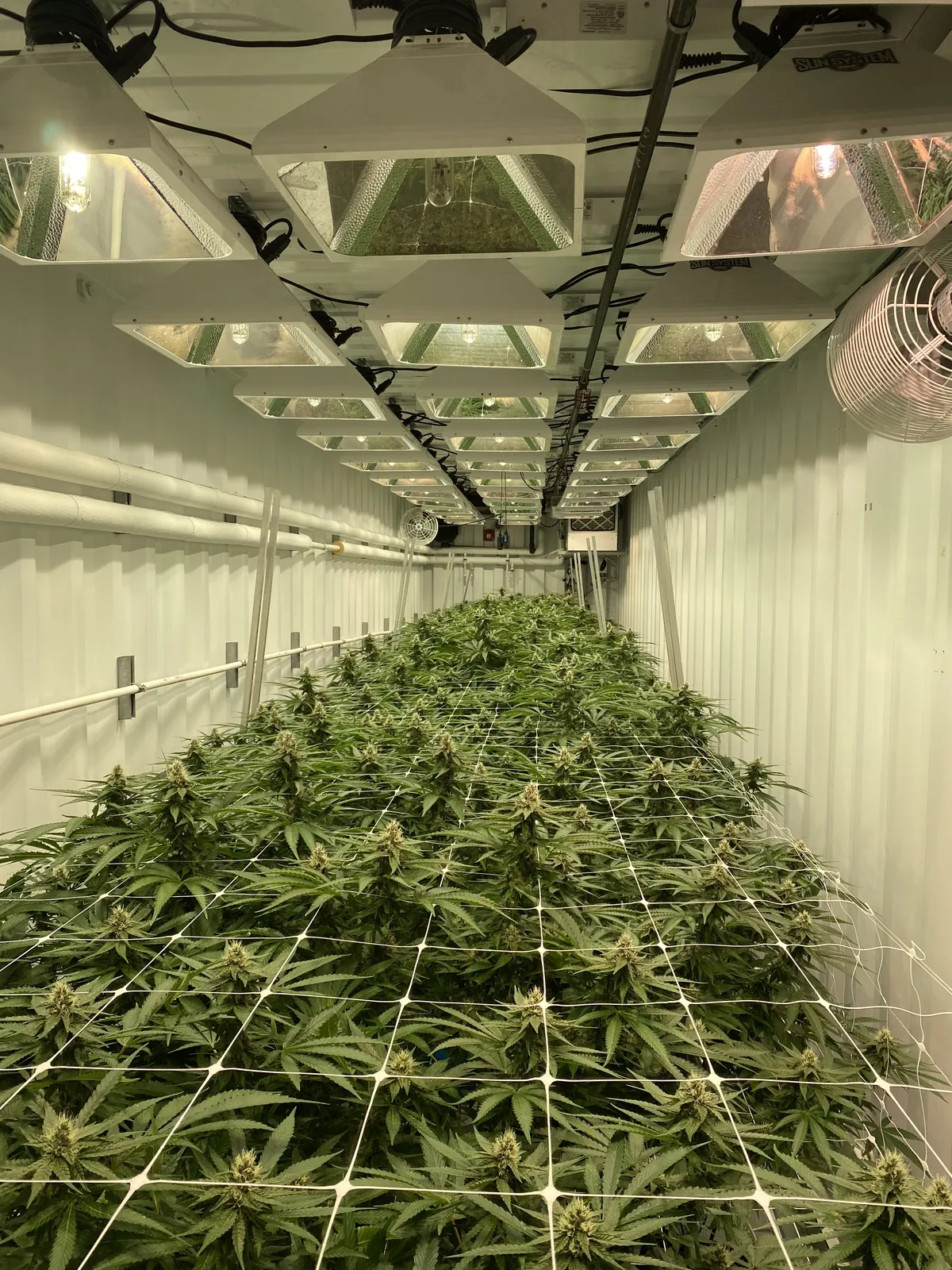
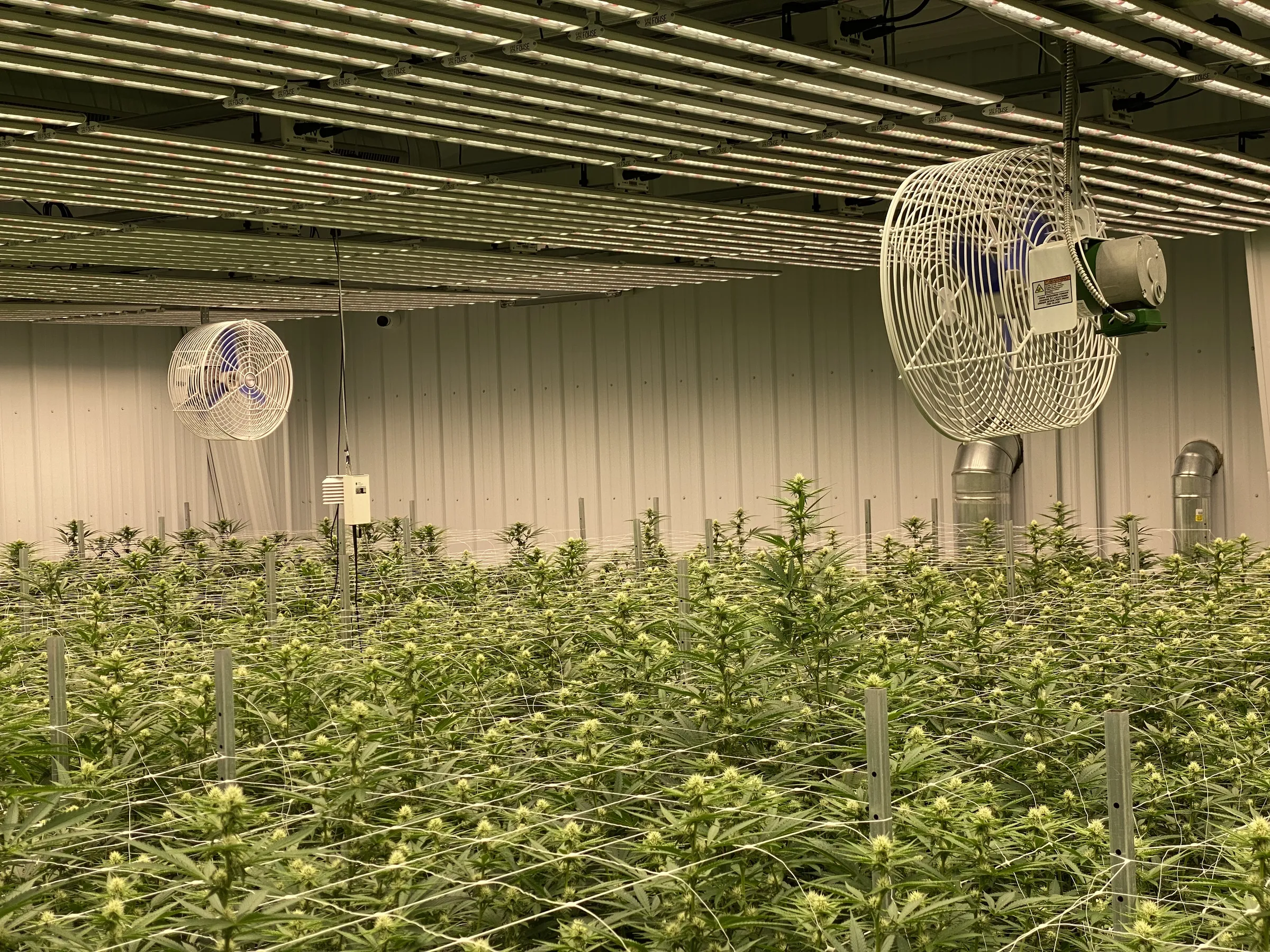
Size the build to the statutory cap. A Class 2 producer at its 50,000 sq ft indoor limit runs $7.5 million to $25 million or more at $150 to $500+ per sq ft, before the $100,000 license fee, $625,000 bond and $1.25 million in reserves. The 12 month operational deadline sets the pace: 30 to 60 days for the design package and 3 to 6 months of construction after permits leaves no room for a redesign.
Power favors Georgia: the average commercial price was 11.53 cents per kWh in 2025 against a 13.37 cent U.S. average, per EIA Electric Power Annual, Table 2.10. Hot, humid summers put a heavy dehumidification load on sealed flower rooms; model it before buying chillers. Siting: 3,000 feet for production and 1,000 feet for dispensing from schools, early care programs and pre-existing places of worship (O.C.G.A. 16-12-215), with local zoning on top.
Georgia specifics
Testing. Every manufactured batch needs a passing certificate of analysis from an independent laboratory on the Commission's list, with samples pulled on camera and reserve samples held 12 months (Rule 351-4-.06). A failed batch is quarantined, then disputed within 30 days, remediated and retested twice, or destroyed.
Security. Cameras run 24 hours a day with recordings kept at least 45 days, plus perimeter, duress, panic and holdup alarms and sensors on every entry point (Rules 351-4-.03 and 351-6-.03).
Tracking. Licensees use a Commission-approved vendor connected by API to the state system (Chapter 351-5). Plants, batches and final packages carry tags; inventory reconciles daily, a physical count runs every 30 days, and an outage over 12 hours is reported.
Packaging and edibles. 1,200 mg THC per package; 12,000 mg per patient. Child-resistant primary or secondary packaging, tamper-evident opaque outer (Rule 351-4-.07, Oct. 26, 2026). Candies and cookies stay prohibited; inhalables must state they are not for use by anyone 21 years old or younger and devices may not combust product.
| Topic | Georgia rule | Design response |
|---|---|---|
| Cultivation space | Indoor only: 100,000 sq ft (Class 1) or 50,000 sq ft (Class 2); canopy measured by clearly identifiable boundaries (Rule 351-4-.04, as amended Oct. 26, 2026) | Multi-tier rooms on NextGen Benching with HVAC sized per tier |
| Odor | Odor and air pollution reduction plan: filtration, scrubbers (Rule 351-4-.04(6)(e)) | Negative pressure rooms, carbon filtration and Breeza airflow |
| Extraction | 99% pure hydrocarbon or CO2 in closed-loop systems, spark-free rooms, gas sensors, ASME vessels above 15 psi (Rule 351-4-.05(8)(c)) | C1D1 room around used Precision Extraction systems |
| Vaporizer products | Flower for vaporization and concentrate devices allowed since July 1, 2026; no combusting heating element | Dry and cure rooms held by water activity with Anden dehumidifiers |
| Packaging | 1,200 mg THC per package; child-resistant, tamper-evident, opaque (Rule 351-4-.07) | Fill line with NTEP checkweighing |
What the same work did for an operator like you
What a Georgia applicant gets from the design desk.
- A Georgia cannabis compliance review against Chapter 351 as amended Oct. 26, 2026
- Cannabis facility design for producers building toward the 50,000 or 100,000 sq ft indoor cap
- A cannabis facility design package in 30 to 60 days: room program, MEP set and equipment schedule
- Vaporizer and concentrate lines specified from our cannabis extraction equipment guide
Georgia questions
How do I get a Georgia medical cannabis license?
You cannot apply today. Georgia law allows 2 Class 1 and 4 Class 2 production licenses, all six are held, and the Commission lists no open request for proposals. Dispensing licenses go only to those producers or, through the State Board of Pharmacy, to independent pharmacies. The paths left are a producer partnership, an acquisition or a statute change.
How do I open a dispensary in Georgia?
Only the six producers hold retail dispensing licenses: 5 each by statute, plus one when the registry passed 25,000 patients in Nov. 2024 and one per 10,000 more. 28 were active on Nov. 4, 2026. An independent pharmacy may request a specialty dispensing license instead. For a neighboring market, see the Virginia cannabis hub.
How much does a Georgia cannabis production license cost?
Class 1: $25,000 application, $200,000 license fee, $100,000 annual renewal, a $1.5 million bond or letter of credit and $2 million in cash reserves. Class 2: $5,000, $100,000, $50,000, a $625,000 bond and $1.25 million in reserves (O.C.G.A. 16-12-211 and 16-12-212). The facility, at $150 to $500+ per sq ft, costs more.
What did SB 220 change for Georgia medical cannabis?
Effective July 1, 2026, SB 220 renamed low THC oil "medical cannabis," replaced the 5% THC cap with a 12,000 mg possession limit and 1,200 mg per package, allowed vaporizer products including flower for patients over 21, and added conditions such as lupus. Smoking stays banned.
What can Georgia dispensaries sell now?
Oils, tinctures, transdermal patches, lotions, capsules, ingestibles and vaporizers, including flower for vaporization and concentrate devices, all made by a Commission licensee and sold with a passing certificate of analysis. Candies and cookies are prohibited. Buyers need a Medical Cannabis Patient Registry card; the fee rises to $75 on Dec. 5, 2026.
Where the Georgia rules on this page come from
- Georgia Access to Medical Cannabis Commission: Verify a License, production, dispensing and laboratory licensees as of Nov. 4, 2026
- GMCC: Fee Schedule, application, license and renewal fees by license type and county tier
- GMCC: FAQs, July 1, 2026 product changes, 1,200 mg per package, 12,000 mg possession, prohibited products
- O.C.G.A. 16-12-211 (2025 Code, effective July 1, 2026), Class 1 license count, 100,000 sq ft, fees, bond, cash reserves, 12 month deadline; Class 2 figures at 16-12-212
- O.C.G.A. 16-12-206, dispensing licenses: five per producer, 25,000 and 10,000 patient thresholds, pharmacy specialty license
- O.C.G.A. 16-12-215, 3,000 foot and 1,000 foot setbacks, local zoning
- Ga. Comp. R. & Regs. Chapter 351-4, Class 1 and Class 2 Production Licensees, security, cultivation, extraction, quality control and packaging rules, versions effective Oct. 26, 2026
- EIA Electric Power Annual, Table 2.10 (2025), average commercial electricity price by state
Regulator: Georgia Access to Medical Cannabis Commission. Last reviewed November 7, 2026.
 Record last reviewed