Illinois cannabis licensing, facility design and equipment.
How to open a dispensary in Illinois: win a conditional license in an IDFPR lottery, pass inspection for the 15-36 license, then opt in to medical sales. No new dispensary lottery is announced as of Nov. 2026, but SB 3222 orders an infuser window for 45 licenses by Jan. 1, 2027 and gives craft growers 14,000 sq ft of canopy.
SB 3222 (June 12, 2026): 14,000 sq ft craft canopy, medical opt-in live, infuser window for 45 by Jan. 1, 2027
Syncing and validating with
Where Illinois is today
Illinois is an operating adult use and medical market. The Illinois Department of Financial and Professional Regulation licenses dispensaries and the Illinois Department of Agriculture licenses cultivation centers, craft growers, infusers, transporters and labs. IDFPR counted 288 adult use dispensaries on Sept. 10, 2026, with 68 social equity conditional licensees still building toward full licenses.
SB 3222 (Public Act 104-463), signed June 12, 2026, is the biggest rewrite since 2019: a flat 14,000 sq ft flowering canopy for every craft grower, a medical opt-in for adult use dispensaries, doubled possession limits, drive-through sales and a 45 license infuser window IDOA must open by Jan. 1, 2027. Compare Illinois with cannabis licensing in every state.
- June 25, 2019. The Cannabis Regulation and Tax Act (P.A. 101-27) takes effect with cultivation center, craft grower, infuser, transporter and dispensing licenses.
- March 4, 2024. IDOA opens craft grower canopy expansions in 3,000 to 9,000 sq ft steps to a 14,000 sq ft maximum after two quarters of sales.
- Dec. 12, 2024. IDOA lists 87 craft growers (20 operational), 55 infusers (16 operational), 21 cultivation centers and 163 transporters.
- June 12, 2026. Gov. Pritzker signs SB 3222: flat 14,000 sq ft craft canopy, 60 day camera floor, 2 a.m. hours, drive-through sales, doubled possession limits.
- Sept. 10, 2026. Medical opt-in opens; IDFPR issues medical licenses to 37 adult use dispensaries the same day.
- Jan. 1, 2027. Deadline for IDOA to open the 45 license infuser window. The Illinois Hemp Act takes effect Nov. 12, 2026, ahead of that deadline.
How to get a Illinois cannabis license
- Watch the infuser window. IDOA must issue rules and open applications for 45 infuser licenses by Jan. 1, 2027; a lottery decides if more than 45 qualify. Prior Illinois hemp operators get an extra entry.
- Partner into a dispensary. No new dispensary lottery is announced. The 68 social equity conditional licensees still working toward 15-36 licenses are the entry point. SB 3222 raised the principal officer threshold to 5% ownership.
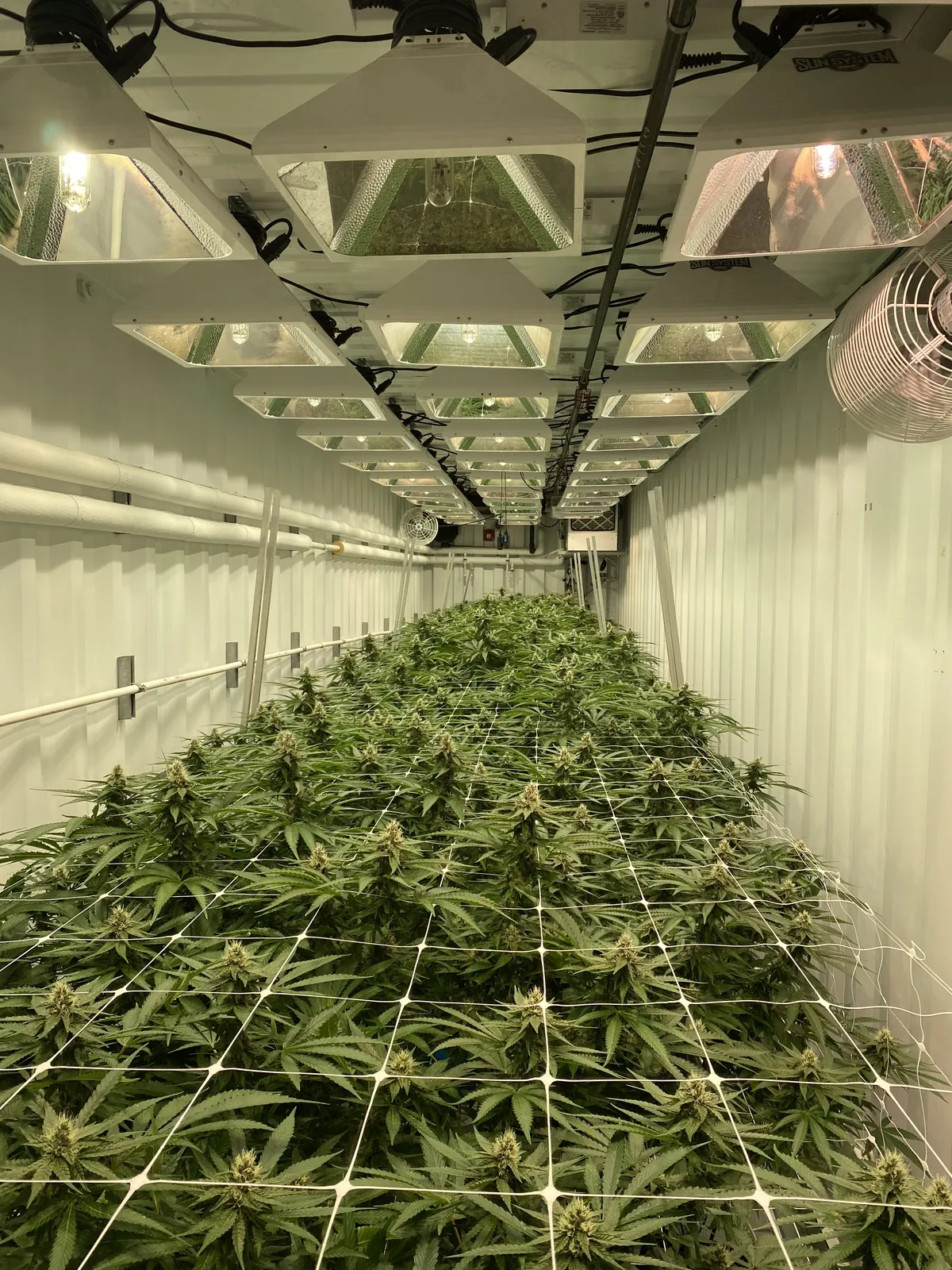
- Plan the craft grower at 14,000 sq ft. New craft growers start at full canopy; existing ones file an Application for Modification. Lay out flower rooms to the airflow and layout 14,000 sq ft of flowering plants needs.
- Site to the rules. A craft grower may not sit within 1,500 feet of another craft grower or cultivation center and must meet local zoning (Rule 1300.350); after approval, IDOA wants full plans with camera, alarm, storage and loading dock locations.
- Pick your starting point. Dispensary plans: price the conditional license buy-in and medical opt-in with cannabis financial modeling. Cultivation and processing plans: start new license facility planning so the 14,000 sq ft build or infuser kitchen is drawn before the window opens.
What the state issues, and what each one needs built
- Craft grower. IDOA license to cultivate, dry, cure and package with a flat 14,000 sq ft of flowering canopy since SB 3222 (previously 5,000 sq ft plus increments). 87 licensed and 20 operational as of Dec. 12, 2024, with 8 more operational during 2025 per IDOA; no window open. Fees: $5,000 to apply (410 ILCS 705/30-10) and $40,000 for the license, half for social equity applicants; IDOA waives the $40,000 renewal fee for the next two renewals.
- Infuser. Incorporates cannabis or concentrate into products; no cultivation. 55 licensed, 16 operational (Dec. 2024), with 3 more operational during 2025 per IDOA. IDOA must open a window for 45 more by Jan. 1, 2027 through a Social Equity Experience Lottery, with an extra entry for Illinois hemp operators.
- Cultivation center. 21 licensed and operational (Dec. 2024). SB 3222 drops the energy-efficient HVAC mandate above 6,000 sq ft of canopy.
- Transporter. 163 licensed, 60 operational (Dec. 2024); independent transporters may run up to five storage sites; renewal fees paused to Jan. 1, 2028.
- Dispensing organization. IDFPR conditional license by lottery, then the 15-36 license after inspection; renewal $60,000 every two years, expiring March 31 of even years. 288 adult use stores as of Sept. 10, 2026, plus optional medical licenses.
What a Illinois facility costs to design and build.
As a planning example, a craft grower at the new 14,000 sq ft canopy might take 25,000 to 30,000 sq ft of building once drying, trim, packaging, vault and mechanical space are added; at $150 to $500+ per sq ft that is $3.75 million to $15 million or more. Design runs 30 to 60 days and construction 3 to 6 months after permits, and IDOA reviews full plans before the build, so the drawing set is the critical path. Growers moving from 5,000 to 14,000 sq ft face the same review through an Application for Modification.
Illinois commercial power averaged 13.10 cents per kWh in 2025, just under the 13.37 cent U.S. average, per EIA Electric Power Annual, Table 2.10, up from 11.81 cents in 2024. Cold winters and humid summers mean heating load in January and dehumidification load in July; size the plant for both. Siting is the 1,500 foot separation rule for craft growers plus local zoning, and dispensaries need municipal approval for 2 a.m. hours.
Illinois specifics
Testing. SB 3222 moves testing labs from registration to licensing with fining power, and IDOA says updated lab and testing standard rules are coming. Six labs were registered in FY2025. Hold sampling and quarantine space for the new rules.
Security. Craft growers keep 90 days of video on site plus 90 days off site, cover every entrance, parking area and interior room except restrooms, and record at 3 frames per second minimum on alarm (Rule 1300.385); IDOA says the 90 day rule stands despite the new 60 day statutory floor. Dispensaries drop to 60 days under SB 3222.
Tracking. Craft growers run a comprehensive initial inventory, weekly inventories with batch numbers and an annual full count, kept on premises for IDOA (Rule 1300.380), on top of the state tracking system.
Packaging and edibles. Possession limits doubled June 12, 2026 to 60 g flower, 10 g concentrate and 1,000 mg THC in infused products. The dispensary name is no longer required on packaging, and since Sept. 10, 2026 products sold to medical patients carry the federal warning label.
| Topic | Illinois rule | Design response |
|---|---|---|
| Craft canopy | Flat 14,000 sq ft of flowering canopy for every craft grower since June 12, 2026 | Multi-tier flower rooms on NextGen Benching under Thrive Agritech LED, sized with the HVAC design guide |
| Cultivation center HVAC | SB 3222 removes the VRF or energy-efficient HVAC mandate above 6,000 sq ft of canopy | Pick the plant on kWh per pound: Urban Farms HVAC with grow-optimized dehumidification |
| Security | 90 days of video on site and 90 off site, full interior coverage, 0.7 LUX cameras (Rule 1300.385) | Camera and alarm layout drawn into the plans IDOA requires after approval |
| Infuser kitchen | Infusers incorporate cannabis or concentrate into products; no cultivation on the license | Dosing and depositing line from the edibles equipment guide |
| Siting | 1,500 feet from another craft grower or cultivation center; local zoning (Rule 1300.350) | Site screen before the lease, then the facility design sequence |
What the same work did for an operator like you
What a Illinois applicant gets from the design desk.
- A cannabis compliance review against 8 Ill. Adm. Code 1300 and the SB 3222 changes before IDOA plan submission
- Cannabis facility design for a 14,000 sq ft craft grower or an infuser kitchen built for the 2027 window
- A cannabis facility design package in 30 to 60 days: room program, MEP set and equipment schedule
- Extraction and infusion lines specified from our cannabis extraction equipment guide
Illinois questions
How do I open a dispensary in Illinois?
Hold a conditional adult use dispensing license from an IDFPR lottery, find a site, pass inspection and receive the 15-36 license. No new lottery is announced as of Nov. 2026, so the practical route is partnering with one of the 68 conditional licensees still building out, then opting in to medical sales. For a nearby market, see Missouri.
How much does an Illinois dispensary license cost?
Renewal is $60,000 every two years under 410 ILCS 705/15-45, with licenses expiring March 31 of even-numbered years. The 15-36 license fee is calculated after inspection, and the application requires a surety bond or escrow. The build, not the fee, is the big number: budget back of house at $150 to $500+ per sq ft.
How big can an Illinois craft grower be?
14,000 sq ft of flowering canopy, flat, since SB 3222 took effect June 12, 2026. Before that, craft growers started at 5,000 sq ft and expanded in 3,000 sq ft increments. New licensees may build to 14,000 from day one; existing growers file an Application for Modification. Canopy counts flowering plants only, so veg, mother and drying rooms sit outside the cap.
Are new Illinois cannabis licenses coming?
Yes, for infusers: IDOA must open a window for 45 infuser licenses by Jan. 1, 2027, decided by a Social Equity Experience Lottery with an extra entry for prior Illinois hemp operators. No new dispensary, craft grower or cultivation center round is announced. Adult use dispensaries can add a medical license on a rolling basis since Sept. 10, 2026.
What did SB 3222 change for Illinois cannabis businesses?
Signed June 12, 2026, it set a flat 14,000 sq ft craft canopy, created the medical opt-in, doubled possession limits to 60 g flower and 1,000 mg infused THC, allowed drive-through sales and 2 a.m. hours, cut dispensary video retention to 60 days, paused craft grower, infuser and transporter renewal fees, and moved testing labs to licensing.
Where the Illinois rules on this page come from
- IDOA Informational Bulletin IB-2026-06 on SB 3222, 14,000 sq ft canopy, infuser window, fee pauses, 90-day video rule, lab licensing
- IDFPR SB 3222 fact sheet (June 23, 2026), Public Act 104-0463, possession limits, hours, drive-through, 60-day retention, medical opt-in
- IDFPR release, Sept. 10, 2026, 37 medical licenses, 288 adult use dispensaries, 68 conditional licensees
- IDOA licensee status list (Dec. 12, 2024), craft grower, infuser, cultivation center and transporter counts
- IDOA Fees and Fines, craft grower, infuser and transporter fees, social equity waiver, renewal waivers
- 410 ILCS 705/30-10, $5,000 craft grower application fee
- 410 ILCS 705/15-45, $60,000 dispensary renewal and two-year term
- 8 Ill. Adm. Code 1300.385, Security, craft grower video retention and camera coverage
- 8 Ill. Adm. Code 1300.350, Specifications, 1,500 foot separation, zoning, plan submission
- EIA Electric Power Annual, Table 2.10 (2025), average commercial electricity price by state
Regulator: Illinois Department of Financial and Professional Regulation and Illinois Department of Agriculture. Last reviewed November 7, 2026.
 Record last reviewed