Kentucky cannabis licensing, facility design and equipment.
A Kentucky medical cannabis license is issued only through an Office of Medical Cannabis application window, and the only window to date ran July 1 to Aug. 31, 2024. No new window is open as of November 2026. The state has issued 79 licenses, 26 dispensaries were open as of Oct. 16, 2026, and smoking raw flower remains prohibited.
No license window open as of Nov. 2026; 79 licenses from 2024 lotteries, 26 dispensaries open Oct. 16, 2026
Syncing and validating with
Where Kentucky is today
Kentucky is a medical-only market under KRS Chapter 218B, regulated by the Kentucky Office of Medical Cannabis in the Cabinet for Health and Family Services. The one application window, July 1 to Aug. 31, 2024, drew 4,998 applications; the 2024 lotteries awarded 16 cultivator, 10 processor and 48 dispensary licenses, plus 5 safety compliance facilities without a lottery. The office lists 79 licensees as of Oct. 14, 2026 and no new window.
The office's directory shows the first stores open in January 2026 and 26 dispensaries open as of Oct. 16, 2026. The cabinet reviews license need quarterly under 915 KAR 1:020, so the next opening arrives as a posted notice. Compare Kentucky with cannabis licensing in every state.
- March 31, 2023. Senate Bill 47 signed, creating KRS Chapter 218B.
- July 1 to Aug. 31, 2024. Only business license window; 4,998 applications, 4,075 for dispensaries.
- Oct. 28, 2024. Cultivator and processor lottery: 10 Tier I, 4 Tier II, 2 Tier III, 10 processors. Dispensary lotteries Nov. 25 and Dec. 16 award 48 licenses.
- Jan. 1, 2025. Program live; local opt-out deadline passes.
- Jan. 15, 2026. First dispensaries appear on the office's open list (Lexington; Beaver Dam Jan. 16).
- Oct. 16, 2026. 26 dispensaries open; 13 cultivators and 5 processors approved to operate.
- Jan. 1, 2027. Next quarter of the cabinet's standing review of license need (915 KAR 1:020 Section 11); no window announced as of Nov. 7, 2026.
How to get a Kentucky cannabis license
- Watch for the notice of license availability. 915 KAR 1:010 requires the office to post the window and license counts by category. None is posted as of Nov. 7, 2026.
- Pick one license type. One type per applicant; cultivators file one application per tier, dispensaries one per region, each with its own address and capital.
- Prove sufficient capital. $50,000 for Tier I up to $1 million for Tier IV; $150,000 for a processor, dispensary or lab. Compare cannabis business financing options early.
- Clear the siting rules. Stay 1,000 feet from schools and daycares, keep dispensaries off grow sites, and check the opt-out list: 23 counties and 55 cities had prohibited cannabis businesses as of May 2, 2025.
- Budget the fee and the lottery. Application fees of $3,000 to $30,000 are nonrefundable. When eligible applicants exceed the licenses available, a public lottery decides and winners pay the license fee.
- Pick your starting point. Dispensary plans: one store per county outside Fayette and Jefferson, so price the region with cannabis financial modeling. Cultivation and processing plans: start new license facility planning so canopy, extraction and security match your tier.
What the state issues, and what each one needs built
- Cultivator, Tiers I to IV. Indoor growth area capped at 2,500, 10,000, 25,000 and 50,000 sq ft (KRS 218B.105); no outdoor growing. Licensed: 10 Tier I, 4 Tier II, 2 Tier III, no Tier IV. Application $3,000 to $30,000, annual license $12,000 to $100,000 by tier.
- Processor. Extraction and manufacturing under 915 KAR 1:040; 10 licensed, 5 operating. Application $5,000, license $25,000 a year, $150,000 capital.
- Dispensary. 48 licensed across 11 regions: at least 4 per region, 6 in the Fayette and Jefferson regions, one per county elsewhere. Application $5,000, license $30,000 a year, $150,000 capital.
- Safety compliance facility. Testing lab, no cap, no lottery; 5 licensed. Application $3,000, license $12,000 a year.
- Producer. Combined grow and process license (915 KAR 1:050); not offered.
What a Kentucky facility costs to design and build.
Size the building to the tier. A Tier II grow holds 10,000 sq ft of canopy, so a 20,000 sq ft building at $150 to $500+ per sq ft runs $3 million to $10 million or more, against $200,000 in required capital and a $25,000 annual license fee. Design takes 30 to 60 days and the build 3 to 6 months after permits.
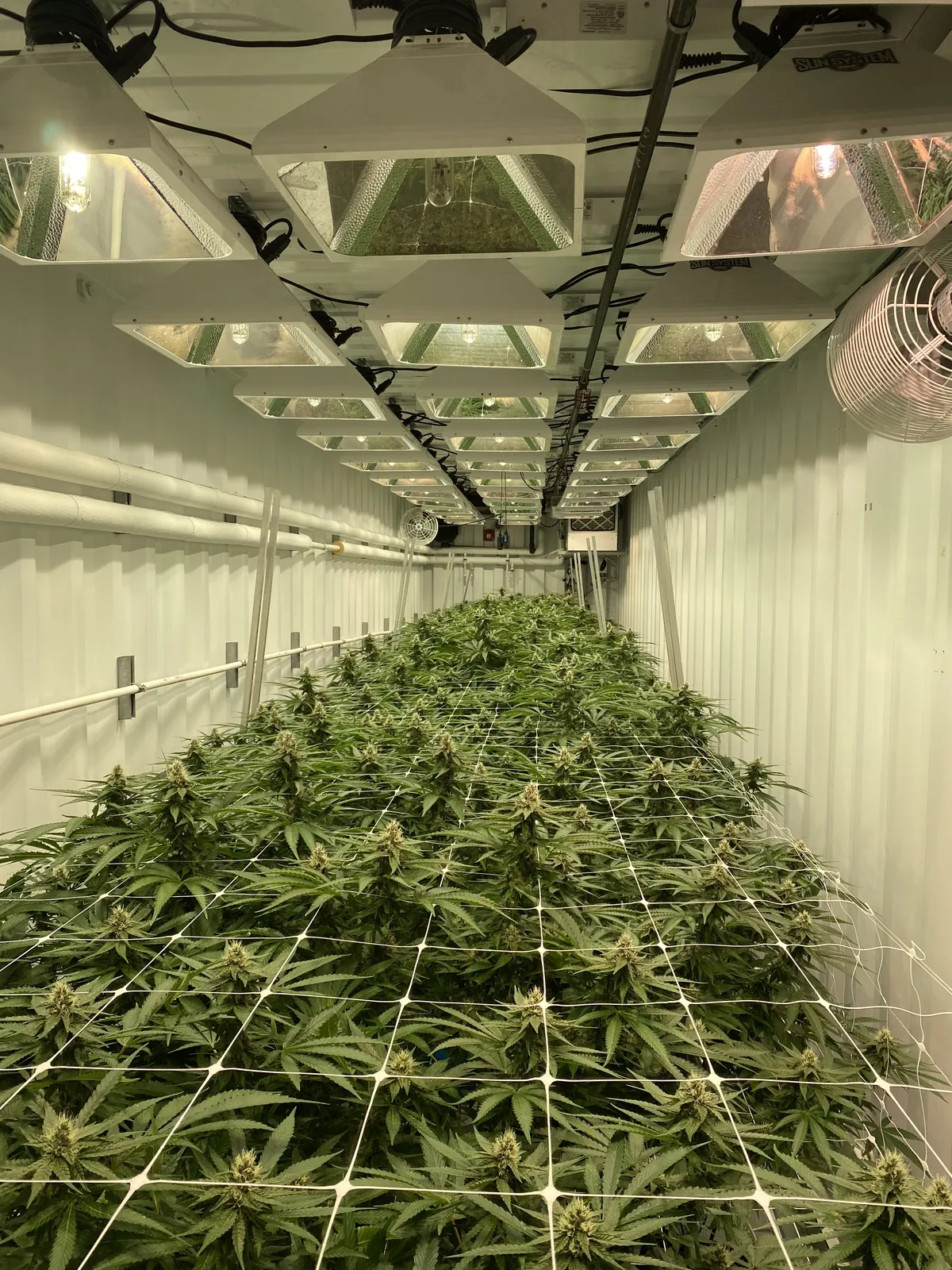
Commercial electricity averaged 11.75 cents per kWh in Kentucky in 2025 against 13.37 cents nationally, per EIA Electric Power Annual, Table 2.10. Humid summers make dehumidification the dominant load in sealed rooms, so model latent load before choosing grow-optimized or industrial dehumidifiers; cold winters add heating and humidification.
Siting: no cannabis business within 1,000 feet of a school or daycare (KRS 218B.095), and no dispensary on a grow or processing site. Every county and city was opted in by default but any may prohibit by ordinance; the office listed 78 opt-outs and 88 opt-ins as of May 2, 2025. Read the ordinance before you sign a lease.
Kentucky specifics
Testing. 915 KAR 1:110: water activity below 0.65, total yeast and mold under 10,000 CFU per gram, four Aspergillus species not detected, harvest batches up to 20 lb. Remediation is allowed at most twice.
Odor. 915 KAR 1:020 Section 4(1)(l) requires odor mitigation procedures and an odor SOP. No numeric standard, so the local ordinance sets the bar.
Security. Cameras cover 20 feet beyond the perimeter, record facial detail 24/7 and keep footage 60 days; alarm failures alert within 5 minutes; backup power runs 24 hours (915 KAR 1:030 Section 7, 1:070 Section 11).
Tracking. All licensees work in the cabinet's seed-to-sale system: plants logged within 24 hours of receipt, real-time inventory, physical counts every 30 days.
Packaging and edibles. Child-resistant two-step packaging, opaque, navy blue state symbol. Edibles, oils and tinctures hold 10 mg THC per serving; flower is capped at 35% THC and other products at 70% (915 KAR 1:040, 1:100). Raw flower is labeled "NOT INTENDED FOR CONSUMPTION BY SMOKING".
| Topic | Kentucky rule | Design response |
|---|---|---|
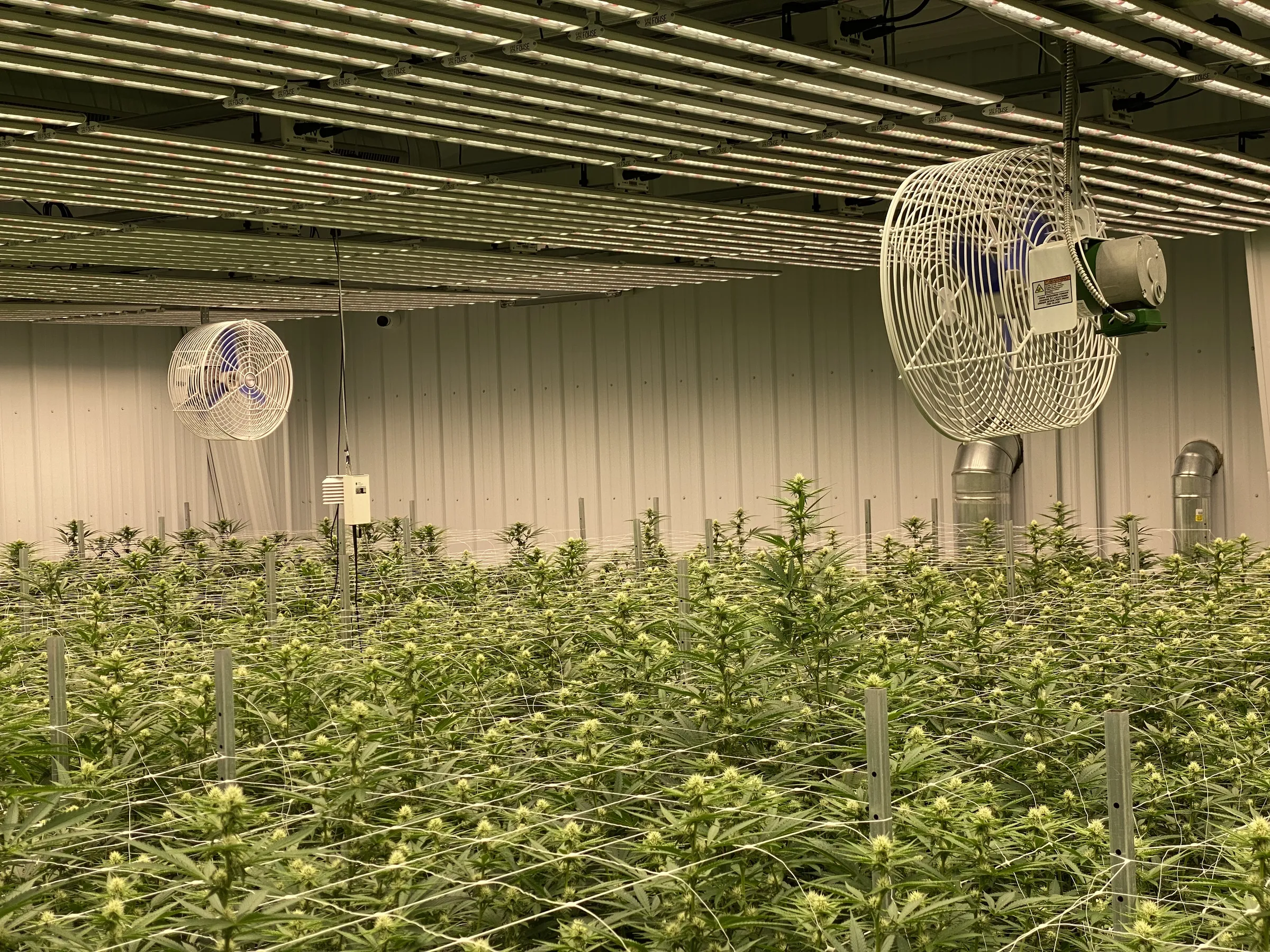
| Canopy | Indoor growth area 2,500 to 50,000 sq ft by tier; every shelf level counts (Technical Advisory 2025-004) | Multi-tier rooms on NextGen Benching under Thrive Agritech LEDs |
| Enclosed facility | Roofed, locked building; no in-ground growing; temperature, humidity and ventilation recorded (915 KAR 1:030) | Sealed rooms with Anden dehumidifiers and HVAC sized by room |
| Extraction | 99% propane, butane, isobutane, heptane, CO2 or ethanol; spark-free ventilated room; closed loop; method posted on doors (915 KAR 1:040 Section 9) | C1D1 room in the MEP set around used Precision Extraction systems |
| Potency caps | Flower 35% THC; 10 mg THC per serving oral; 70% other products | Dosing line from the edibles equipment guide, NTEP checkweighing at fill |
| Testing | Water activity below 0.65; yeast and mold under 10,000 CFU/g; Aspergillus not detected (915 KAR 1:110) | Dry room control per our water activity guide and microbial mitigation |
What the same work did for an operator like you
What a Kentucky applicant gets from the design desk.
- A Kentucky cannabis compliance review against KRS 218B and 915 KAR Chapter 1 before the initial inspection request
- Cannabis facility design that fits canopy to your tier, counting every shelf level the way the office does
- A cannabis facility design package in 30 to 60 days: room program, MEP set, camera plan, equipment schedule
- Extraction rooms specified from our cannabis extraction equipment guide
Kentucky questions
How do I get a Kentucky medical cannabis license?
Apply during a window the Office of Medical Cannabis posts under 915 KAR 1:010. The only window ran July 1 to Aug. 31, 2024 and none is posted as of Nov. 7, 2026. If eligible applicants exceed the licenses in the notice, a public lottery picks winners, who then pay the license fee.
How do I open a dispensary in Kentucky?
Hold one of the 48 dispensary licenses or buy one; a license sale goes to the office on Form BUS001. Budget $5,000 to apply, $30,000 a year to license and $150,000 in capital, stay 1,000 feet from schools and daycares, and expect one store per county outside Fayette and Jefferson.
How much does a Kentucky cultivator license cost?
Application fees are $3,000, $10,000, $20,000 and $30,000 for Tiers I to IV. Annual license fees are $12,000, $25,000, $50,000 and $100,000, and required capital runs $50,000 to $1 million. The build is the larger number at $150 to $500+ per sq ft.
Will Kentucky hold another cannabis dispensary lottery?
None is scheduled. The cabinet reviews license need quarterly under 915 KAR 1:020 and must post a notice before any window. Since July 1, 2026 cardholders can buy only in state, so demand sits with the 48 licensed stores. For the neighboring market, see Virginia cannabis licensing.
Can patients smoke flower in Kentucky?
No. KRS 218B.010 excludes smoking from protected use and every raw flower package must read "NOT INTENDED FOR CONSUMPTION BY SMOKING". Flower sells for vaporization, so cultivators still dry, cure and test to 915 KAR 1:110 limits. Vape products sell only to buyers over 21.
Where the Kentucky rules on this page come from
- Kentucky Office of Medical Cannabis: Businesses, application window, lottery dates and regions
- Office of Medical Cannabis: Licensees, 79 licensees by type and approved-to-operate status, Oct. 14, 2026
- Office of Medical Cannabis: Find a Dispensary, 26 open dispensaries as of Oct. 16, 2026
- Office of Medical Cannabis: Application Analytics, 4,998 applications by category
- Office of Medical Cannabis: Local Government Opt-Outs and Opt-Ins, 78 opt-outs and 88 opt-ins as of May 2, 2025
- KRS 218B.105, cultivator tiers and square footage limits
- KRS 218B.095, 1,000 foot buffer, security and enclosed facility requirements
- 915 KAR 1:010, application fees, sufficient capital, notice of availability and renewal
- 915 KAR 1:020, license fees, dispensary regions, odor mitigation, quarterly review
- 915 KAR 1:040, processor extraction, product forms and potency caps
- 915 KAR 1:110, testing limits, batch sizes and remediation
- EIA Electric Power Annual, Table 2.10 (2025), average commercial electricity price by state
Regulator: Kentucky Office of Medical Cannabis, Cabinet for Health and Family Services. Last reviewed November 7, 2026.
 Record last reviewed