New Hampshire cannabis licensing, facility design and equipment.
New Hampshire cannabis is medical only as of Nov. 2026. The Therapeutic Cannabis Program under DHHS licenses nonprofit alternative treatment centers (ATCs), capped at 4 certificates, with 3 operators running 7 dispensaries. Adult use failed again when the Senate tabled HB 186 on March 5, 2026. A greenhouse cultivation law took effect Aug. 19, 2026.
Senate tabled adult use HB 186 on March 5, 2026; greenhouse law for ATCs in force since Aug. 19, 2026
Syncing and validating with
Where New Hampshire is today
New Hampshire runs a medical-only program under RSA 126-X, administered by the New Hampshire Department of Health and Human Services Therapeutic Cannabis Program. The only business license is the alternative treatment center (ATC), a not-for-profit that cultivates, processes and dispenses. Statute caps valid certificates at 4; DHHS lists 3 operators with 7 dispensary locations, and no request for applications is open as of Nov. 2026.
Two 2026 outcomes matter. For profit conversion bills HB 54 and SB 479 were both laid on the Senate table and not enacted, so the nonprofit rule stands. SB 468 survived a veto on Aug. 19, 2026 and lets ATCs apply for a greenhouse cultivation location once DHHS writes rules. Compare New Hampshire with cannabis licensing in every state.
- 2013. RSA 126-X creates the Therapeutic Cannabis Program and the nonprofit ATC model.
- Oct. 1, 2024. HB 1278 lets providers certify adults 21 and older for any debilitating or terminal condition.
- Jan. 7, 2026. House passes adult use bill HB 186, 208 to 135, and for-profit ATC bill HB 54 by voice vote.
- March 5, 2026. Senate lays HB 186 on the table, 15 to 9; HB 54 follows on Apr. 9, 2026.
- Aug. 19, 2026. Legislature overrides the veto of SB 468 (Senate 16 to 8, House 257 to 44); Chapter 344 adds greenhouse cultivation to RSA 126-X:7, effective on passage.
- Nov. 2026. DHHS lists no new ATC request for applications, and greenhouse rules under RSA 126-X:7 are still to be written.
How to get a New Hampshire cannabis license
- Confirm the cap. RSA 126-X:7 allows at most 4 ATC certificates, and 7 dispensary locations at no more than two per ATC put all 4 in use, so a request for applications opens only if a certificate lapses. Watch the DHHS Therapeutic Cannabis pages.
- Form the nonprofit. HB 54 and SB 479 were laid on the Senate table in 2026. Structure a New Hampshire voluntary corporation with a clinician and a qualifying patient on the board.
- Budget the RFA. $3,000 to submit, $20,000 on selection, then the annual program expense fee. Write the cannabis cultivation business plan for a vertical ATC, not a dispensary.
- Plan the greenhouse option. SB 468 lets an ATC apply for a greenhouse location with a proposal showing energy and price savings, subject to local zoning and DHHS rules still to be written.
- Pick your starting point. Dispensary plans: there is no dispensary-only license, so model the whole ATC with cannabis financial modeling. Cultivation and processing plans: start facility design for new licenses so the enclosed facility, extraction room and security plan are ready for the RFA.
What the state issues, and what each one needs built
- Alternative treatment center (ATC). The only license: a nonprofit that cultivates, processes and dispenses to registered patients. RSA 126-X:7 caps valid certificates at 4 and lets DHHS accept new applications when fewer are held. The board must include a clinician and a qualifying patient; clinicians may hold no ownership.
- Additional dispensary location. An ATC in geographic area 1, 2, 3 or 4 may be authorized to open one more dispensary, dispensing and education only. Three operators run 7 locations today.
- Cultivation locations. An enclosed, locked facility, with an optional second site; since Aug. 19, 2026 an ATC may also request a greenhouse location to cut energy cost.
- Fees (He-C 402.04). RFA submission $3,000; RFA selection $20,000; change of location $30,000; name or administrator change $250; plus an annual program expense fee set by share of cannabis dispensed.
What a New Hampshire facility costs to design and build.
An ATC funds grow, processing and up to two dispensaries on one nonprofit balance sheet. Example: a 15,000 sq ft enclosed cultivation and processing building at $150 to $500+ per sq ft runs $2.25 million to $7.5 million or more, before dispensaries and $23,000 in RFA fees. Design takes 30 to 60 days and the build 3 to 6 months after permits.
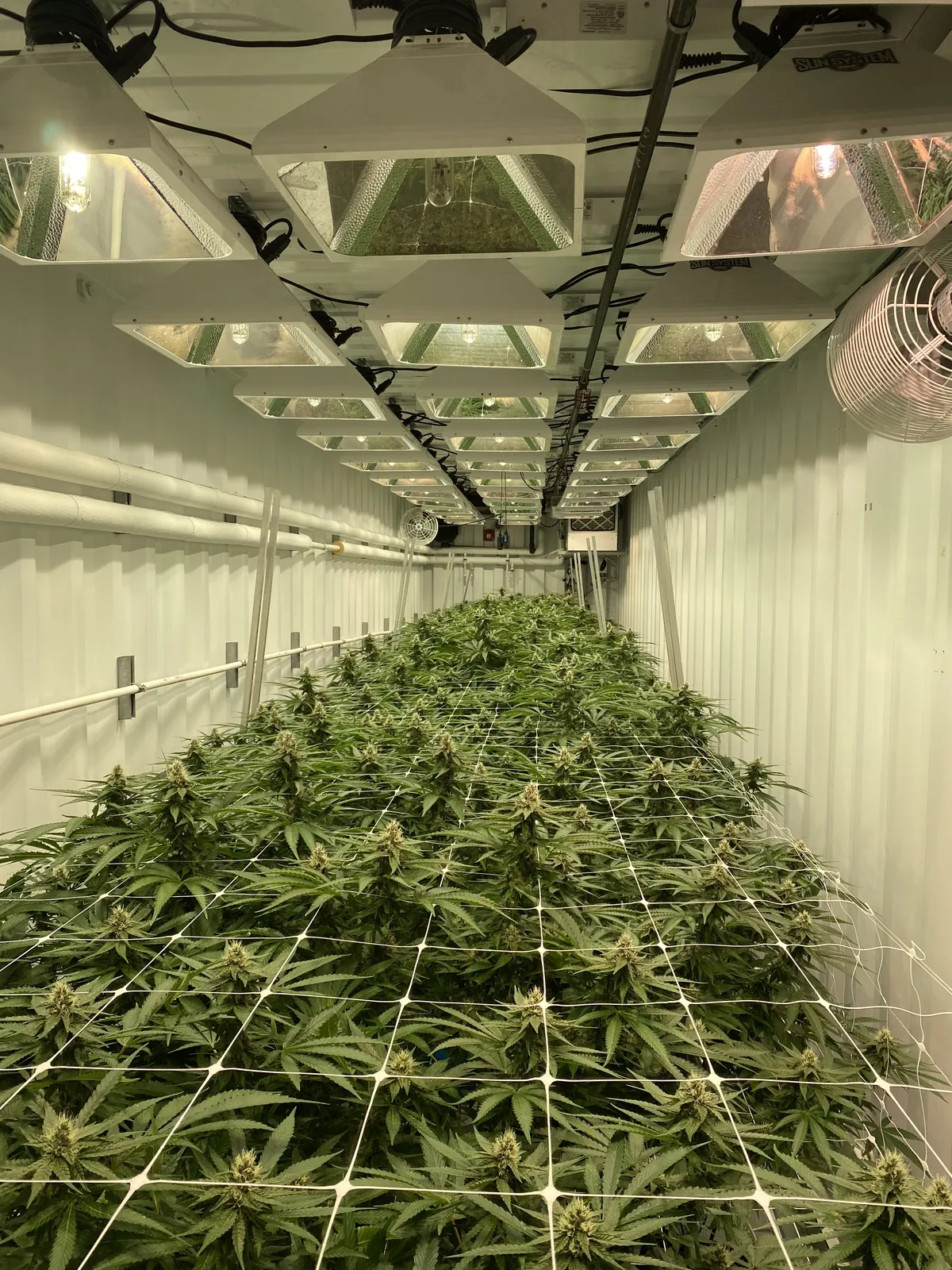
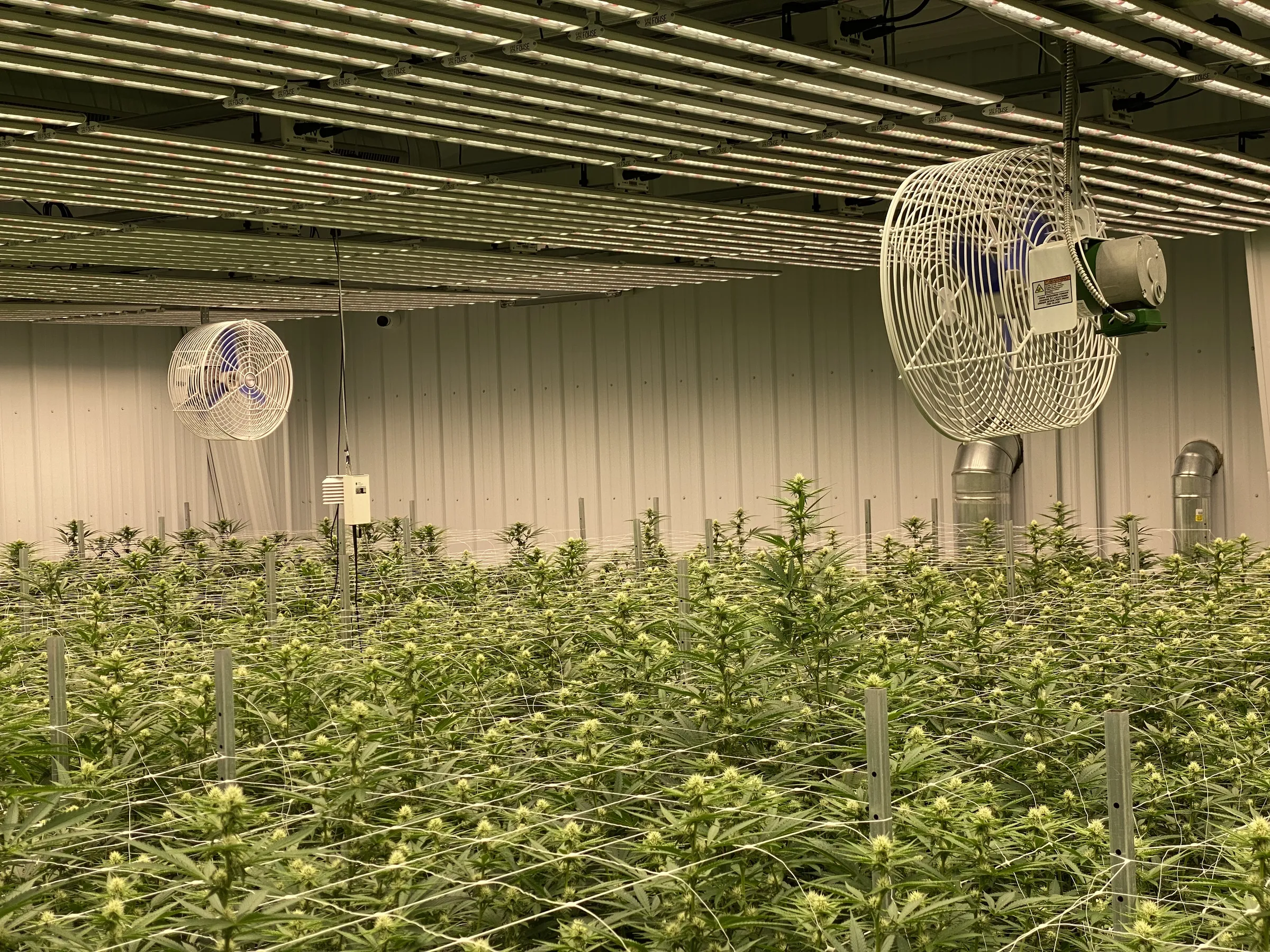
Power is the New Hampshire problem: 20.11 cents per kWh average commercial price in 2025 against a 13.37 cent U.S. average, per EIA Electric Power Annual, Table 2.10, which is why the legislature overrode a veto to allow greenhouses. Cold winters add heating load and humid summers add dehumidification, so model kWh per pound with Quest dehumidifiers (sourced on request) before you pick a site. Local zoning applies to every ATC site and greenhouse, and DHHS must consult the host town first.
New Hampshire specifics
Testing. Every harvested and concentrate batch goes to an independent New Hampshire lab licensed under RSA 151 (He-C 402.15): cannabinoid profile, microbials, mycotoxins, heavy metals, residual solvents at 500 ppm, and quarterly pesticide screens per cultivation site that fail above 10 ppb.
Security. He-C 402.24 requires cameras in every cannabis area, entry, exit and parking lot, 90 days of 24 hour recording, perimeter and window alarms, duress alarms, a backup alarm from a second company and operation through a power outage.
Tracking. He-C 402.13 requires an electronic inventory system with a real-time record of plants, usable cannabis and infused products, daily reconciliation and a monthly comprehensive inventory. No seed-to-sale vendor is named.
Packaging and edibles. He-C 402.19 requires plain, opaque, tamper-proof, child-resistant containers, no imagery beyond the ATC logo, and labels in milligrams with dosing and onset. He-C 402.16 sets no per-serving THC cap but limits solvents to acetone, butane, ethanol, heptane, isopropanol and propane.
| Topic | New Hampshire rule | Design response |
|---|---|---|
| Cultivation facility | Enclosed, locked facility (RSA 126-X:7); greenhouse location allowed since Aug. 19, 2026 pending DHHS rules | Sealed rooms with HVAC sized by room, or a greenhouse program on Urban Farms HVAC |
| Energy | 20.11 cents per kWh commercial power (EIA 2025); the greenhouse law exists to cut energy cost | Thrive Agritech LEDs and Anden dehumidifiers selected on kWh per pound |
| Extraction | He-C 402.16: six permitted solvents, fire and building code, NEC, certified hood, sprinklers, Saf-C 6000 limits posted | C1D1 room with used Precision Extraction systems |
| Testing | He-C 402.15: every batch, independent lab, pesticides fail above 10 ppb | Airflow and sanitation built for microbial pass rates |
| Packaging | He-C 402.19: opaque, tamper-proof, child-resistant; seal applied at the cultivation site | Packaging room at the grow with NTEP checkweighing |
What the same work did for an operator like you
What a New Hampshire applicant gets from the design desk.
- A New Hampshire cannabis compliance review against RSA 126-X and He-C 402 before an RFA or greenhouse request
- Cannabis facility design for the enclosed cultivation facility, processing suite and dispensary back-of-house
- A cannabis facility design package in 30 to 60 days with an energy model built for 20 cent power
- Extraction rooms specified from our cannabis extraction equipment guide to the six solvents He-C 402.16 allows
New Hampshire questions
Is weed legal in New Hampshire in 2026?
Medical cannabis is legal for registered patients under RSA 126-X. Adult use is not. The House passed HB 186 on Jan. 7, 2026, 208 to 135, and the Senate laid it on the table on March 5, 2026, 15 to 9.
How do I open a dispensary in New Hampshire?
You need an alternative treatment center certificate from DHHS, and the ATC must also cultivate and process. RSA 126-X:7 caps certificates at 4 and no request for applications is open as of Nov. 2026. Existing ATCs may add one dispensary each in areas 1 to 4.
How much does a New Hampshire cannabis license cost?
He-C 402.04 sets an RFA submission fee of $3,000 and a selection fee of $20,000, plus an annual program expense fee based on share of cannabis dispensed. Moving a location costs $30,000. The real cost is the grow and processing build at $150 to $500+ per sq ft.
What is an NH alternative treatment center?
A not-for-profit registered by DHHS that grows, processes and dispenses therapeutic cannabis. Three operators run 7 locations: GraniteLeaf, Sanctuary and Temescal Wellness. For profit bills HB 54 and SB 479 were laid on the Senate table in 2026, so the nonprofit requirement still applies.
What changed for New Hampshire cannabis in 2026?
SB 468 became Chapter 344 on Aug. 19, 2026 after a veto override, letting ATCs request a greenhouse cultivation location to cut energy cost; DHHS must now write rules. For an operating adult use market nearby, see New York cannabis licensing.
Where the New Hampshire rules on this page come from
- NH DHHS: Therapeutic Cannabis Program, program status, nonprofit ATC definition, 2023 to 2025 law changes
- NH DHHS: Alternative Treatment Centers, 3 operators and 7 dispensary locations
- RSA 126-X:7, Alternative Treatment Centers, 4-certificate cap, additional dispensary, enclosed facility, greenhouse paragraph (2026, 344:1)
- NH General Court: HB 186 docket, House 208 to 135 and Senate table 15 to 9
- SB 468 (2026) docket, veto June 12, 2026, override Aug. 19, 2026, Chapter 344
- He-C 402.04, Fees, RFA and change fees
- He-C 402.16, Production of Cannabis-Infused Products, permitted solvents and fire code; He-C 402.15, 402.19 and 402.24 sit in the same part
- EIA Electric Power Annual, Table 2.10 (2025), average commercial electricity price by state
Regulator: New Hampshire Department of Health and Human Services, Therapeutic Cannabis Program. Last reviewed November 7, 2026.
 Record last reviewed