New Jersey cannabis licensing, facility design and equipment.
As of October 2026, you can apply for a New Jersey cannabis license any day: the Cannabis Regulatory Commission takes applications for every class on a rolling basis, with no deadline and no statewide cap. The real decision is sizing. Pick the class and canopy tier first, then design the building, power and security that tier needs.
Rolling applications for every class, no statewide cap; 614 businesses operating (Aug 2026)
Syncing and validating with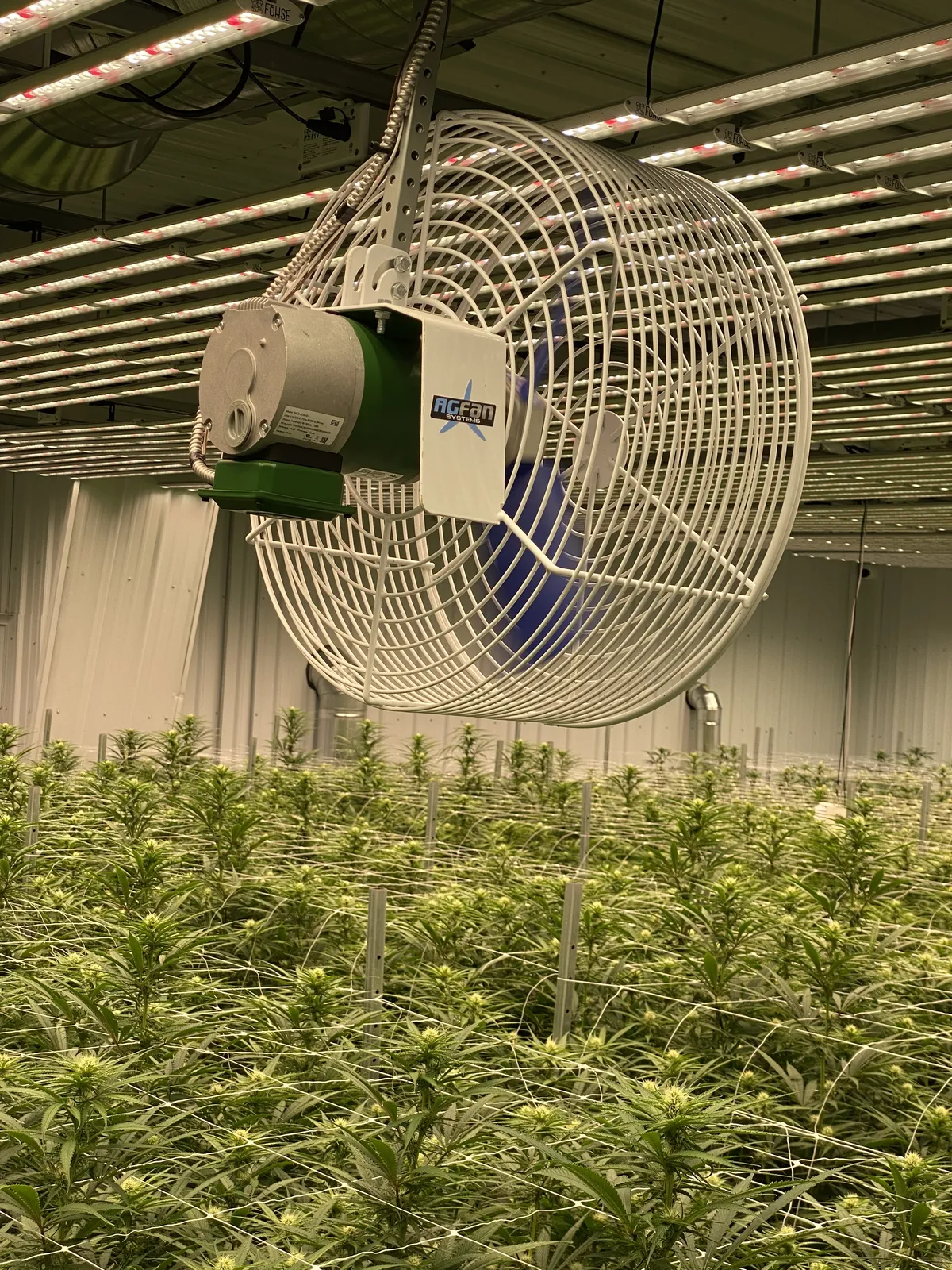
Where New Jersey is today
New Jersey is open for applications. The New Jersey Cannabis Regulatory Commission (CRC) accepts every adult-use class on a rolling basis, with no statewide limit on licenses. As of Sept 1, 2026 it had approved 2,568 of 3,267 applications. As of Aug 5, 2026, 614 businesses were licensed to operate, including 71 adult-use cultivators and 83 adult-use manufacturers. Compare New Jersey and the other state programs.
- Feb 22, 2021. The CREAMM Act (P.L. 2021, c.16) is approved.
- Aug 19, 2021. The CRC's first adult-use rules, N.J.A.C. 17:30, take effect.
- Dec 15, 2021. The CRC opens its license application portal.
- Mar 15, 2022. Dispensary applications open; 172 are filed by 4 p.m.
- Apr 21, 2022. Adult-use sales begin at 13 dispensaries.
- Feb 2023. The cap of 37 Class 1 cultivators, which counted existing medical operators, expires.
- Nov 20, 2024. The current CRC fee schedule takes effect.
- Aug 5, 2026. 614 businesses are licensed to operate, 350 of them adult-use retailers.
How to get a New Jersey cannabis license
- Apply now. As of October 2026 the CRC takes every class on a rolling basis. Comparing markets? See how to get a cultivation license in New York and Delaware licensing and facility rules.
- Choose the class and size. Cultivators pick a canopy tier and must justify it with expected product demand. A microbusiness is capped at 10 employees and a 2,500 sq ft plant.
- Pick conditional or annual. A conditional applicant needs no site control to apply and has 120 days to apply to convert. If you meet every annual requirement, apply for the annual license directly.
- Lock in local approval. You need a resolution of support from the municipal governing body, zoning approval and a signed lease. Towns can prohibit any class by ordinance.
- File in the portal. Submit every document electronically, including personal history and entity disclosures. Incomplete files get a cure letter.
- Build and pass inspection. The CRC inspects each premises before licensing. Manufacturers also need an on-site NJ Department of Labor consultation, with serious hazards fixed before operations start.
- Get help matched to your class. Dispensary-only applicants mostly need the site, zoning and security file in order: start with New Jersey cannabis compliance. Cultivation and manufacturing applicants need the tier, rooms and power plan settled before filing: start with new license facility planning.
What the state issues, and what each one needs built
Six adult-use classes plus testing labs. Annual license fees are due at approval and at each renewal.
- Class 1 Cultivator, by mature canopy: Tier I to 10,000 sq ft, $5,000 a year; Tier II to 25,000, $10,000; Tier III to 50,000, $20,000; Tier IV to 75,000, $30,000; Tier V to 100,000, $40,000; Tier VI to 150,000, $50,000.
- Class 2 Manufacturer: $20,000 for premises up to 10,000 sq ft, $30,000 above that.
- Class 3 Wholesaler $10,000, Class 4 Distributor $3,000, Class 5 Retailer $10,000, Class 6 Delivery $3,000.
- Microbusiness, any class: $1,000 a year. Limits: 10 employees, a 2,500 sq ft plant, canopy of 2,500 sq ft by 24 ft high, 1,000 mature plants and 1,000 lb of usable cannabis acquired a month.
- Application fees: $200 + $800 conditional, $400 + $1,600 annual; microbusinesses pay half. The first-year license fee is reduced by the application fees already paid.
- Testing laboratory: $4,000 a year.
What a New Jersey facility costs to design and build.
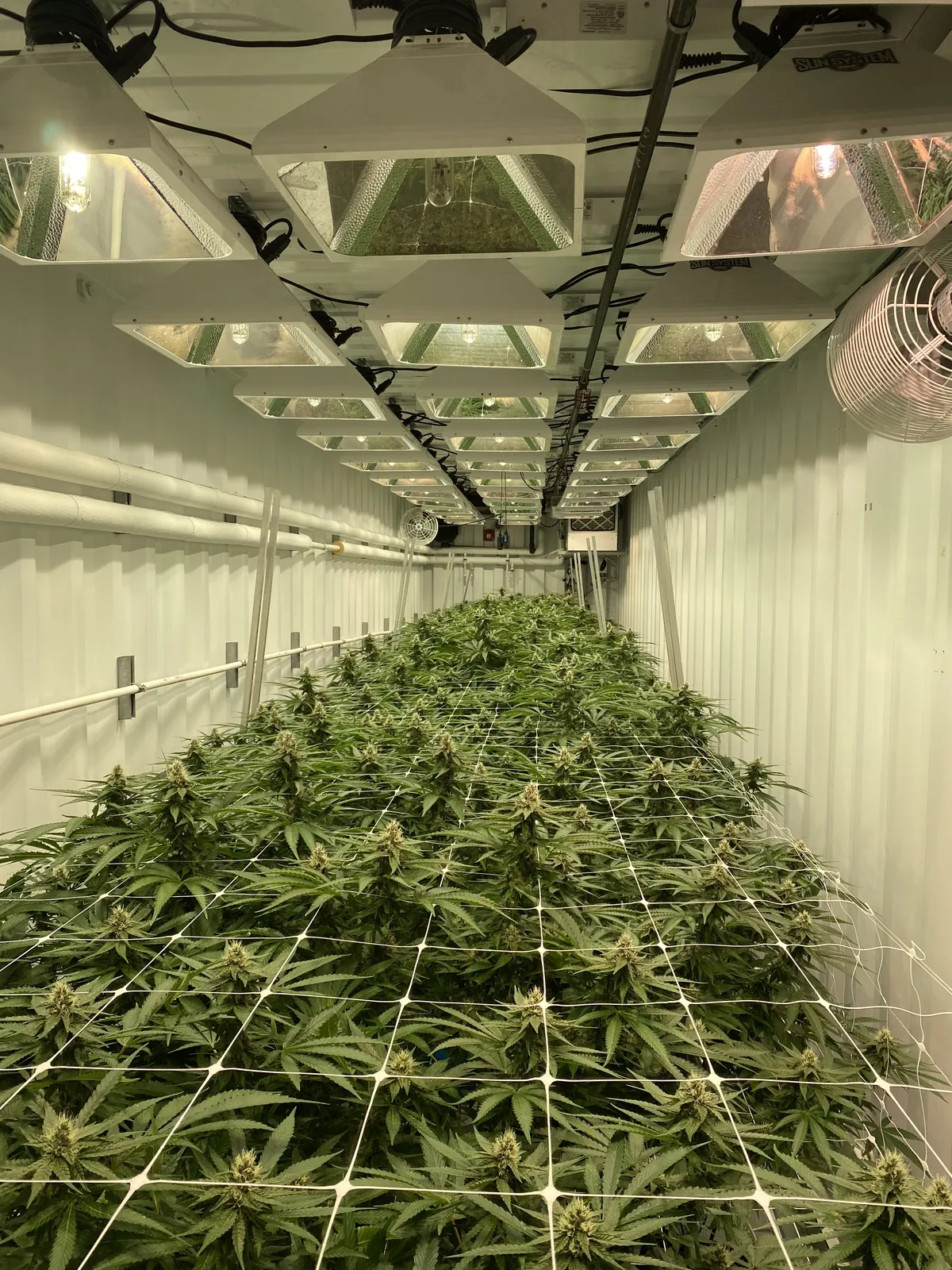
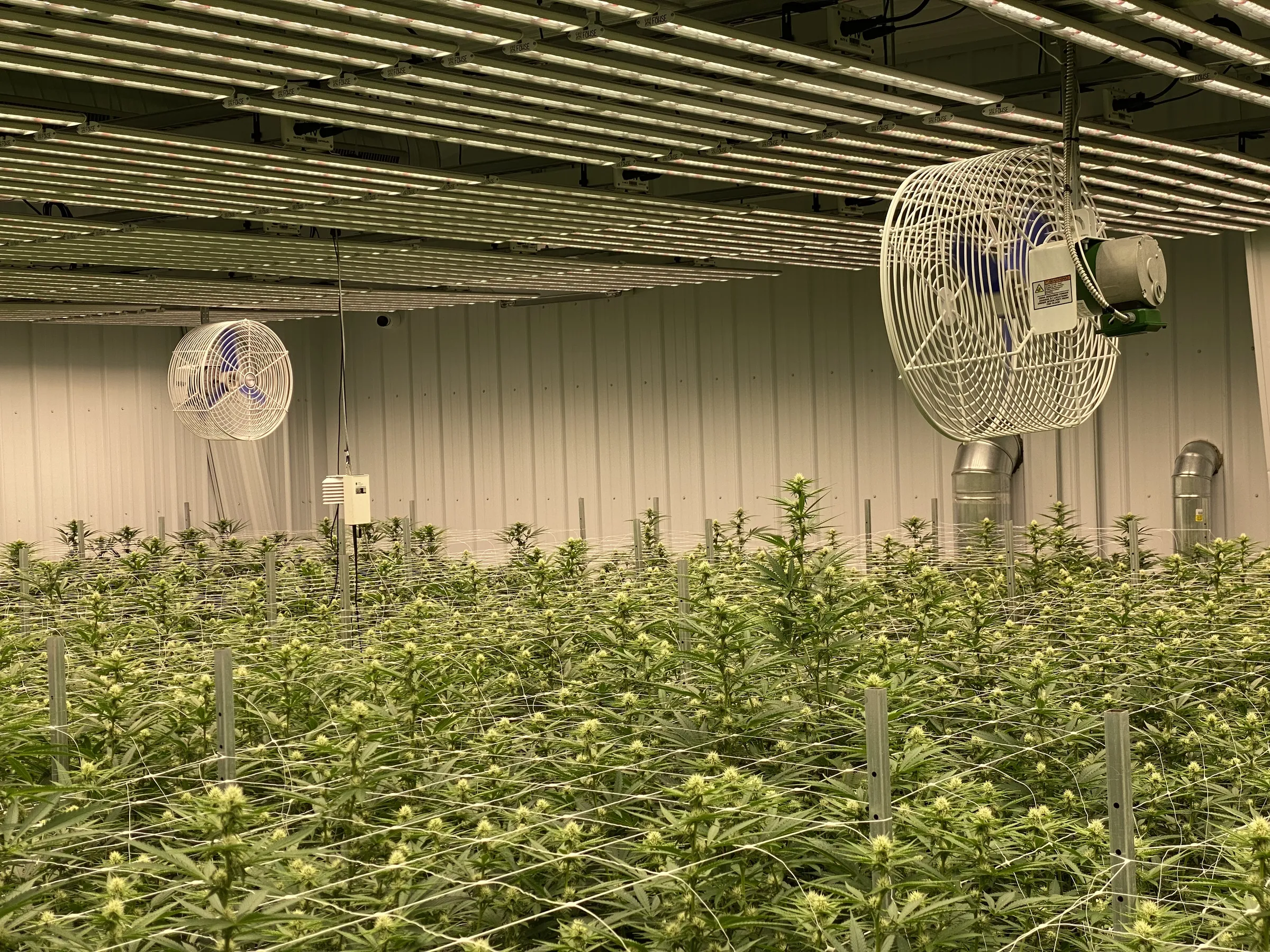
Size the building from the tier, then apply two New Jersey canopy rules. Every shelf in a stacked rack counts toward canopy, so racking shrinks the footprint, not the tier. Drying, curing, packaging and storage rooms do not count, so they add building beyond canopy.
- Microbusiness: the whole plant is capped at 2,500 sq ft, about $375,000 to $1.25M+ at $150 to $500+ per sq ft.
- Tier I, 10,000 sq ft of canopy: at a planning ratio of about 2 sq ft of building per sq ft of single-level canopy, roughly 20,000 sq ft, or $3M to $10M+.
- Tier II, 25,000 sq ft of canopy: roughly 50,000 sq ft, or $7.5M to $25M+.
Power: New Jersey's average commercial electricity price was 16.53 cents per kWh in 2025, against 13.37 cents nationally (EIA Electric Power Annual, Table 2.10), so lighting and dehumidification efficiency carry more weight here. Siting: a cultivator cannot operate on land valued, assessed or taxed as agricultural or horticultural use, so screen out farmland-assessed parcels before you sign a lease. Design takes 30 to 60 days, and the build runs 3 to 6 months after permits.
New Jersey specifics
Testing. New Jersey rescinded its own lab guidance, and labs now follow Maryland's standards (the Maryland Technical Authority for Cannabis Testing, Revision 3.0). All eight licensed labs received notices of violation in October 2025 for not using them. A failed batch cannot be sold and must be rendered unrecoverable and unrecognizable.
Odor. The CRC rules reviewed set no odor standard, but the NJ Department of Environmental Protection treats odor as an air contaminant, and a first violative release can draw $150 to $10,000 in penalties.
Security. Cameras on all critical control activities, a 30-day archive, 24/7 monitoring, remote CRC viewing, alarm tests at least every 30 days, automatic backup on power loss and a well-lit perimeter. Outdoor grows add an 8 ft fence.
Tracking and packaging. Metrc (CRC Resolution 2022-2), with inventory updated daily and audited monthly. Inhalable packages hold no more than 1/4 oz. Ingestibles are capped at 10 mg of THC per serving and 100 mg per package, within 90 to 110 percent of the label.
| Topic | New Jersey rule | Design response |
|---|---|---|
| Canopy tier | Tiers to 150,000 sq ft; every rack shelf counts; drying and storage rooms do not | Rack and room plan fixed before the tier goes on the application, built from a grow room equipment list |
| Manufacturing premises | Enclosed, locked, ventilated indoor area; NJDOL hazards fixed before operations | Room-by-room layout per our facility design guide |
| Concentrates | Rules name extracts and resins from non-chemical processes; no solvent list in subchapter 11 | Solventless room as the base case, sized for rosin presses |
| Edibles | 10 mg THC per serving, 100 mg per package, 90 to 110 percent of label | Dosing line sized to the tolerance: edibles equipment |
| Testing | Maryland standards; failed batches destroyed (waiver denied Aug 6, 2026) | Protocol set before first harvest: how to pass microbial testing |
| Odor | No CRC odor standard found; NJDEP penalizes odor releases | Carbon filtration and room pressure set in the cannabis HVAC design |
What the same work did for an operator like you
What a New Jersey applicant gets from the design desk.
- A cannabis facility design package sized to your tier, ready for zoning and the CRC inspection.
- Cannabis facility design for the MEP set, with camera coverage, backup power and odor control drawn in.
- Cannabis financial modeling that tests Tier I against Tier II and times investor entry around the two-year, 50 percent ownership limit.
- Cannabis microbial mitigation before first harvest, built for Maryland standards and the rule that failed batches be destroyed.
- Cannabis equipment financing options for cultivation, extraction and kitchen lines.
New Jersey questions
How do I open a dispensary in New Jersey?
Apply to the CRC for a Class 5 retailer license, accepted on a rolling basis as of October 2026. Before approval you need a resolution of support from the town's governing body, zoning approval and a signed lease. A conditional license lets you apply before you control a site.
How much is a dispensary license in NJ?
A Class 5 retailer license is $10,000 a year, plus application fees of $400 and $1,600 for an annual license or $200 and $800 for a conditional one. A microbusiness retailer pays $1,000 a year and half the application fees.
What is the largest cultivation tier?
Tier VI, up to 150,000 sq ft of mature canopy at $50,000 a year. Every rack shelf counts toward canopy, so a vertical room fills a tier faster than its footprint suggests.
Can I bring in investors after licensing?
Yes, within limits. From application until at least two years after operations begin, an annual license holder cannot change more than 50 percent of its ownership, and a business that closes in that window has its license treated as abandoned. After that, a transfer of more than 50 percent carries a $20,000 application fee. Build the raise into your cultivation business plan.
Which testing standard applies?
Maryland's. Labs follow the Maryland Technical Authority for Cannabis Testing, Revision 3.0, and must hold ISO/IEC 17025 accreditation. Our microbial testing compliance guide covers common failure points, and lab founders can start with the ISO 17025 roadmap.
Where the New Jersey rules on this page come from
- CRC License Applications, rolling applications, no cap, classes, microbusiness limits, local approval
- CRC Fee Schedule, effective Nov 20, 2024, all fees and cultivator tiers
- CRC meeting slides, Sept 9, 2026 and Aug 6, 2026, application and operating counts
- CRC public meeting minutes, Aug 6, 2026, Green Analytics East enforcement memo and 2025 in Review, failed batches, Maryland standards, lab violations
- CRC Resolution 2026-09-09-01 and Resolution 2022-2, ownership limits, Metrc
- CRC: CREAMM Act, dispensary applications release and sales start release, timeline dates
- N.J.A.C. 17:30-10.4, 10.1 and 10.3, tiers, canopy, farmland rule, outdoor fencing
- N.J.A.C. 17:30-9.10, 9.13 and 18.5, security, inventory, lab accreditation
- N.J.A.C. 17:30 subchapter 11, manufacturing premises, product limits, OSHA consultation
- NJDEP Cannabis Facilities: Air Enforcement, odor enforcement
- EIA Electric Power Annual, Table 2.10 (2025), average commercial electricity price by state
Regulator: New Jersey Cannabis Regulatory Commission. Last reviewed October 23, 2026.
 Record last reviewed May 26, 2026