Oklahoma cannabis licensing, facility design and equipment.
How to open a dispensary in Oklahoma in 2026: buy an existing OMMA license, because HB 3143 (2026) extended the moratorium on new dispensary, grower and processor licenses to Aug. 1, 2028. The medical-only market is contracting, with 1,582 growers and 1,226 dispensaries on Nov. 2, 2026 against 5,434 and 2,611 three years earlier.
Moratorium on new dispensary, grower and processor licenses extended to Aug. 1, 2028 (HB 3143, 2026)
Syncing and validating with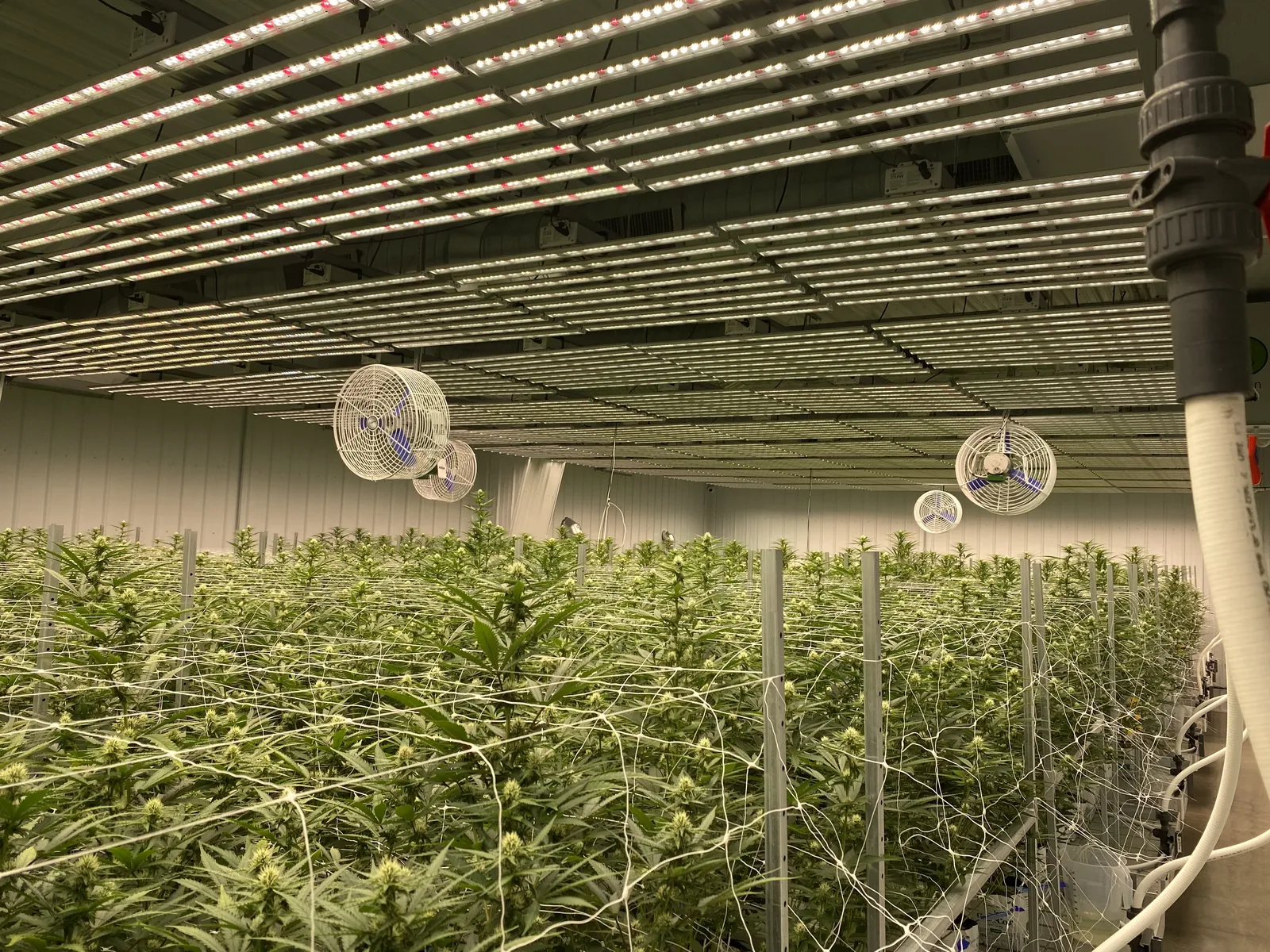
Where Oklahoma is today
Oklahoma is a medical-only market regulated by the Oklahoma Medical Marijuana Authority (OMMA). A moratorium on new dispensary, grower and processor licenses has run since Aug. 26, 2022; HB 3143 (2026) pushed the end date from Aug. 1, 2026 to Aug. 1, 2028, or sooner if OMMA's Executive Director finds all pending licensing reviews, inspections and investigations complete. Transporter, testing lab and waste disposal licenses remain open.
Growers fell from 5,434 to 1,582 and dispensaries from 2,611 to 1,226 between Nov. 2023 and Nov. 2, 2026. Entry now means buying a license in good standing. Compare cannabis licensing in every state.
- Aug. 26, 2022. Moratorium on new dispensary, grower and processor licenses begins under HB 3208.
- April 20, 2023. Growers must post a $50,000 surety bond or prove five years of land ownership (SB 913).
- Nov. 1, 2023. OMMA counts 5,434 growers, 2,611 dispensaries and 1,585 processors.
- June 1, 2025. Flower must reach dispensaries pre-packaged in 0.5 g to 3 oz units (HB 2807).
- 2026 session. HB 3143 extends the moratorium to Aug. 1, 2028 and bars transfer of licenses under investigation.
- Nov. 2, 2026. 1,582 growers, 1,226 dispensaries, 545 processors and 12 testing labs hold licenses.
How to get a Oklahoma cannabis license
- Buy, do not apply. New dispensary, grower and processor applications are closed until Aug. 1, 2028. Licensees in good standing may sell; a license under investigation cannot be transferred (HB 3143), so pull the compliance history first.
- Meet the ownership test. 75% of ownership interests must be Oklahoma residents, every person of interest clears an OSBI check, and the Foreign Financial Interest Attestation reaches OBNDD within 60 days or the license is revoked.
- Price the fees and bond. Dispensary renewal runs $2,500 to $10,000 a year; a Tier 2 indoor grow is $5,000 plus a $50,000 bond. Model the acquisition with cannabis financial modeling.
- Keep the registrations live. OBNDD registration renews by Oct. 31, Metrc credentials stay current even at zero inventory, and OMMA inspects and audits every business annually.
- Start the right design. Dispensary plans: lay out the sales floor, vault and pre-pack intake with cannabis facility design. Cultivation and processing plans: begin facility design for new licenses so the tier you buy matches the building you can run.
What the state issues, and what each one needs built
- Dispensary. $2,500 initial fee, then 10% of the prior year's state sales and excise tax annually, floor $2,500 and cap $10,000. 1,226 licensed; no new licenses until Aug. 1, 2028.
- Grower. Seven indoor or greenhouse tiers by canopy, from Tier 1 (up to 10,000 sq ft, $2,500) to Tier 7 (100,000 sq ft and up, $50,000 plus $0.25 per extra sq ft); eight outdoor tiers by acreage from $2,500 to $50,000 plus $250 per acre. Each license posts a $50,000 bond unless the owner has held the land at least five years. 1,582 licensed; under moratorium.
- Processor. Five tiers by volume, Tier 1 (up to 10,000 lb biomass or 100 L concentrate) $2,500 to Tier 5 (over 300,000 lb or 1,000 L) $20,000. 545 licensed; under moratorium.
- Open license types. Transporter $2,500, testing laboratory $20,000, waste disposal $5,000. 12 labs and 7 waste facilities licensed Nov. 2, 2026.
What a Oklahoma facility costs to design and build.
Oklahoma is a buyer's market for licenses and buildings. A Tier 2 indoor grow tops out at 20,000 sq ft of canopy inside a larger building; at $150 to $500+ per sq ft, a 33,000 sq ft building runs $4.95 million to $16.5 million or more new; with more than 3,800 grows gone since 2023, a fitted shell is often cheaper. Design takes 30 to 60 days and the build 3 to 6 months after permits, and a license purchase closes on the compliance file, not a window.
Power: Oklahoma's average commercial electricity price was 9.09 cents per kWh in 2025 against a U.S. average of 13.37 cents, with industrial at 6.14 cents, per EIA Electric Power Annual, Table 2.10, among the lowest in the country. Humid summers mean heavy dehumidification in flower and dry rooms; size it with Anden dehumidifiers. Growers carry a $50,000 surety bond on the permit area unless they have owned the land five years, so keep the licensed footprint tight.
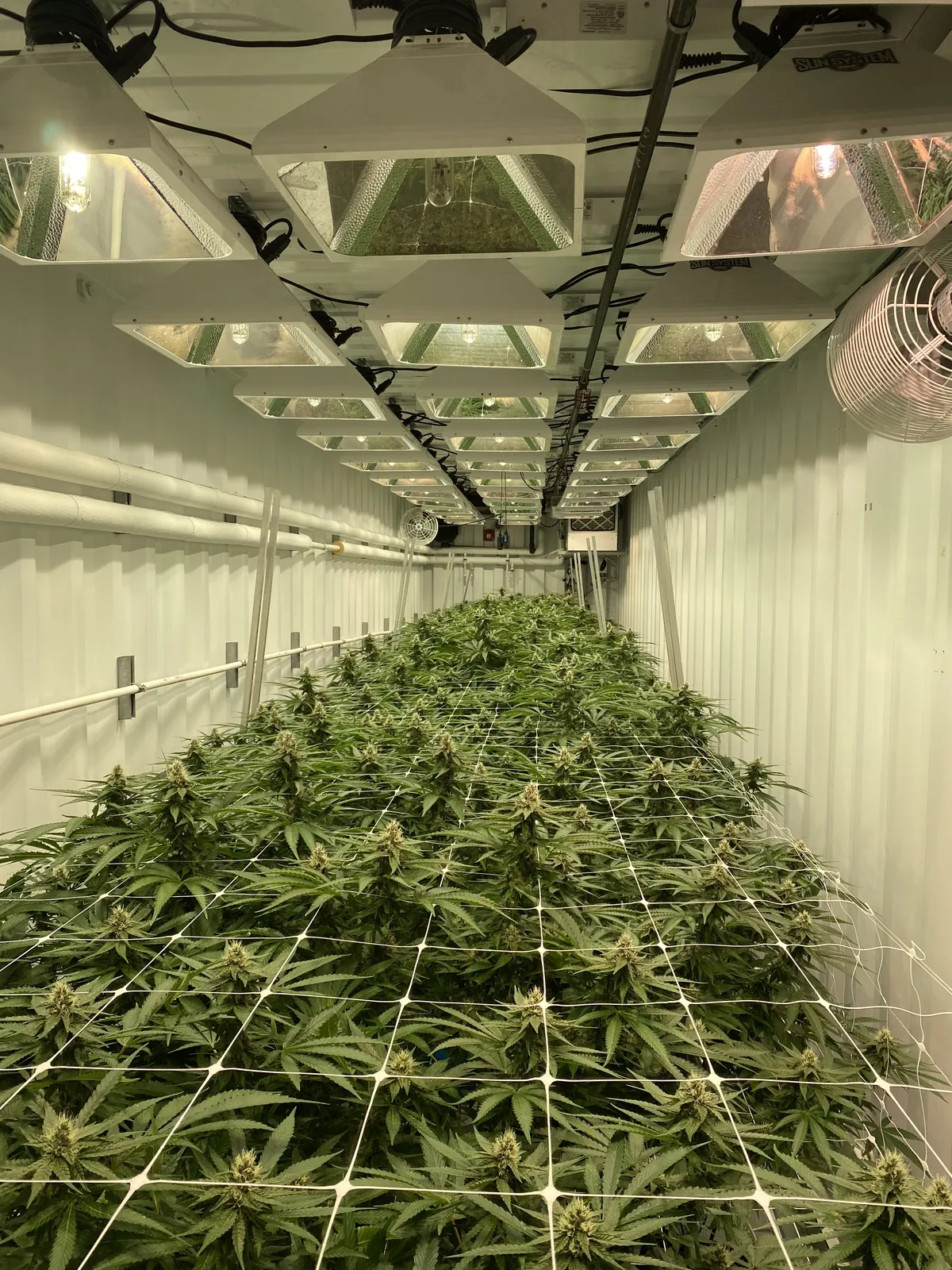
Oklahoma specifics
Testing. Twelve licensed laboratories remain from 26 in 2023, each paying a $20,000 license fee. SB 1635 (2024) changed application and final product testing requirements.
Security. OMMA runs an annual compliance inspection and an annual audit at every licensed business, OBNDD registration is mandatory to handle product, and growers hold a $50,000 surety bond on the permit area.
Tracking. Metrc is the statewide seed-to-sale system. Every owner or key administrator completes the Metrc New Business class, zero inventory is reported by the 15th of each month, and pre-packaged flower is tracked by weight.
Packaging. Since June 1, 2025 growers and processors deliver flower, trim, kief and pre-rolls to dispensaries pre-packaged in 0.5 g to 3 oz units (63 O.S. 431.1); dispensaries may not open or alter them, and clear containers leave the store inside an opaque exit bag.
| Topic | Oklahoma rule | Design response |
|---|---|---|
| Canopy tiers | Indoor fees step at 10,000, 20,000, 40,000, 60,000, 80,000 and 100,000 sq ft | Flower rooms on NextGen rolling benches sized to land just under a tier line |
| Pre-pack | Flower leaves the grow or processor packaged in 0.5 g to 3 oz units | Packaging room with Paxiom weigh and fill and NTEP checkweighing |
| Greenhouse and outdoor | Greenhouse tiers by canopy, outdoor by acreage; both licensed | Greenhouse dehumidification with Quest units sourced on request (HVAC guide) |
| Processor tiers | Tier 1 caps at 100 L of concentrate; Tier 5 above 1,000 L | C1D1 room in the MEP set (C1D1 room requirements), used Precision Extraction systems |
What the same work did for an operator like you
What a Oklahoma applicant gets from the design desk.
- A Oklahoma cannabis compliance review of a license you plan to buy: tier, bond, Metrc status and inspection history
- Cannabis facility design that fits an acquired grow or processor into the building it already has
- A cannabis facility design package in 30 to 60 days: room program, MEP set and equipment schedule
- Pre-pack and extraction lines specified from our cannabis extraction equipment guide to the processor tier you hold
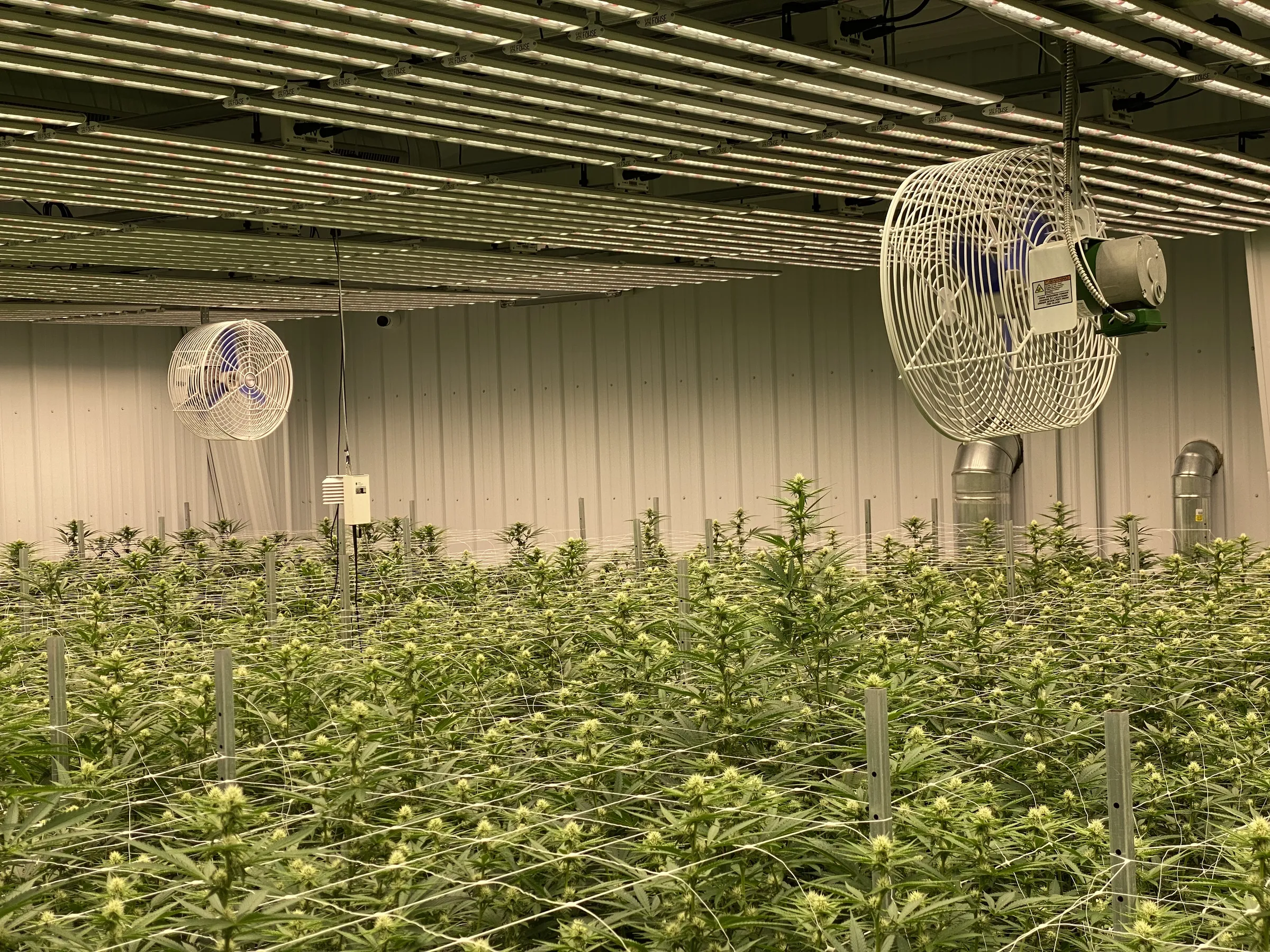
Oklahoma questions
Can I get a new dispensary license in Oklahoma?
No. OMMA stopped accepting new dispensary, grower and processor applications on Aug. 26, 2022, and HB 3143 (2026) extended the moratorium to Aug. 1, 2028. The only path is buying an existing license in good standing; licenses under investigation cannot be transferred.
How much is an OMMA license?
Dispensaries pay $2,500 initially and then 10% of the prior year's state sales and excise tax, between $2,500 and $10,000 a year. Indoor grower fees run $2,500 for up to 10,000 sq ft of canopy to $50,000 plus $0.25 per sq ft above 100,000, plus a $50,000 bond. Processors pay $2,500 to $20,000.
How many marijuana licenses does Oklahoma have?
On Nov. 2, 2026 OMMA listed 1,582 growers, 1,226 dispensaries, 545 processors, 42 transporters and 12 testing labs, serving 302,634 patients. Three years earlier the counts were 5,434 growers, 2,611 dispensaries and 1,585 processors.
What are the Oklahoma grow license tiers?
Indoor and greenhouse grows are tiered by canopy: up to 10,000 sq ft ($2,500), 20,000 ($5,000), 40,000 ($10,000), 60,000 ($20,000), 80,000 ($30,000), 99,999 ($40,000) and 100,000 or more ($50,000 plus $0.25 per extra sq ft). Outdoor runs from 2.5 acres ($2,500) to 50 acres ($50,000).
Does Oklahoma require Metrc?
Yes. Every OMMA licensee must be fully Metrc compliant, including businesses with zero inventory, which report by the 15th of each month. For a neighboring market, see Missouri cannabis licensing.
Where the Oklahoma rules on this page come from
- OMMA: Apply for a Commercial License, moratorium dates, HB 3143, fees
- OMMA: Licensing and Tax Data, Nov. 2026 and Nov. 2023 counts
- OMMA: Tiered Licensing, grower, processor and dispensary fees
- OMMA: Bond Requirement, $50,000 grower bond
- OMMA: Commercial Licenses, 75% residency, OBNDD
- OMMA: Seed-to-Sale, Metrc
- OMMA: Pre-Pack Requirements, June 1, 2025 rule
- OMMA: Inspections and Compliance
- EIA Electric Power Annual, Table 2.10 (2025)
Regulator: Oklahoma Medical Marijuana Authority. Last reviewed November 7, 2026.
 Record last reviewed