Alabama cannabis licensing, facility design and equipment.
An Alabama medical cannabis license comes from the Alabama Medical Cannabis Commission, and as of Nov. 2026 the only open application is for state testing laboratories. The first dispensary sold product in Montgomery in June 2026, three of four dispensary licenses are issued, and all five integrated facility licenses remain in a contested hearing.
First sales June 2026; 5 integrated facility licenses still unissued after the July 27, 2026 hearing
Syncing and validating with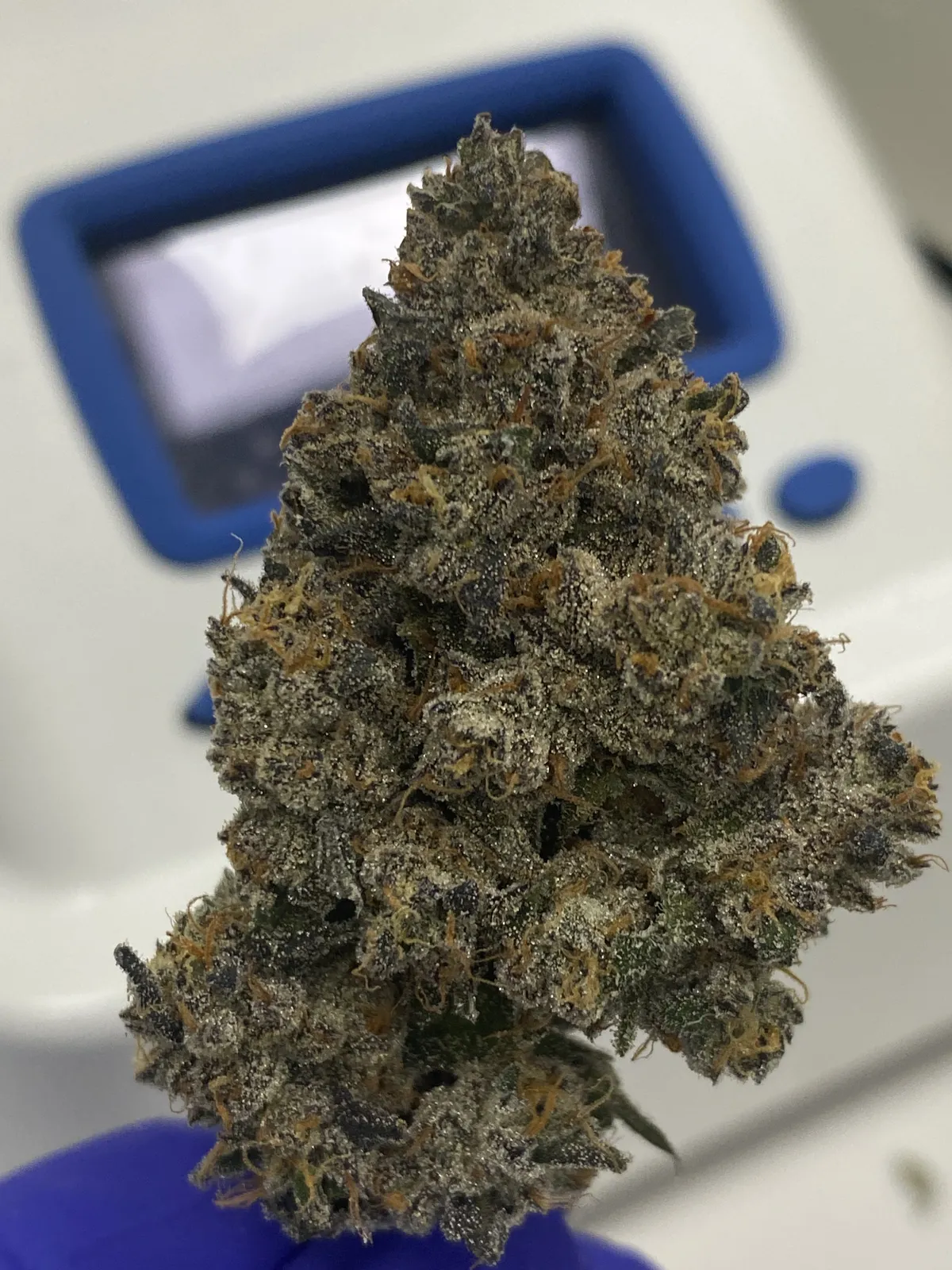
Where Alabama is today
Alabama is a medical-only market run by the Alabama Medical Cannabis Commission (AMCC) under Ala. Code Chapter 20-2A. The first dispensary opened in Montgomery in early June 2026 and a second in Talladega on Aug. 28, 2026. Nine of 12 cultivator and all 4 processor licenses are awarded, 3 of 4 dispensary licenses are issued, and the 5 integrated facility licenses remain unissued after a contested hearing that opened July 27, 2026. Challenges to those licenses and the fourth dispensary license have stalled 28 of the minimum 37 dispensary sites.
Compare Alabama with cannabis licensing in every state.
- Oct. 15, 2022. AMCC licensing and security rules, Chapters 538-X-3 and 538-X-4, take effect under Act 2021-450.
- June 12, 2023. First 21 awards from 90 applicants; AMCC stays issuance Sept. 1 and rescinds them Oct. 26, 2023.
- Dec. 1 and 12, 2023. Awards of 7 cultivators, 4 processors, 4 dispensaries, 4 transporters, 1 lab, then the integrated facility round. Hearings and court stays follow.
- Aug. 8, 2024. Two more cultivator awards bring the total to 9 of 12.
- June 12, 2026. First sales begin in Montgomery that month; the testing laboratory offering opens.
- July 27, 2026. Integrated facility hearing opens in Tuscaloosa; as of Nov. 8, 2026 AMCC has posted no recommended order or award.
How to get a Alabama cannabis license
- Watch the next offering. Only the testing laboratory round is open. Three cultivator licenses sit unawarded under the cap of 12; the fourth dispensary license and the integrated awards are under challenge.
- Confirm eligibility. Majority ownership needs 15 continuous years of Alabama residence; integrated facility and cultivator applicants add 15 years of commercial horticulture experience (20-2A-55).
- Lock the site and the locality. File the local business license, the county resolution or city ordinance, zoning approval and an architect or engineer certified blueprint (538-X-3-.05).
- Budget fees and the clock. $2,500 to apply, the $30,000 to $50,000 annual fee within 14 days of award, and growing within 60 days of approval. See cannabis business financing options.
- Pick your starting point. Dispensary plans: model a 3-site network with cannabis financial modeling. Cultivation and processing plans: start new license facility planning so the 60 day start is a permit date, not a design date.
What the state issues, and what each one needs built
- Integrated facility. Cultivate, process, transport and dispense through up to 5 sites. Cap 5, annual fee $50,000. Awarded Dec. 12, 2023; none issued as of Nov. 2026.
- Cultivator. Enclosed, locked, camera-monitored grow; hydroponics allowed; growing starts within 60 days of approval notice (20-2A-62). Cap 12, fee $40,000, 9 awarded.
- Processor. Oral, topical, suppository, patch and inhaler forms only; no flower, vapes or infused food (20-2A-3(14)). Cap 4, fee $40,000, all 4 awarded.
- Dispensary. Up to 3 sites in different counties, each 1,000 feet from a school or day care in a locality that opted in (20-2A-64). Cap 4, fee $40,000, 3 issued. Transporters and labs have no cap and pay $30,000. Every category pays a $2,500 application fee and carries $2 million in liability insurance.
What a Alabama facility costs to design and build.
An integrated facility carries cultivation, processing and up to 5 dispensing sites, so a 20,000 sq ft grow and processing building at $150 to $500+ per sq ft runs $3 million to $10 million or more before dispensaries and the $50,000 annual fee. Design takes 30 to 60 days and the build 3 to 6 months after permits, against the 60 day cultivation start clock in Ala. Code 20-2A-62.
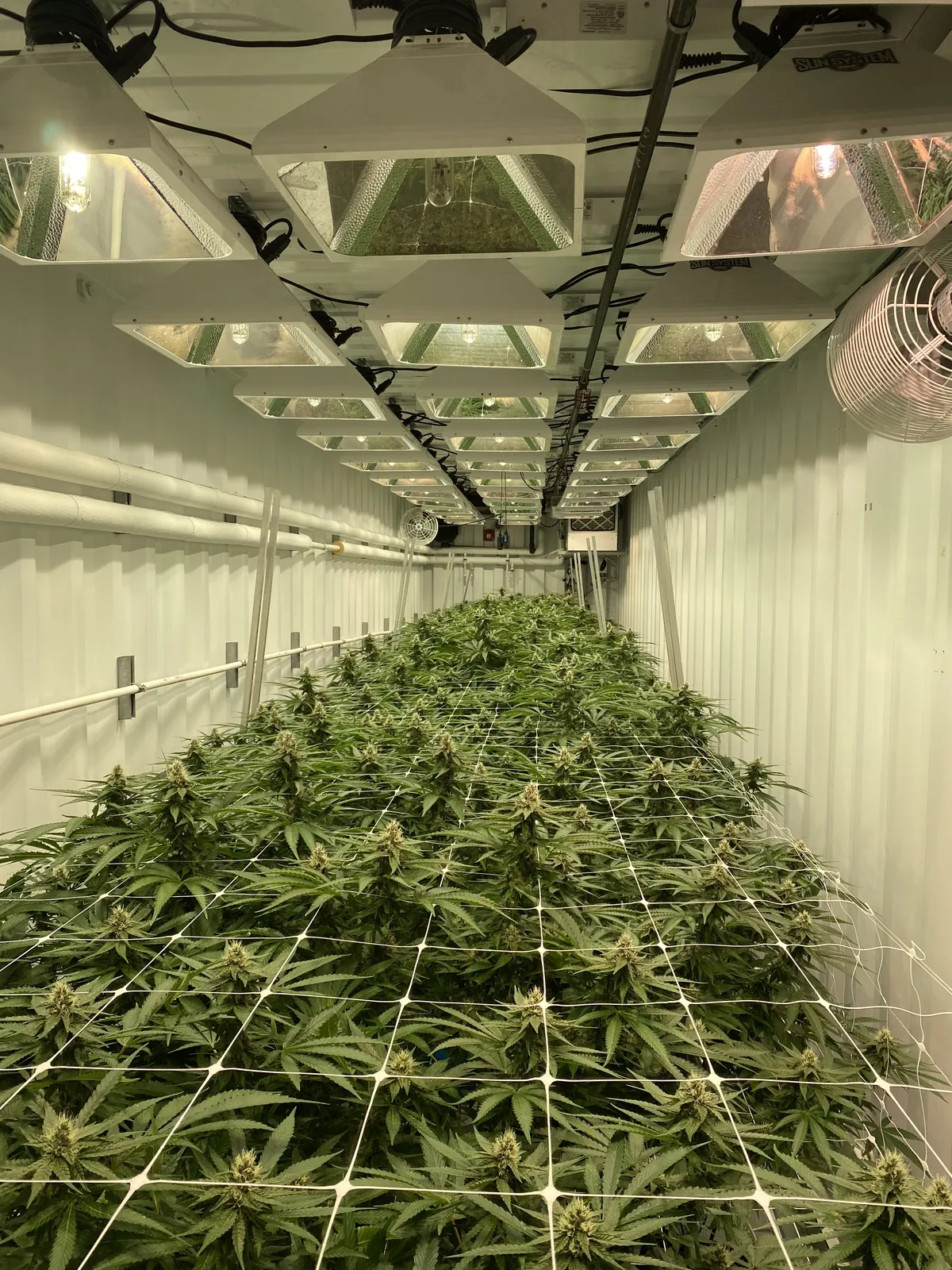
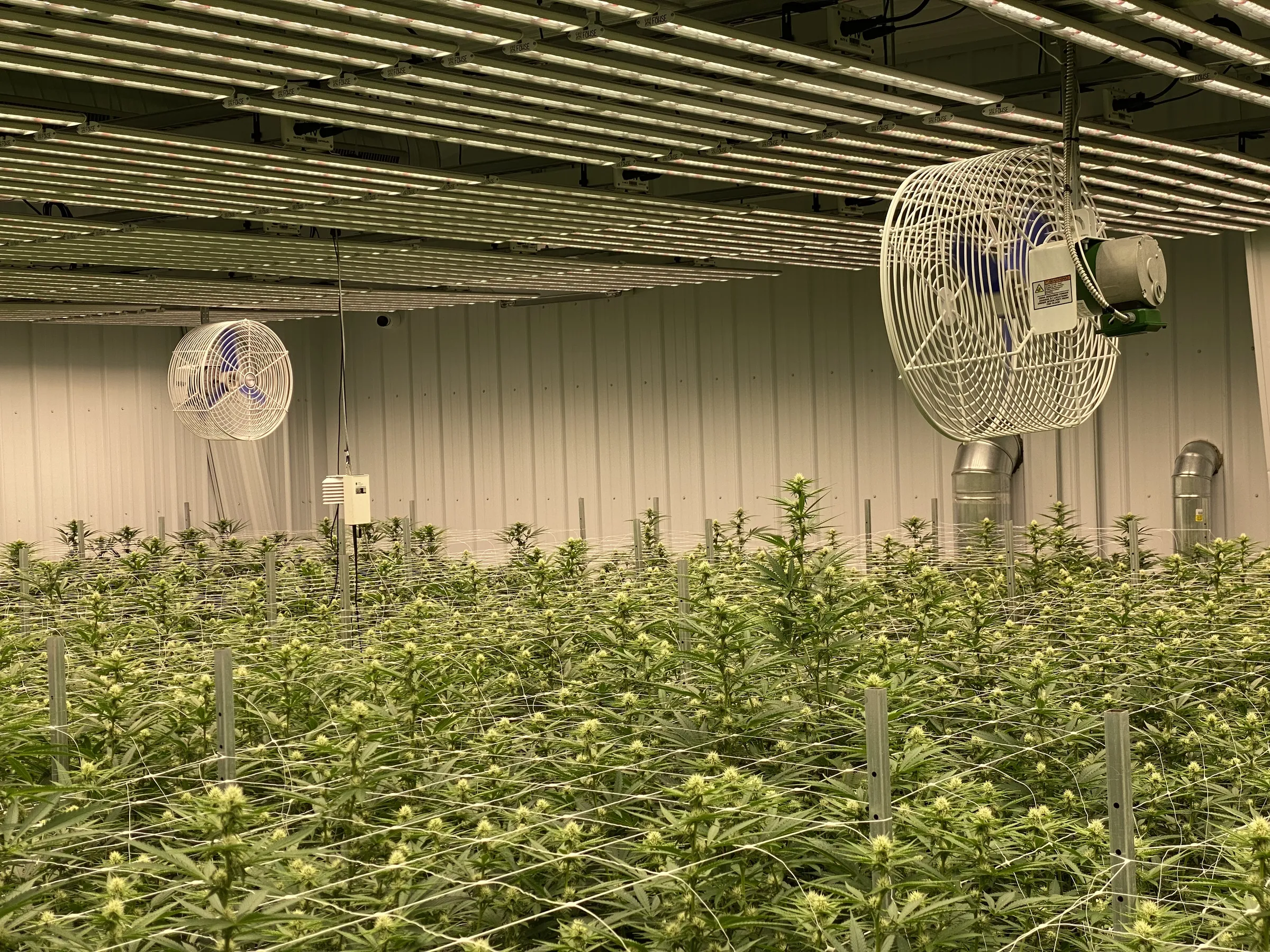
Power: Alabama's average commercial electricity price was 14.60 cents per kWh in 2025, above the 13.37 cent U.S. average, per EIA Electric Power Annual, Table 2.10. The humid subtropical climate makes dehumidification the largest swing in the kWh budget, so size Quest dehumidifiers, sourced on request, to latent load. Siting: dispensing sites need a county resolution or city ordinance and 1,000 feet from any school or day care.
Alabama specifics
Testing. A state testing laboratory clears every lot before transfer; Rule 538-X-4-.07(12)(o)3 sets the sample at 10 to 30 grams of cannabis or the lesser of 1% or ten units of product.
Security. Rule 538-X-4-.07(12)(o)11: alarms on every entry and perimeter window, 24 hour video with audio, 60 day retention, perimeter fence, keycard exterior doors, a vault and at least one guard during business hours.
Tracking. Ala. Code 20-2A-54 creates the statewide seed-to-sale system. Licensees update it daily, keep six years of data and meet ISA/IEC 62443 cybersecurity standards (538-X-4-.05). Labels carry a QR code tied to the system (538-X-6-.05).
Packaging and edibles. No flower, smoking, vaping or infused food (20-2A-3(14)). Child-resistant, tamper-evident packaging with a half-inch universal symbol (20-2A-63). Patients are capped at 50 mg THC a day, 75 mg after 90 days, and gel cubes use the peach universal flavor (538-X-6-.04).
| Topic | Alabama rule | Design response |
|---|---|---|
| Product forms | No flower, vapes or infused food; oral, topical, suppository, patch and inhaler forms only (20-2A-3(14)) | Extraction and formulation lab sized from our extraction equipment guide, with used Precision Extraction systems where hydrocarbon fits |
| Cultivation | Enclosed, locked, camera and keypad monitored; growing starts within 60 days of approval (20-2A-62) | Sealed rooms with HVAC sized per room and Anden dehumidifiers carried by Urth & Fyre |
| Dosing | 50 mg THC daily cap; peach flavor for gel cubes (20-2A-33, 538-X-6-.04) | Pope Scientific distillation feeding a dosing line with NTEP checkweighing |
| Testing and security | State lab clears each lot; 24 hour video, 60 day retention, vault (538-X-4-.07) | In-house screening with Orange Photonics analyzers; vault and camera plan in the processing facility layout |
What the same work did for an operator like you
What a Alabama applicant gets from the design desk.
- An Alabama cannabis compliance review of site, security and QA plans against Chapter 538-X
- Cannabis facility design for a processor or integrated facility: extraction, formulation, packaging, vault and dispensary back-of-house
- A cannabis facility design package in 30 to 60 days, with drawings ready for the architect or engineer certification Rule 538-X-3-.05 requires
- Still rooms and tincture lines from our cannabis distillation guide for a market with no flower or vape sales
Alabama questions
How do I get an Alabama medical cannabis license?
Apply to the Alabama Medical Cannabis Commission during an offering for your category. As of Nov. 2026 only the state testing laboratory offering, open since June 12, 2026, accepts applications. Majority ownership needs 15 years of Alabama residency and the application fee is $2,500.
Can I open a dispensary in Alabama?
Only through one of 4 dispensary or 5 integrated facility licenses. Three dispensary licenses are issued, the fourth is under challenge, and the integrated licenses await a recommended order from the 2026 hearing. Each dispensary licensee runs up to 3 sites. Compare Florida's MMTC model.
How much does an Alabama cannabis license cost?
$2,500 to apply, then an annual fee of $40,000 for a cultivator, processor or dispensary, $50,000 for an integrated facility and $30,000 for a transporter or lab, due within 14 days of award. Add $2 million in liability insurance and CPA-verified budgets.
Is medical marijuana legal in Alabama in 2026?
Yes. The first sale took place in Montgomery in June 2026 and a second dispensary opened in Talladega Aug. 28, 2026. Patients buy tablets, capsules, tinctures, gel cubes, topicals, patches and inhaler oils under a 50 mg daily THC cap. Flower, vapes and adult use are not legal.
What does an Alabama processing facility need?
A locked, alarmed building with 24 hour audio and video kept 60 days, a guard during business hours, a vault and a QA plan naming the state lab test at each stage (538-X-4 and 538-X-6). The plan is extraction, refinement and dosing around a C1D1 extraction room.
Where the Alabama rules on this page come from
- AMCC: Business Applicants, license caps, annual fees, open offerings, local authorizations
- AMCC: Talladega Medical Cannabis Dispensary to Open, Aug. 27, 2026, first dispensaries, 28 stalled sites, 37-site program, fourth dispensary and integrated licenses under challenge
- AMCC: Notice of Public Investigative Hearing, Integrated Facility, July 27, 2026 hearing and recommended order process
- AMCC: License Awards, Dec. 1, 2023, 7 cultivator, 4 processor, 4 dispensary awards
- AMCC: Additional Cultivation Licenses, Aug. 8, 2024, cultivator total and hearing status
- Ala. Code Chapter 20-2A (AMCC compilation), caps, fees, insurance, residency, product forms, dosing, siting
- Ala. Admin. Code Chapter 538-X-4, security, tracking, testing samples
- Ala. Admin. Code Chapter 538-X-6, processor QA, labeling, peach universal flavor
- EIA Electric Power Annual, Table 2.10 (2025), average commercial electricity price by state
Regulator: Alabama Medical Cannabis Commission. Last reviewed November 7, 2026.
 Record last reviewed