Utah cannabis licensing, facility design and equipment.
A Utah medical cannabis license is one of 8 cultivator, 17 processor or up to 17 pharmacy licenses issued through the Utah Department of Agriculture and Food. As of Nov. 2026 the program is medical only, UDAF offers no more cultivation licenses and the second rural pharmacy window closed Sept. 2, 2026, with the license due by Jan. 1, 2027.
Medical only; 8 cultivator cap with no new licenses offered; second rural pharmacy license due by Jan. 1, 2027
Syncing and validating with
Where Utah is today
Utah is a medical only market. The Utah Department of Agriculture and Food (UDAF) licenses cultivators, processors and medical cannabis pharmacies under Utah Code 4-41a through its licensing board, and HB 389 (2026) moves the rest of the program from the Department of Health and Human Services to UDAF by Jan. 1, 2027. Statute caps cultivation at 8 licenses, all held, and UDAF says no more are being offered.
HB 54 (2025) raised the pharmacy cap from 15 to 17 by adding two independent rural licenses: Moab was awarded Dec. 4, 2025 and the second closed its application window Sept. 2, 2026, with issuance due before Jan. 1, 2027. Everything else changes hands by acquisition only. Compare cannabis licensing in every state.
- 2025. HB 54 becomes law: pharmacy cap rises from 15 to 17 with two independent rural licenses.
- Dec. 4, 2025. The licensing board awards the first independent pharmacy to Boojum Medical in Moab, the 16th pharmacy; 14 applied.
- May 6, 2026. HB 389 and SB 121 take effect: program administration moves to UDAF, purchase fee funds enforcement.
- Sept. 2, 2026. Application window closes for the second independent rural pharmacy (opened Aug. 3).
- Jan. 1, 2027. Deadline to issue the second rural pharmacy license and to complete the DHHS to UDAF transition.
How to get a Utah cannabis license
- Know what is open. UDAF says no more cultivation licenses are being offered. The only window in 2026 was the second independent pharmacy (Aug. 3 to Sept. 2); UDAF must issue it by Jan. 1, 2027.
- Buy in or wait. UDAF's FY 2026 fee schedule lists a $300 change of ownership fee; model the acquisition with cannabis financial modeling before you sign.
- Watch the cultivation trigger. A ninth grow requires DHHS to project greater patient need, a forfeiture, or all growers at 100,000 sq ft.
- File through AIMS. UDAF runs cultivator renewals in AIMS; the 2026 cultivator renewal meeting is Dec. 17, documents due Nov. 16.
- Pick your starting point. Dispensary plans: Utah licenses medical cannabis pharmacies, not dispensaries, so start with cannabis compliance consulting. Cultivation and processing plans: begin new license facility planning.
What the state issues, and what each one needs built
- Cannabis cultivation facility. Capped at 8 under 4-41a-205 unless every grower hits the 100,000 sq ft limit, DHHS projects more patient need or a licensee forfeits. 8 companies at 12 sites; annual fee $95,000 on UDAF's FY 2026 schedule, bond required at renewal.
- Cannabis processing facility. 17 licensed. Tier 1 annual fee $95,000 and Tier 2 $35,000 on the same schedule.
- Medical cannabis pharmacy. Up to 17 licenses, 16 awarded as of Dec. 17, 2025. License fee $67,000 in Weber, Davis, Salt Lake and Utah counties and $33,500 in rural counties on UDAF's FY 2026 schedule, plus a $2,500 application fee; HB 54 keeps a 50% reduction in medically underserved areas and third to sixth class counties. The first independent holder cannot transfer control for 15 years.
- Testing laboratory. One licensed lab serves the state.
What a Utah facility costs to design and build.
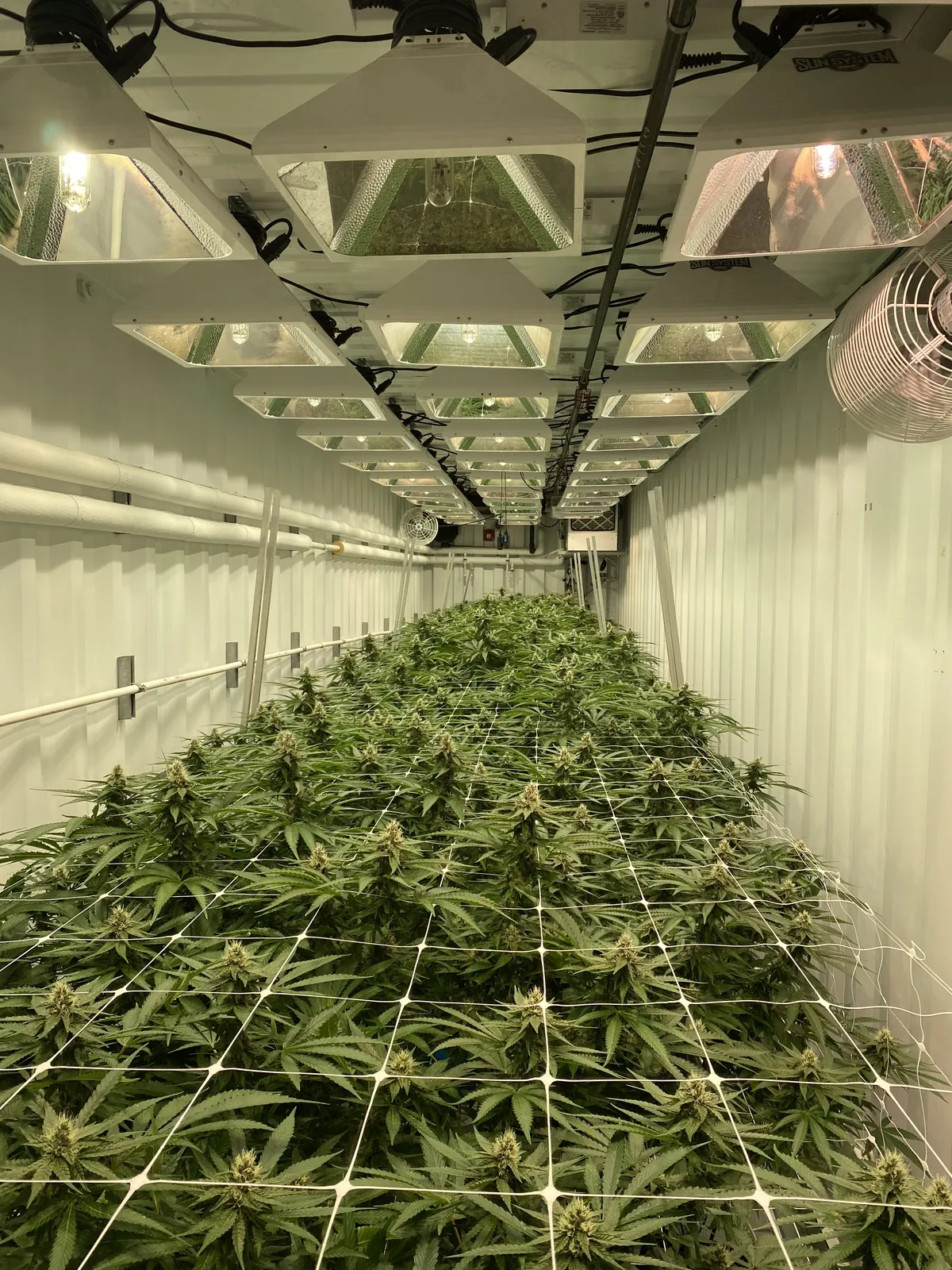
With 8 cultivators capped at 100,000 sq ft each, Utah growth is expansion, not new entry. A 20,000 sq ft expansion at $150 to $500+ per sq ft runs $3 million to $10 million or more; design takes 30 to 60 days and the build 3 to 6 months after permits, timed to the December renewal cycle. The Moab pharmacy award shows the bar: 14 applicants, one license, operational within a year.
Utah's average commercial electricity price was 10.06 cents per kWh in 2025 against a 13.37 cent U.S. average, per EIA Electric Power Annual, Table 2.10. The high desert flips the HVAC problem: humidification in veg and summer cooling matter more than dehumidification. Independent pharmacies must sit in medically underserved areas in smaller counties, and SB 66 (2026) lets UDAF set pharmacy regions.
Utah specifics
Testing. One licensed laboratory tests every batch. Since HB 54 (2025), UDAF may order toxin testing on an inspector's concern but cannot require a third test on a batch that already passed.
Security and tracking. Production establishments and pharmacies track cannabis by unique identifier in real time in an inventory control system tied to the state verification system (4-41a-103). Production facilities need one secure public entrance, an alarm with backup power and tamper proof video kept 45 days (4-41a-401, R66-2-8); pharmacies keep the same 45 days with cameras at every point of sale and a silent panic alarm (R66-5-7).
Packaging and products. Utah sells medicinal dosage forms only (26B-4-201), including tablets, capsules, oils, resin, wax, aerosols, topicals, gelatinous cubes and uniform confections, plus flower in labeled containers within 10% of stated weight. No chocolate or beverages; the 30 day limit is 113 grams of flower or 20 grams of active THC. HB 389 (2026) rewrote labeling and packaging provisions and allowed low THC products below 0.3%.
| Topic | Utah rule | Design response |
|---|---|---|
| Cultivation size | 8 licenses; 100,000 sq ft grow limit per cultivator (4-41a-205) | Phase the build to the limit with rooms sized for yield (grow room layout and airflow), Thrive Agritech LED to hold power cost down |
| Dry climate | No odor rule found; batch records and testing on every lot | MicroCool fogging for humidity, Anden dehumidification for flower and dry rooms |
| Processing | 17 processors; tier 1 fee $95,000; third tests barred after a pass | Hazardous location extraction room from C1D1 room requirements, used Precision Extraction systems |
| Products and labels | Medicinal dosage forms; HB 389 labeling and packaging updates; low THC products | Dosing and packaging line built to the form list (edibles equipment) |
What the same work did for an operator like you
What a Utah applicant gets from the design desk.
- A Utah medical cannabis compliance review against 4-41a and the 2026 UDAF transition before an acquisition or renewal
- Cannabis facility design for a cultivation expansion toward the 100,000 sq ft limit
- A cannabis facility design package in 30 to 60 days for a processing suite or pharmacy build
- HVAC sized for high desert humidity swings from our cannabis HVAC design guide
Utah questions
How do I open a dispensary in Utah?
Utah has no dispensaries; it has medical cannabis pharmacies, capped at 17 by HB 54 (2025) with 16 awarded as of Dec. 2025. The only path in 2026 was the second independent rural pharmacy, whose application window closed Sept. 2, 2026. Otherwise you buy a licensee, and UDAF's FY 2026 fee schedule lists a $300 change of ownership fee.
Can I get a Utah cannabis cultivation license?
Not now. Statute caps cultivation at 8 licenses, all held, and UDAF says none are being offered. The cap lifts only if every grower reaches the 100,000 sq ft limit, DHHS projects more patient need or a licensee forfeits. For an open cultivation market in the region, see Nevada.
Who regulates medical cannabis in Utah?
The Utah Department of Agriculture and Food licenses cultivators, processors and pharmacies through its Specialized Product Authority Licensing Board. HB 389 (2026) moves the rest of the DHHS program to UDAF by Jan. 1, 2027, so one agency will run it all.
How much does a Utah medical cannabis license cost?
UDAF's FY 2026 fee schedule sets the cultivation and tier 1 processor licenses at $95,000 each and the pharmacy license at $67,000 in Weber, Davis, Salt Lake and Utah counties or $33,500 in rural counties, plus a $2,500 application fee. The building is the larger number: $150 to $500+ per sq ft indoors.
What changed in Utah medical cannabis law in 2026?
HB 389 and SB 121 took effect May 6, 2026. Program administration moves from DHHS to UDAF by Jan. 1, 2027, a purchase fee funds enforcement, pharmacies may sell low THC products and labeling rules were rewritten. SB 66 lets UDAF set pharmacy geographic regions.
Where the Utah rules on this page come from
- UDAF: Medical Cannabis Cultivators, 8 license cap under 4-41a-205, no licenses offered, renewal dates
- Utah DHHS: Cultivators, 100,000 sq ft grow limit and cap exceptions
- UDAF release, Dec. 17, 2025, Moab award, 8 cultivators, 17 processors, 16 pharmacies, 1 lab
- 2025 HB 54, Cannabinoid Amendments, pharmacy cap of 17, independent licenses, fee reductions, testing limits
- Utah DHHS: 2026 Medical Cannabis Law Updates, HB 389 and SB 121, DHHS to UDAF transition
- OLRGC: 2026 Passed Legislation, Health and Human Services, HB 389, SB 121, SB 66 summaries
- UDAF Fee Schedule, FY 2026, cultivation, processor, pharmacy and application fees
- Utah Code 26B-4-201, medicinal dosage forms and legal dosage limit
- Utah Code 4-41a, inventory control system (4-41a-103) and production security (4-41a-401)
- Utah Admin. Code R66-2-8, processing facility video and alarm standards
- Utah Admin. Code R66-5-7, pharmacy video, alarm and panic alarm standards
- EIA Electric Power Annual, Table 2.10 (2025), commercial electricity price
- UDAF: application for a new independent medical cannabis pharmacy (July 29, 2026), rural pharmacy window and licensing board
Regulator: Utah Department of Agriculture and Food, Specialized Products Division. Last reviewed November 7, 2026.
 Record last reviewed