Arizona cannabis licensing, facility design and equipment.
How to open a dispensary in Arizona: hold or buy into a marijuana establishment license from the Arizona Department of Health Services, because the Smart and Safe Arizona Act caps licenses at one per 10 registered pharmacies and no application window is open as of Nov. 2026. The state counted 170 licensed adult use establishments in Feb. 2026.
170 licensed establishments as of Feb. 2026; no new application window open as of Nov. 2026
Syncing and validating with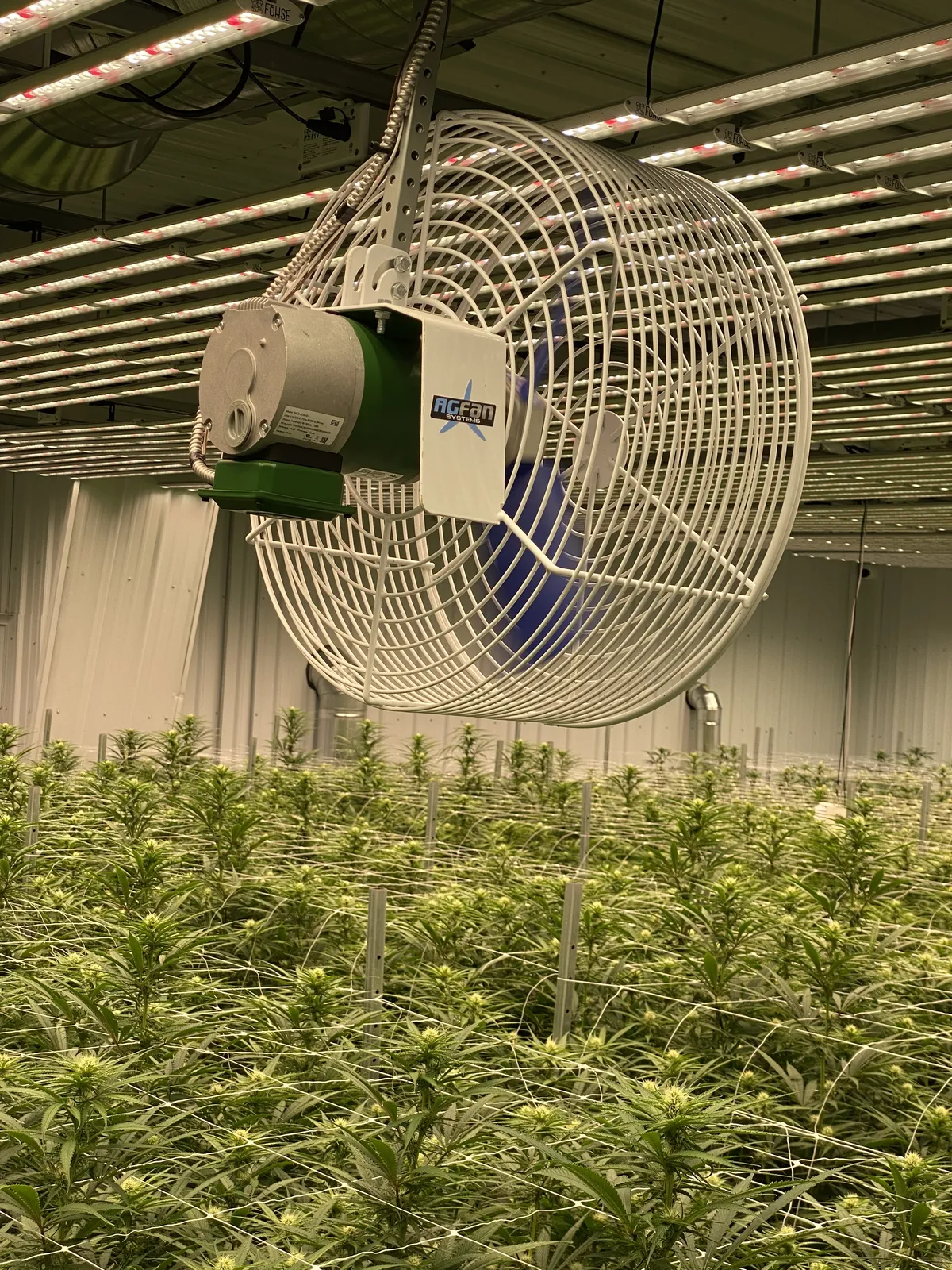
Where Arizona is today
Arizona is a dual medical and adult use market licensed by the Arizona Department of Health Services (ADHS) under A.R.S. Title 36, Chapters 28.1 and 28.2. The marijuana establishment license is capped at one per 10 registered pharmacies, plus two per county with no medical dispensary or one per county with one, and a legislative fiscal note counted 170 licensed establishments in Feb. 2026. The only new licenses since launch were the 2021 social equity round.
Bills to add 18 rural dual licenses opened no window in 2025 or 2026, so entry today means buying or partnering into an existing license. Compare Arizona with cannabis licensing in every state.
- 2010. Voters approve the Arizona Medical Marijuana Act; ADHS registers nonprofit medical dispensaries.
- 2020. Voters approve the Smart and Safe Arizona Act; medical dispensaries become early applicants for dual licenses.
- 2021. Adult use rules in A.A.C. Title 9, Chapter 18 take effect.
- Dec. 1 to 14, 2021. Social equity application window; licenses allocated by random drawing with a $5,000 fee and $500,000 liquid capital test.
- Nov. 1, 2024. Latest amendments to the fee, security, labeling and inventory rules take effect.
- June 14, 2026. SB 1363, the rural opportunity initiative that would have added 18 dual licenses, is marked dead, a year after SB 1057 failed a House vote on June 23, 2025 (both per the BillTrack50 tracker).
How to get a Arizona cannabis license
- Know there is no window. The pharmacy ratio caps licenses and ADHS has run no establishment round since Dec. 2021. SB 1128 proposed an April 1 to 14, 2027 window for 18 rural dual licenses in 2026; the last House summary, dated April 1, 2026, shows no final vote, and ADHS has opened no window.
- Buy or partner into a license. Site moves and added cultivation or manufacturing sites each file with ADHS at $2,500 (R9-18-102), plus $2,500 for approval to operate.
- Size each site. Retail, cultivation and manufacturing sites are approved separately, so an added grow is its own filing and its own build. See the cannabis cultivation business plan.
- Build to R9-18-312 and 313. Locked grow rooms or 10 foot solid walls outdoors, 704 x 480 cameras kept 30 days, and a food establishment license before any edible is made.
- Pick your starting point. Dispensary plans: price an acquisition with cannabis financial modeling. Cultivation and processing plans: start facility planning so the added site passes approval to operate on the first inspection.
What the state issues, and what each one needs built
- Marijuana establishment. Retail, cultivation and manufacturing of adult use marijuana; capped at one per 10 registered pharmacies statewide; two-year term; $25,000 initial fee, $5,000 renewal, $2,500 to add or move a cultivation or manufacturing site (R9-18-102). 170 licensed as of Feb. 2026.
- Dual licensee. A nonprofit medical dispensary that also holds an establishment license and sells to patients and adults; the two licenses cannot be transferred separately (R9-18-305).
- Social equity establishment. 26 licenses drawn in 2022 from the Dec. 2021 window; 51% owners each met three of four income, enforcement, family or community criteria (R9-18-303).
- Marijuana testing facility. Independent lab licensed under Article 4; $25,000 initial fee, $5,000 renewal.
What a Arizona facility costs to design and build.
With no new licenses, Arizona projects are acquisitions and added sites. A 15,000 sq ft cultivation and manufacturing site added to an existing license at $150 to $500+ per sq ft runs $2.25 million to $7.5 million or more, plus the $2,500 ADHS filing and approval to operate. Design takes 30 to 60 days and the build 3 to 6 months after permits.
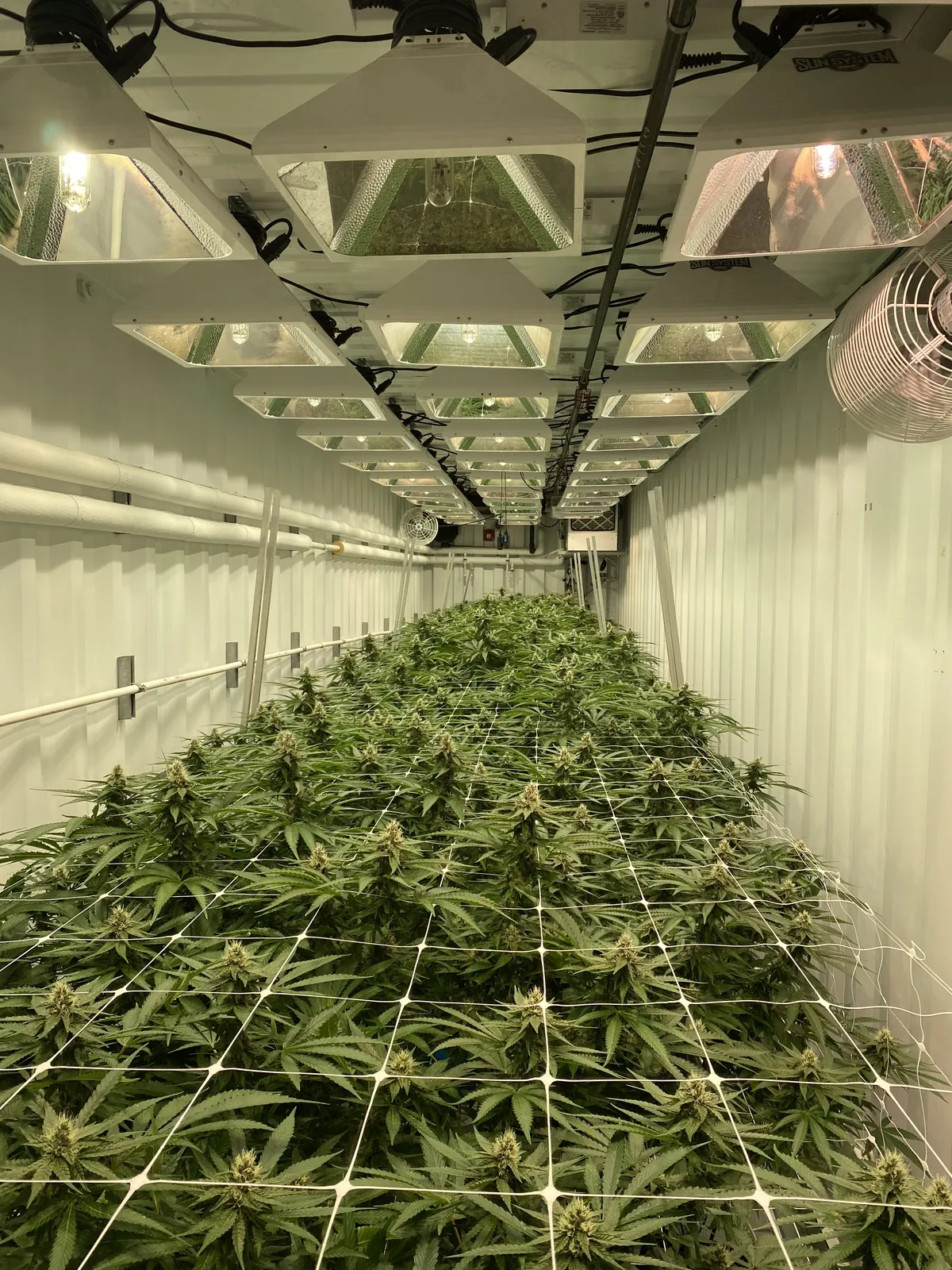
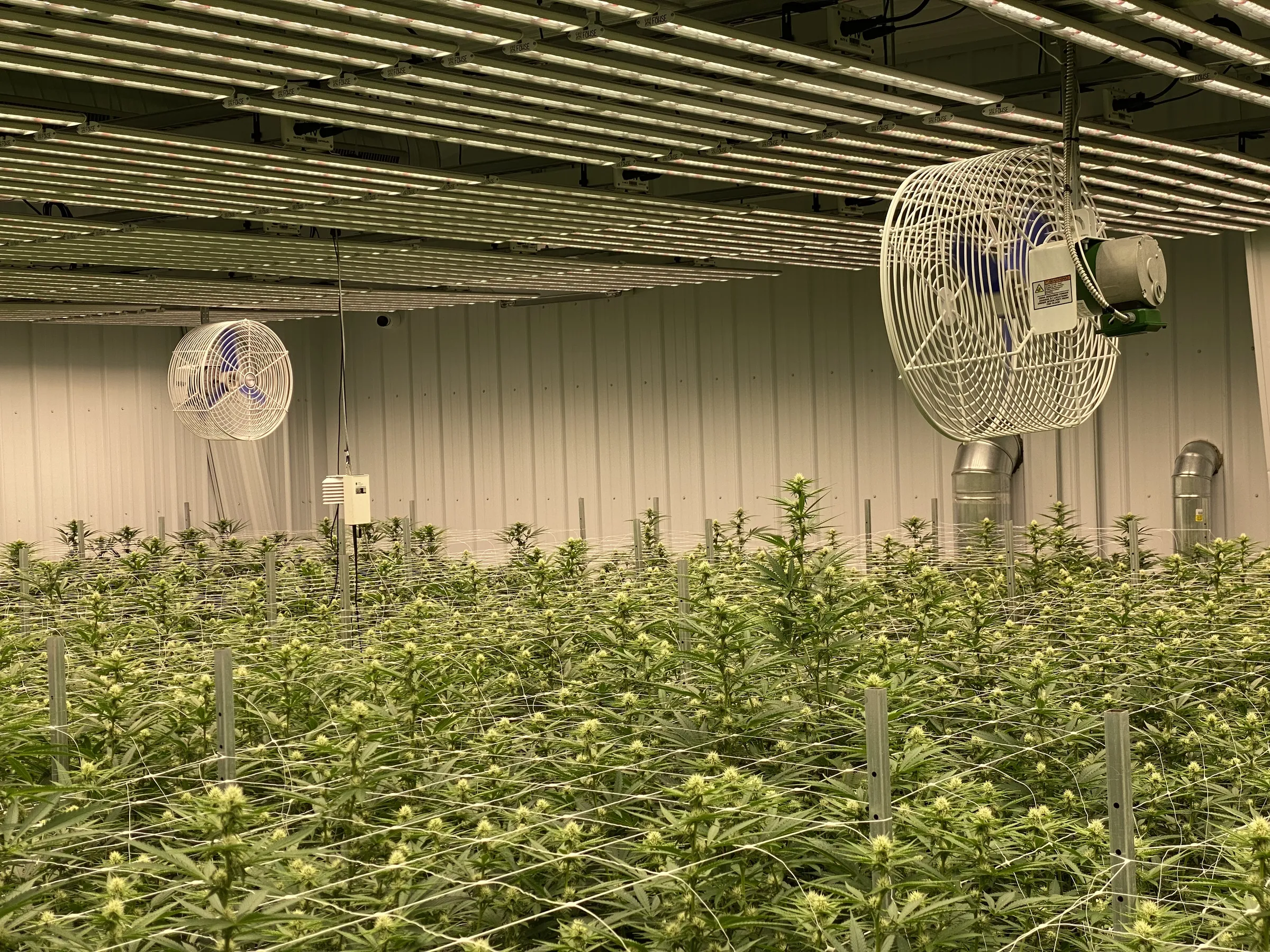
Power: Arizona's average commercial electricity price was 12.45 cents per kWh in 2025, below the 13.37 cent U.S. average, per EIA Electric Power Annual, Table 2.10. The desert flips the usual load: sensible cooling and winter humidification dominate, with dehumidification peaking only in monsoon season, so match Gavita fixtures, sourced on request, to the room's heat budget. Siting: each retail, cultivation and manufacturing site is approved by ADHS and outdoor grows need the 10 foot wall, so confirm local zoning before the filing.
Arizona specifics
Testing. Every batch is tested by an ADHS-licensed lab before sale under R9-18-311 and Table 3.1: potency and microbial at minimum, plus the other analytes unless excluded. Heavy metals drop to quarterly after six compliant months, and a failed batch may be retested at up to two labs within seven days.
Security. R9-18-312: a closed, locked room for indoor cultivation, 10 foot solid walls and a one-inch metal gate outdoors, cameras at every entrance, point of sale and grow room at 704 x 480 or better, 30 day retention, panic buttons and five minutes of battery backup.
Tracking. No state seed-to-sale system is named in rule. R9-18-314 requires each establishment's own inventory control system, a 30 day audit under GAAP and five years of records covering every harvest, transfer, lab submission and disposal.
Packaging and edibles. Child-resistant packaging at retail with a QR code to the test report (R9-18-310). Edibles are capped at 10 mg total THC per serving and 100 mg per package, scored into servings, and made under a food establishment license (R9-18-313).
| Topic | Arizona rule | Design response |
|---|---|---|
| Cultivation | Indoor grow in a closed, locked room; outdoor behind 10 foot solid walls (R9-18-312) | Sealed rooms with Urban Farms HVAC sized for desert cooling load, per our cannabis HVAC design guide |
| Humidity | Microbial and potency testing on every batch (R9-18-311) | MicroCool fogging to hold VPD in dry air, with microbial compliance built into airflow |
| Lighting | Grow room cameras must read activity in low light (R9-18-312) | Thrive Agritech LEDs laid out with the camera plan in the grow room layout |
| Edibles | 10 mg THC per serving, 100 mg per package; food establishment license (R9-18-313) | Licensed kitchen and dosing line from our edibles equipment guide with Paxiom packaging |
What the same work did for an operator like you
What a Arizona applicant gets from the design desk.
- An Arizona cannabis compliance review of an acquisition target's sites against R9-18-311 through 314 before close
- Cannabis facility design for added cultivation and manufacturing sites, drawn for approval to operate
- A cannabis facility design package in 30 to 60 days: room program, MEP set and equipment schedule
- Extraction suites specified from our cannabis extraction equipment guide, matched to Arizona's residual solvent exclusions
Arizona questions
How do I open a dispensary in Arizona?
Buy or partner into an existing marijuana establishment license. ADHS caps licenses at one per 10 registered pharmacies and has opened no round since the Dec. 2021 social equity window, so the 170 licenses counted in Feb. 2026 are the market. Site changes file with ADHS before approval to operate.
How much does an Arizona dispensary license cost?
ADHS charges $25,000 for an initial marijuana establishment license and $5,000 for each two-year renewal, plus $2,500 for approval to operate and $2,500 for every site change or added cultivation or manufacturing site (R9-18-102). The price of an existing license is set by private sale, not by the state.
Is Arizona issuing new cannabis licenses in 2026?
No. Rural initiative bills that would have added 18 dual licenses to unserved communities failed: SB 1057 lost a House vote June 23, 2025 and SB 1363 was marked dead June 14, 2026, per the BillTrack50 tracker. For other markets, compare Nevada or New York.
Does Arizona require Metrc?
No state system is named in rule. R9-18-314 requires each establishment to run its own inventory control system under a designated agent, audit it at least every 30 days under GAAP and keep five years of records. The audit trail must cover every harvest, transfer, lab submission and disposal.
What does an Arizona grow room have to meet?
R9-18-312: a closed, locked room indoors or 10 foot solid walls outdoors, a camera in each grow room that reads activity in low light, 704 x 480 recording kept 30 days, intrusion detection and panic buttons. Every batch then clears potency and microbial testing, so we design airflow for microbial prevention from day one.
Where the Arizona rules on this page come from
- JLBC fiscal note, SB 1641 (March 23, 2026), 170 licensed establishments, pharmacy-ratio cap, $25,000 and $5,000 fees
- Arizona House summary, SB 1128 (April 1, 2026), current law caps, two-year term, proposed 18 rural dual licenses and April 2027 window
- Arizona House summary, SB 1057 (June 2025), rural opportunity initiative as passed the Senate
- ADHS Notice of Exempt Rulemaking, social equity rules, Dec. 2021 window, eligibility, $5,000 fee, $500,000 capital
- ADHS Director's Blog, May 10, 2022, 26 social equity licenses awarded
- A.A.C. R9-18-102, Fees, establishment, site and testing facility fees
- A.A.C. R9-18-312, Security, cultivation enclosure, cameras, retention
- A.A.C. R9-18-311, Analysis, batch testing and retest rules
- A.A.C. R9-18-313, Edible Food Products, 10 mg and 100 mg THC caps
- EIA Electric Power Annual, Table 2.10 (2025), average commercial electricity price by state
Regulator: Arizona Department of Health Services. Last reviewed November 7, 2026.
 Record last reviewed